
 Bianca Muller
Cape Glossy Starlings aren’t particularly shy about making themselves at home. You’ll find them foraging on the ground, helping themselves to fruit and investigating all sorts of potential food sources. They’re also cavity nesters, which means a hole in a tree can be far more useful to them than a carefully positioned branch. For gardeners who enjoy watching the wildlife that passes through their outdoor spaces, there’s plenty to appreciate about this southern African native.
How to identify a Cape Glossy Starling
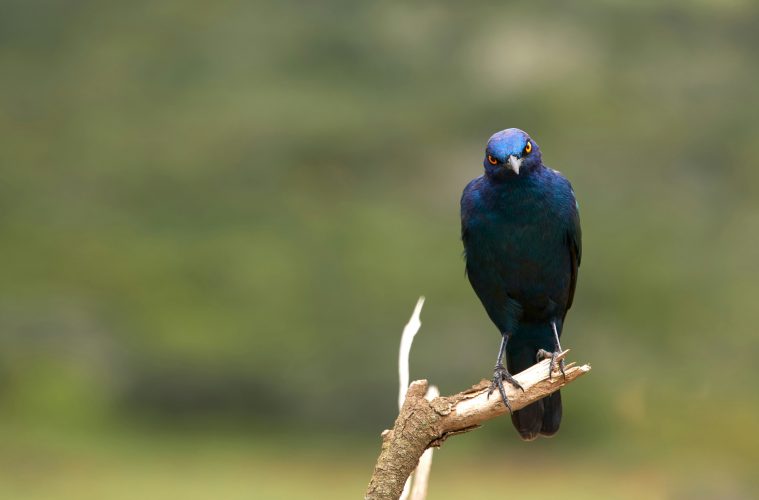
The Cape Glossy Starling is a medium-sized bird with glossy blue-green plumage that changes appearance depending on the light. Its compact shape, relatively short tail and striking orange-yellow eye help distinguish it from similar-looking starlings.
Young birds are generally duller than adults, so don’t be surprised if a juvenile looks less colourful. When the sun catches an adult’s feathers, however, the iridescent sheen can be hard to miss.
Where can you spot Cape Glossy Starlings?
Cape Glossy Starlings occur across much of southern Africa, including South Africa, Namibia, Botswana and Zimbabwe. They favour open woodland, savanna and bushveld, but they’re also comfortable in parks, on farms and in suburban gardens.
If you’d like to encourage them to visit your garden, trees are a good place to start. Established trees offer perching and roosting spots, while suitable cavities can provide nesting opportunities.
What do Cape Glossy Starlings eat?
Cape Glossy Starlings have a varied diet that includes fruit, insects and other small invertebrates. They often forage on the ground, searching for food, but will also feed in trees and take advantage of food sources around people.
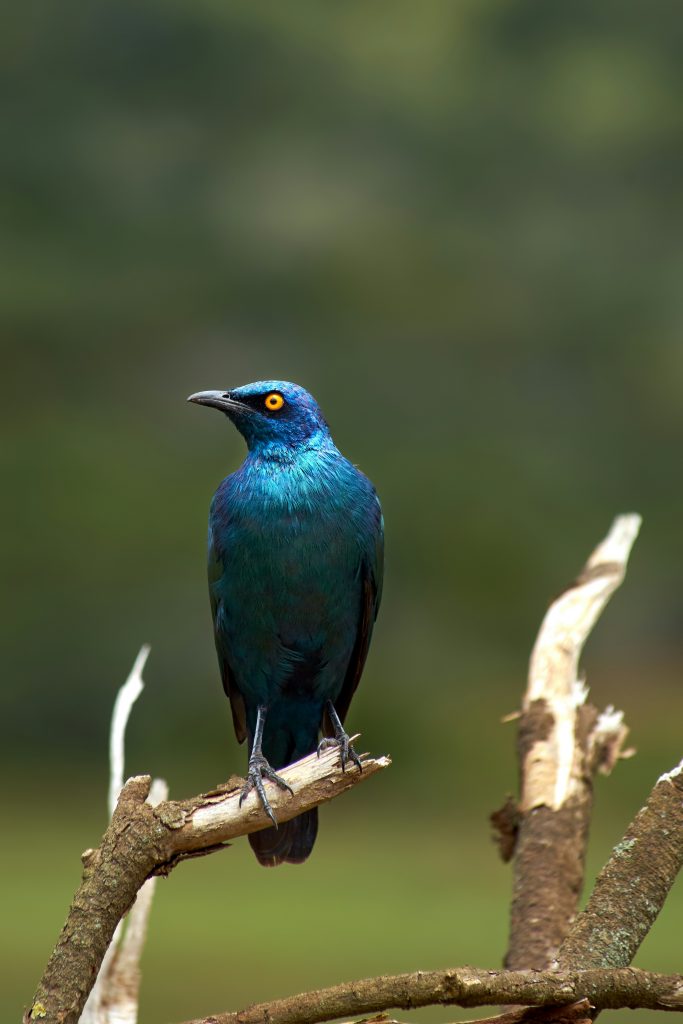
Photo: Unsplash
For gardeners, this is another reason to create a space that supports a variety of wildlife. Indigenous plants suited to your region can provide natural food and shelter, while reducing pesticide use helps protect the insects that many birds depend on.
Rather than relying on bread or kitchen scraps, focus on providing natural food sources and suitable habitat.
Are Cape Glossy Starlings social birds?
Very much so. Although they generally nest in individual pairs, Cape Glossy Starlings are sociable outside the breeding season and may gather in larger flocks to feed or roost.
You might see several birds inspecting a patch of lawn together, moving between trees or chattering from a rooftop. Their lively behaviour makes them rewarding visitors to watch from a patio or window.
Where do Cape Glossy Starlings build their nests?
Cape Glossy Starlings are cavity nesters, meaning they use enclosed spaces rather than building exposed nests among branches. Natural holes in trees can provide suitable nesting sites, and these spaces may also attract other cavity-nesting birds.
Breeding takes place during the warmer months in South Africa, with nesting reported from spring into summer. Both parents help raise their young, bringing food to the nest as the chicks develop.
An interesting fact about Cape Glossy Starlings
Their glossy feathers aren’t simply blue or green. The shimmering effect is known as iridescence, where the appearance of a surface changes with the angle of the light. That’s why a Cape Glossy Starling can look almost turquoise in one moment and darker or greener the next.
ALSO SEE: Garden bird of the week: Southern red bishop
Feature image: Unsplash
