
 Bianca Muller
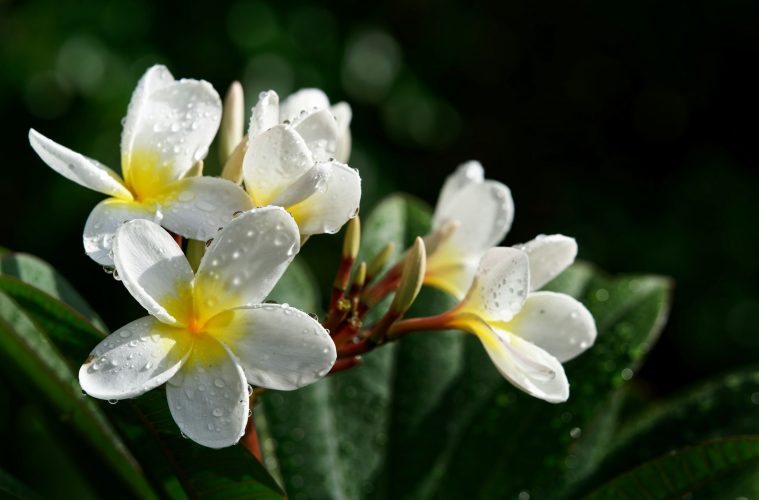
Every year, without fail, frangipanis remind us that summer isn’t far away. Their bare, knobbly branches suddenly burst into glossy green leaves and clusters of beautifully scented flowers that perfume entire gardens. They’re the kind of tree neighbours ask about over the fence, and if you’ve ever owned one, chances are you’ve been given a cutting or passed one on yourself.
Despite their tropical reputation, frangipanis aren’t nearly as demanding as they look. Once established, they’re remarkably hardy, shrugging off dry spells and rewarding gardeners with months of flowers for very little effort.
More than just a pretty flower
Frangipani (Plumeria spp.) is native to Central America, Mexico and the Caribbean, although many people associate it with tropical islands like Bali and Hawaii, where it’s widely planted around homes, temples and resorts.
Its common name has an equally interesting story. It’s believed to have been named after the 16th-century Italian nobleman Marquis Muzio Frangipani, whose perfume carried a scent similar to the flowers.
The blooms are unmistakable. Thick, waxy petals appear in shades of white, cream, yellow, pink, coral, red and deep burgundy, often with contrasting centres. Many varieties become even more fragrant after sunset, filling the evening air with their sweet perfume.
Even when the tree isn’t in flower, it still earns its place in the garden. During winter, frangipanis shed their leaves, revealing a network of chunky, sculptural branches that almost look like living artwork.
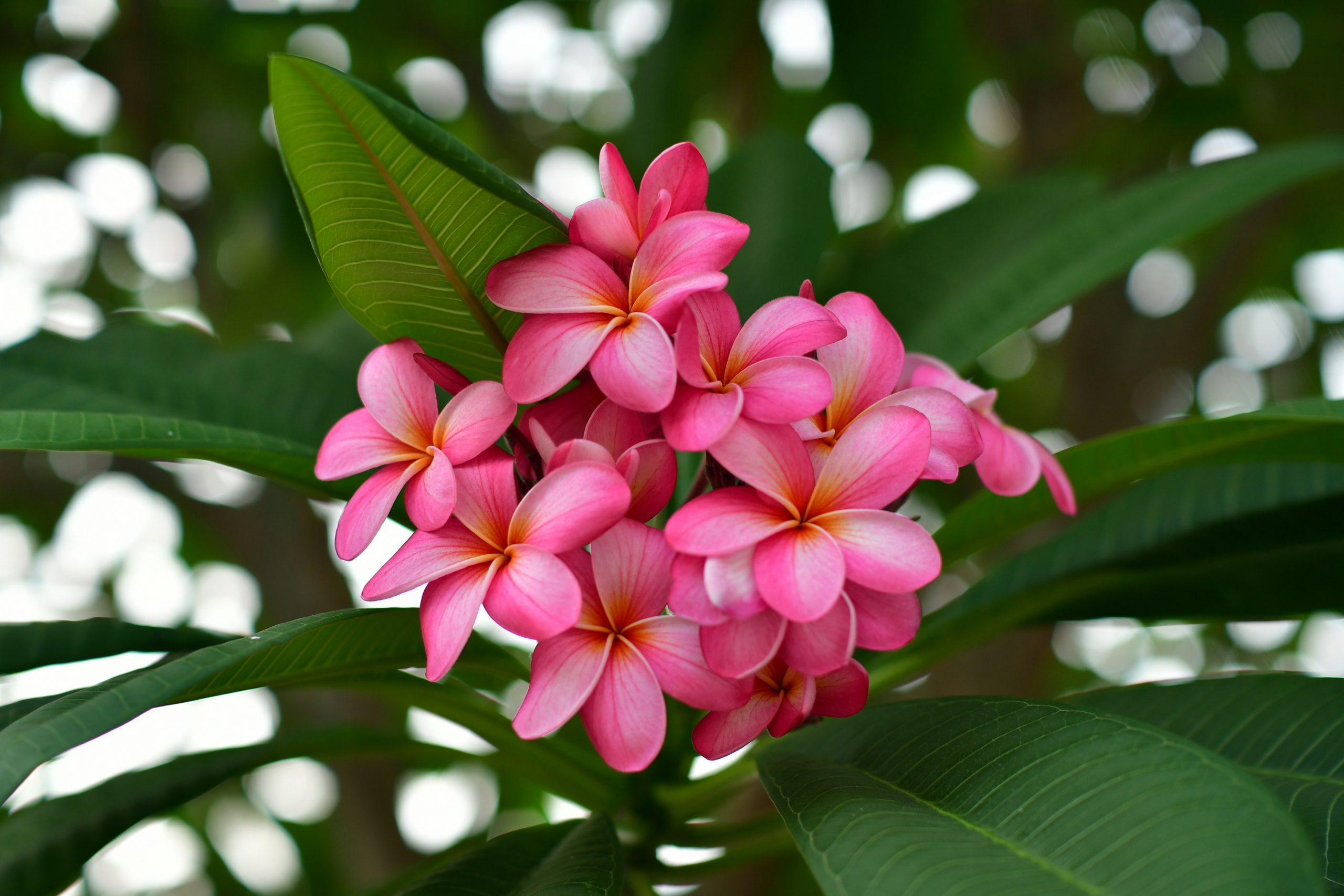
Photo: Unsplash
The best spot in the garden
If your frangipani isn’t flowering as much as you’d hoped, the answer is almost always more sunshine. These trees thrive in full sun and need at least six hours of direct light every day to produce their best display. Warmth is equally important, making them especially well suited to many parts of South Africa.
They also appreciate:
- Well-draining soil
- Good air circulation
- Protection from severe frost while young
- Space for their spreading branches to develop
Heavy clay soil can be improved with compost and coarse sand to prevent water from sitting around the roots.
Less water is usually better
One of the quickest ways to upset a frangipani is by watering it too often. The thick stems store moisture, allowing the tree to cope surprisingly well during dry periods. Young plants benefit from regular watering while they establish themselves, but mature trees generally need little more than occasional deep watering during extended dry spells.
Winter is a different story. As the tree becomes dormant and drops its leaves, watering should be reduced significantly. Cold, wet soil is far more likely to cause problems than dry conditions. If you’re unsure whether your frangipani needs a drink, it’s usually better to wait another day or two.
Feed for flowers, not leaves
Frangipanis aren’t particularly hungry plants, but the right fertiliser at the right time can make a noticeable difference. Feed during spring and summer with a fertiliser that’s higher in phosphorus and potassium than nitrogen. Too much nitrogen encourages lush leafy growth at the expense of flowers, which is often why healthy-looking trees fail to bloom.
Once autumn arrives and growth slows, stop feeding until spring returns.
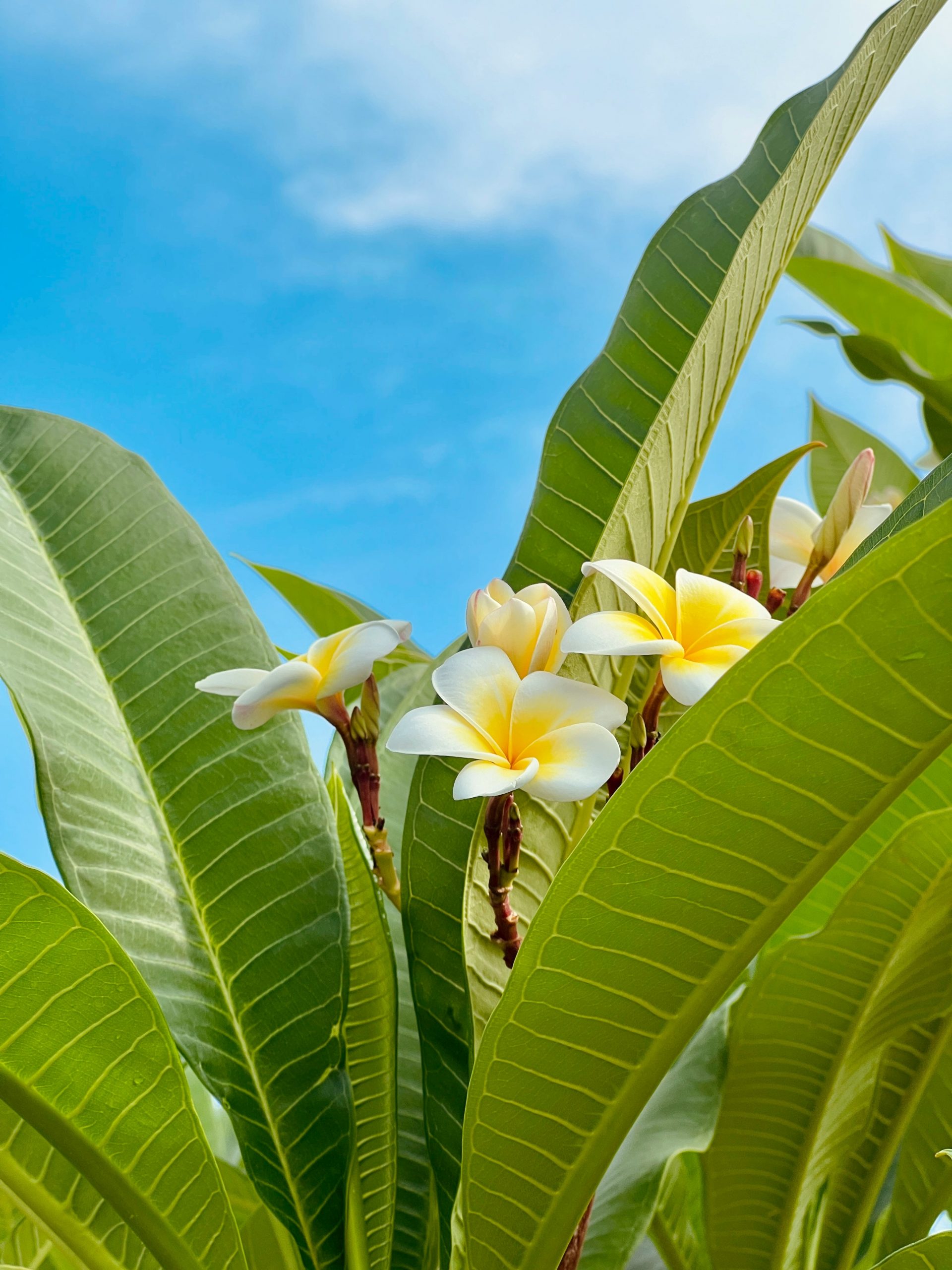
Photo: Unsplash
Pruning isn’t essential
Unlike many ornamental trees, frangipanis don’t need regular shaping. A light prune in late winter or early spring is usually enough to remove dead, damaged or crossing branches. If you’d like a fuller canopy, pruning after flowering can encourage branching, which often leads to even more blooms the following season.
The tree produces a milky white sap when cut, so it’s worth wearing gloves if you have sensitive skin.
One cutting can become a whole new tree
Frangipanis have earned a reputation as one of the easiest ornamental trees to share. A healthy branch removed during pruning can simply be left somewhere dry for about a week, allowing the cut end to callous over before being planted into free-draining soil. Water sparingly until roots develop, and before long you’ll have another tree.
Happy in a pot
Don’t have space for a tree? Frangipanis are just as happy growing in large containers. Choose the biggest pot you can comfortably manage, making sure it has generous drainage holes. A quality free-draining potting mix and a sunny patio are often all that’s needed.
Container-grown plants may need slightly more frequent watering during the hottest months but should never be left standing in water.
Common problems
Frangipanis are generally low-maintenance, but a few issues can occasionally appear.
Yellow leaves
If it’s winter, yellowing leaves are completely normal as the tree enters dormancy. During the growing season, however, yellow leaves can point to overwatering or poor drainage.
Not flowering
Insufficient sunlight is usually the culprit. Overfeeding with nitrogen-rich fertiliser can also encourage leaves instead of flowers.
Frangipani rust
This fungal disease appears as bright orange or rusty spots on the undersides of leaves. Remove infected foliage promptly and improve airflow through the canopy to help prevent it from spreading.
Frost damage
Young trees are more vulnerable to frost than mature specimens. If you garden in a colder part of the country, plant your frangipani in a sheltered position or grow it in a container that can be moved if necessary.
Plant it where you’ll enjoy it most
One of the biggest mistakes people make is tucking a frangipani into an empty corner of the garden. Instead, plant it somewhere you’ll walk past every day. Near a patio, beside an outdoor dining area or outside a bedroom window, its fragrance becomes part of daily life rather than something you only notice from a distance.
ALSO SEE: How to grow a thriving bougainvillea
Feature image: Unsplash
