
 Bianca Muller
Ever been pottering around in the garden and noticed a small bird hopping confidently a few metres away, tail flicking as if it owns the place, chances are you’ve met a Cape robin-chat.
One of South Africa’s most familiar garden birds, the Cape robin-chat has a charming habit of following gardeners as they dig, weed or prune, patiently waiting for disturbed insects to become an easy meal. Curious rather than shy, it’s the kind of bird that quickly becomes a regular visitor, often returning to the same favourite perch day after day.
Here’s everything you need to know about this much-loved feathered neighbour.
How to identify a Cape robin-chat
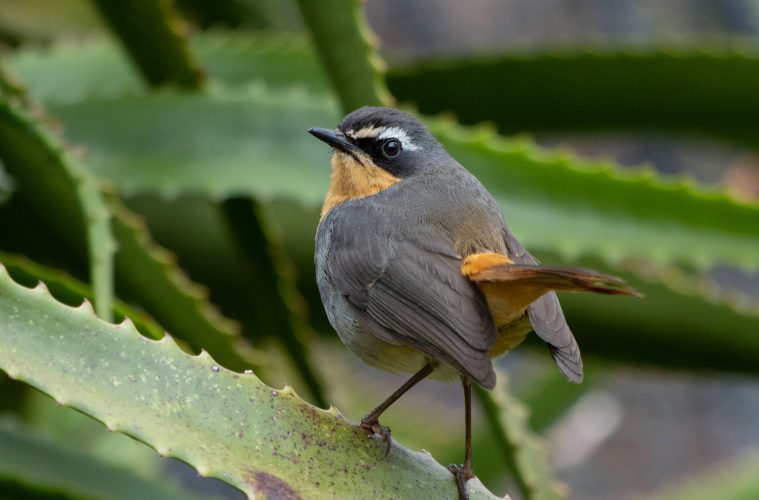
The Cape robin-chat (Cossypha caffra) is a medium-sized robin, measuring around 16–17cm long.
Its most recognisable features include:
- A warm orange face, throat and upper chest
- Olive-brown back and wings
- Pale grey belly
- White eyebrow stripe above the eye
- Dark tail with distinctive orange outer feathers, often flashed while flicking its tail
Although both males and females look very similar, juveniles are quite different. Young birds are mottled brown with speckled plumage before gradually developing their signature orange colouring.
Where you’ll find them
Cape robin-chats are widespread across much of South Africa and are especially common in suburban gardens, parks, forests, riverine vegetation and fynbos. They’re happiest where there’s plenty of natural cover. Dense shrubs, indigenous hedges, leaf litter and shady corners all provide ideal feeding and nesting spots.
Unlike many birds that spend most of their time high in the canopy, Cape robin-chats prefer to stay close to the ground, darting between bushes and hopping through flower beds in search of food.
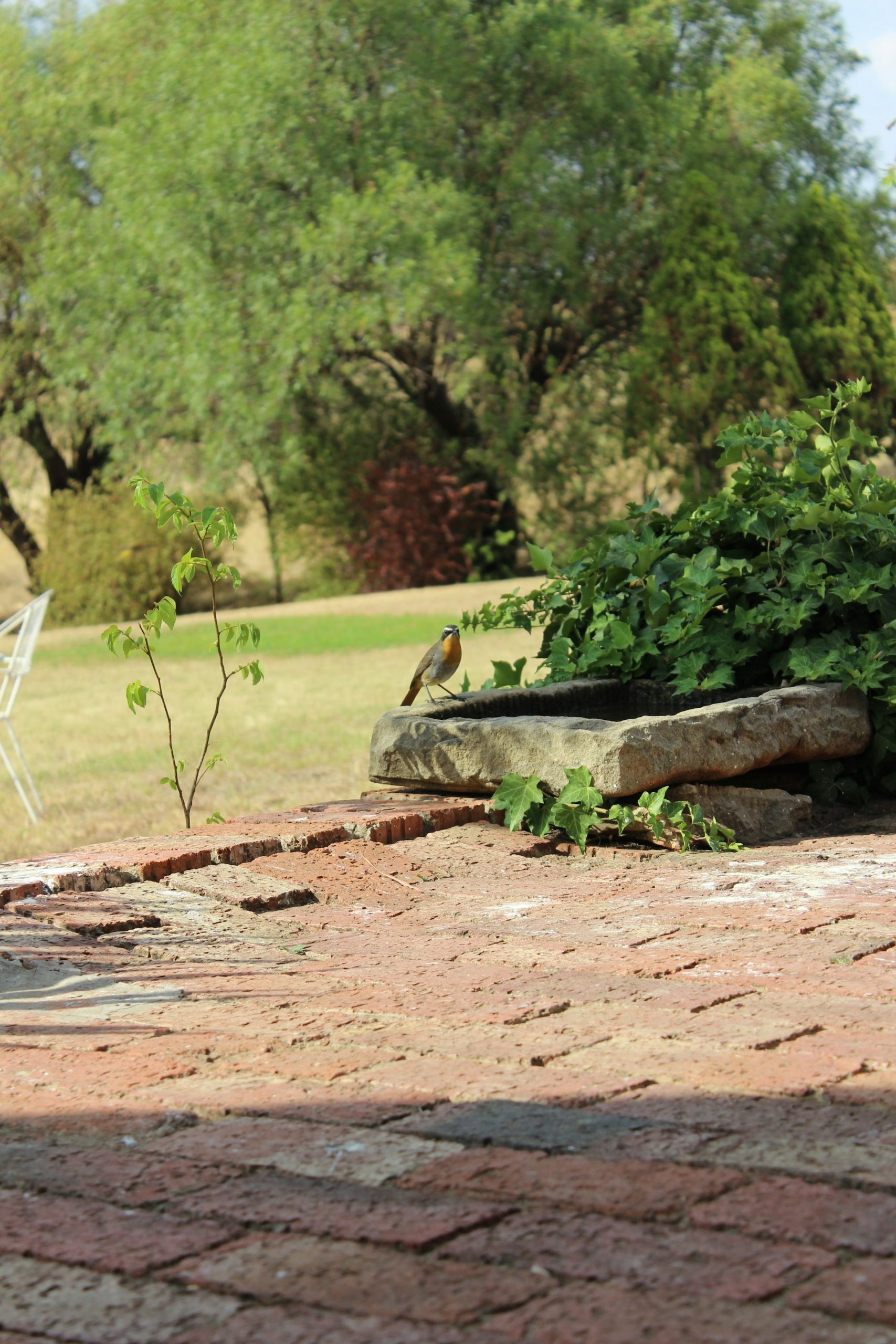
Photo: Unsplash
What do Cape robin-chats eat?
Cape robin-chats are primarily insectivores, making them welcome helpers in the garden.
Their diet includes:
- Beetles
- Ants
- Caterpillars
- Spiders
- Earthworms
- Grasshoppers
- Small snails
When insects are scarce, they’ll happily snack on berries and other small fruits, particularly those from indigenous plants.
One of their cleverest feeding habits is following people (or even larger animals) around the garden. Every spadeful of soil or lifted mulch layer could reveal a tasty insect, and the robin-chat is usually ready to take advantage.
Their beautiful song
One of the reasons gardeners become so fond of Cape robin-chats is their rich, melodic song. They’re among the first birds to start singing before sunrise, filling the early morning with a series of clear whistles, trills and varied notes. Males sing to defend territory and attract mates, but you’ll often hear them throughout the day too.
If you’ve ever wondered which bird is providing the soundtrack to a peaceful South African morning, this cheerful singer is often the answer.
Do Cape robin-chats nest in gardens?
Cape robin-chats frequently build nests in well-established gardens where there’s plenty of shelter.
Their nests are usually tucked away in:
- Dense shrubs
- Creepers
- Climbing plants
- Tree cavities
- Garden structures with hidden ledges
The nest itself is a neat cup made from twigs, roots, grass and leaves, lined with softer plant material.
To give them the best chance of nesting successfully, avoid heavy pruning during the breeding season if you notice birds repeatedly visiting the same shrub.
Fun facts about Cape robin-chats
- They often recognise familiar human routines and may appear as soon as you begin gardening.
- Their tail-flicking isn’t just for show. It helps communicate with other birds and may also flush insects from hiding.
- They usually forage alone or in pairs rather than in large flocks.
- Despite their friendly nature, they’re surprisingly territorial and will defend their favourite feeding spots.
ALSO SEE: Garden bird of the week: Pin-tailed Whydah
Feature image: Unsplash
