
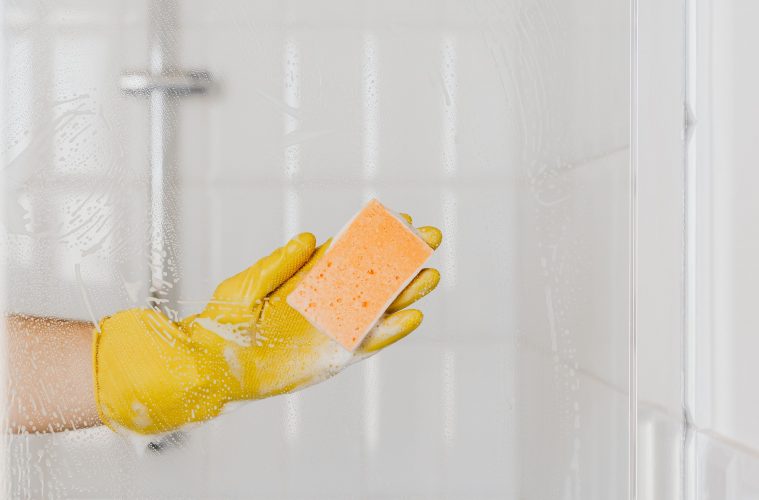
 Bianca Muller
If your shower doors always seem cloudy no matter how often you clean them, hard water is probably to blame. Those stubborn white marks, often called limescale, are left behind when mineral-rich water evaporates, leaving deposits of calcium and magnesium on glass surfaces.
You don’t need to replace your shower screen or spend hours scrubbing. With the right cleaning method and a few pantry staples, you can restore your glass to its crystal-clear shine.
What causes hard water stains?
Hard water contains naturally occurring minerals, mainly calcium and magnesium. As water droplets dry on glass, these minerals remain behind, gradually building into a cloudy film that’s difficult to remove with regular cleaners.
You’ll commonly notice hard water stains on:
- Shower doors
- Bathroom mirrors
- Glass splashbacks
- Windows exposed to sprinklers
- Glass balustrades
- Taps and bathroom fittings
The longer the stains are left, the more stubborn they become, so tackling them early will save you plenty of effort.
Start by checking how severe the stains are
Not all hard water stains require the same approach.
Light to moderate stains
If the glass looks slightly hazy, streaky or has a thin white film, you’re dealing with mild limescale. A homemade cleaner or a quality bathroom cleaner, paired with a non-scratch scrubbing sponge or firm brush, should do the trick.
Heavy limescale buildup
If the glass looks almost opaque and you can barely see through it, the mineral deposits have had plenty of time to build up. While natural remedies can still help, stronger limescale removers containing ingredients like citric or oxalic acid will usually produce faster results. Pair these with a tough sponge or ultra-fine (0000-grade) steel wool designed for glass.
Tip: If you’re using stronger commercial cleaners, avoid getting them on natural stone, painted surfaces, wood, leather, mirrors or delicate metals, as they may cause damage.
An easy DIY cleaner for hard water stains
One of the simplest homemade solutions uses ingredients you probably already have.
Mix together in a spray bottle:
- ½ bottle distilled water
- 2–3 drops of liquid dishwashing soap
- Fill the remainder with distilled white vinegar
The vinegar helps dissolve mineral deposits, while the dish soap lifts grease and everyday grime, making the stains easier to remove.
How to remove hard water stains from glass
For light to moderate stains
- Rinse the glass with hot water to loosen dirt and mineral deposits.
- Generously spray the vinegar solution or your preferred cleaner over the entire surface, working from top to bottom.
- Leave it to sit for around 10 minutes.
- Spray another light coat to keep the surface wet.
- Scrub using circular motions with a non-scratch sponge or firm brush.
- Rinse thoroughly with warm water.
- Repeat if necessary.
- Finish by using a squeegee and drying the glass with a microfibre cloth to prevent streaks.
For stubborn, heavy stains
- Wet the glass with hot water.
- Apply your cleaner generously and allow it to sit for 10–15 minutes.
- Reapply if needed to keep the surface wet.
- Scrub using circular motions with a tough sponge or ultra-fine steel wool while wearing gloves.
- Rinse thoroughly.
- Repeat if stubborn patches remain.
- Finish with a squeegee and buff dry using a clean microfibre cloth.
Natural remedies worth trying
If you’d rather skip harsh chemicals, these household ingredients can also help tackle stubborn mineral deposits.
White vinegar and bicarbonate of soda
Heat some distilled white vinegar until warm (not boiling) and spray it generously onto the glass. For particularly stubborn stains, cover the surface with paper towels soaked in vinegar and leave them in place for 10–20 minutes, keeping them damp throughout.
Mix equal parts bicarbonate of soda and water to form a thick paste. Using an old toothbrush or sponge, gently scrub in circular motions before rinsing with warm water. Finish by cleaning the glass with your regular bathroom cleaner and dry thoroughly.
Toothpaste
Non-gel white toothpaste contains gentle abrasives that can help polish away light mineral stains.
Spread a thin layer over the affected area and leave it for 10–15 minutes. Scrub with a damp sponge, rinse well and finish with your usual glass cleaner.
Lemon and salt
The natural acidity of lemon, combined with the mild abrasive texture of salt, can loosen light limescale.
Dip half a lemon into table salt and rub it over the glass using gentle circular motions. Rinse thoroughly before cleaning with your preferred bathroom cleaner.
Aluminium foil
It may sound surprising, but crumpled aluminium foil can help lift stubborn mineral deposits when used correctly.
Spray the glass generously with cleaner before gently scrubbing using a loosely crumpled ball of foil. Keep the surface well lubricated throughout the process to avoid scratching. Rinse thoroughly and buff dry.
How to prevent hard water stains
Once you’ve restored your glass, a few simple habits can keep it looking cleaner for longer.
- Use a squeegee after every shower.
- Wipe away excess water with a microfibre cloth.
- Spray a daily shower cleaner onto the glass after use.
- Clean your shower weekly instead of waiting for buildup.
- If you live in a hard water area, consider installing a water softener or filtration system.
A few extra seconds after each shower can save you hours of scrubbing later—and keep your bathroom glass sparkling all year round.
ALSO SEE: How to get rid of mould on your ceiling
Feature image: Pexels
