
 Bianca Muller
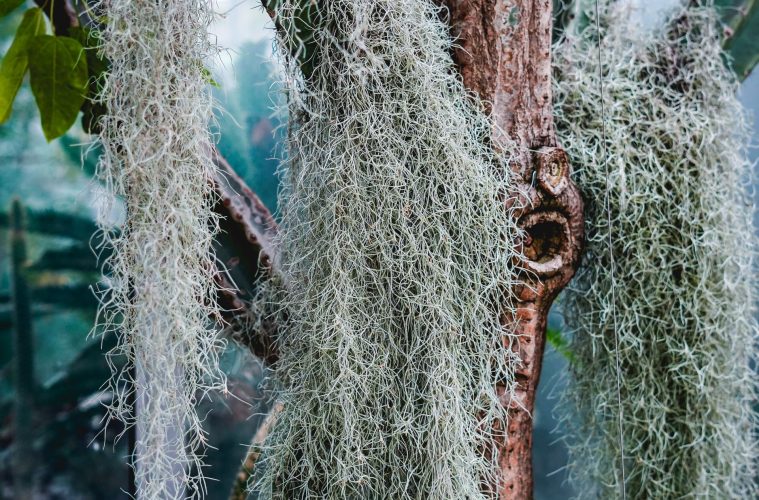
If there’s one plant that has earned a loyal following for both its quirky appearance and easy-going nature, it’s the air plant. These fascinating plants seem to defy the laws of nature by growing without a single handful of soil.
But despite their name, air plants don’t survive on air alone. Understanding how they naturally grow and what they need to thrive is the secret to keeping them healthy for years. Here’s everything you need to know about air plants, from the most popular types to simple care tips.
What are air plants?
Air plants belong to the Tillandsia genus, which is part of the bromeliad family. There are more than 650 species found naturally throughout Central and South America, Mexico and parts of the southern United States.
Unlike most houseplants, air plants are epiphytes, meaning they grow attached to trees, rocks or even telephone wires rather than in the ground. Their roots aren’t used for absorbing water or nutrients; they simply anchor the plant in place. Instead, the leaves do all the hard work.
How do air plants grow without soil?
One of the biggest questions people ask is how air plants survive without being planted. The answer lies in tiny specialised structures called trichomes that cover their leaves. These microscopic scales absorb moisture and nutrients directly from the air, rain, mist and organic debris that lands on the plant.
In their natural habitat, air plants rely on:
- Rainfall
- Morning dew
- Humidity
- Air circulation
- Nutrients carried by dust and decaying organic matter
Because of this unique adaptation, adding soil around their roots can actually cause them to rot.
Popular types of air plants
While there are hundreds of species, these are some of the easiest and most striking varieties for beginners.
Tillandsia ionantha
One of the most popular air plants thanks to its compact size and colourful display. Before flowering, its green leaves turn brilliant shades of red, orange or pink.
Best for: Small displays, terrariums and mounted arrangements.
Tillandsia xerographica
Often called the “queen of air plants”, this large species forms elegant silver-grey spirals and is prized for its sculptural appearance.
Best for: Statement decor pieces.
Tillandsia bulbosa
With twisting, tubular leaves, this unusual species almost resembles an octopus.
Best for: Hanging displays and driftwood arrangements.
Tillandsia caput-medusae
Named after the snake-haired Medusa from Greek mythology, this variety has long, curling leaves that fan out dramatically.
Best for: Coastal-inspired décor.
Tillandsia stricta
Soft green leaves and attractive purple flowers make this one a favourite for beginners.
Best for: Indoor collections.
Tillandsia aeranthos
This hardy species produces striking violet flowers with bright pink bracts and adapts well to indoor conditions.
Best for: First-time air plant owners.
How to care for air plants
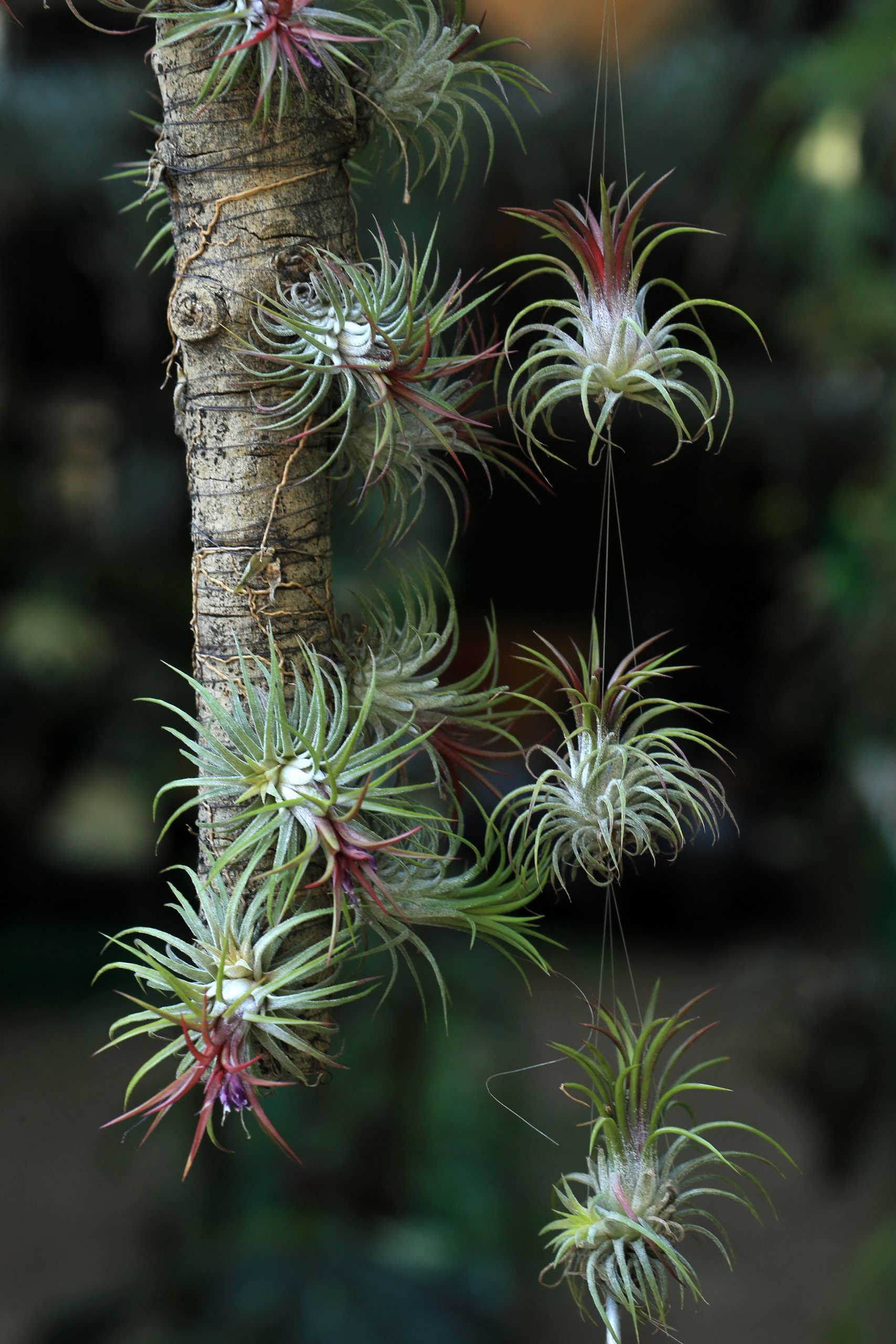
Photo: Pexels
Give them bright, indirect light
Most species enjoy plenty of filtered sunlight. A bright windowsill with morning sun works perfectly.
Avoid harsh afternoon sun, especially during South Africa’s hot summer months, as it can scorch the leaves.
Water properly
Air plants should never be watered like ordinary potted plants.
Instead:
- Soak them in room-temperature water for 20 to 30 minutes once a week.
- During hot, dry weather, soak twice weekly if needed.
- In humid coastal areas, watering may be less frequent.
- Misting can supplement watering but shouldn’t replace regular soaking.
After watering, gently shake off excess water and place the plant upside down on a towel for several hours. This prevents water from collecting in the centre, which can cause rot.
Good airflow is essential
Because air plants naturally grow exposed to moving air, they dislike enclosed, damp spaces.
Always display them somewhere with good ventilation.
Feed occasionally
Use a bromeliad or air plant fertiliser diluted to about a quarter of the recommended strength once a month during spring and summer.
This encourages healthy growth and flowering.
Avoid planting them in soil
It may be tempting to tuck an air plant into a decorative pot, but remember that its roots don’t need soil.
Instead, display them on:
- Driftwood
- Cork bark
- Decorative stones
- Shells
- Wire holders
- Hanging frames
- Ceramic dishes
Just make sure water can drain away easily after soaking.
Are air plants suitable for South African homes?
Absolutely. Air plants are especially well suited to South African homes because many regions experience warm temperatures for much of the year. In drier inland areas, they may simply need slightly more frequent watering, while coastal gardeners can often take advantage of naturally higher humidity.
Because they’re compact, soil-free and incredibly versatile, they’re ideal for apartments, offices, patios and even small indoor gardens.
ALSO SEE: Best indoor plants for low-humidity homes
Feature image: Pexels
