
 Bianca Muller
There’s something a little nerve-wracking about pruning roses. One minute you’re admiring a healthy bush, and the next you’re standing over it with a pair of secateurs, wondering if you’ve just gone too far.
Roses are far tougher than they look. In fact, they thrive on a good winter prune. Done at the right time and in the right way, pruning encourages stronger growth, better airflow and an even bigger display of flowers when spring arrives.
If you’ve been putting it off, now’s the time to grab your gloves. Here’s when to prune your roses across South Africa and how to do it like a pro.
Why winter pruning matters
During winter, roses enter a period of dormancy. While the plant appears to be resting above ground, it’s storing energy in its roots, ready for the growing season ahead. Pruning during this dormant period helps direct that stored energy into fresh, vigorous shoots instead of weak or overcrowded growth. It also removes dead or diseased wood, improves airflow through the plant and can reduce the risk of fungal diseases later in the season.
According to the experts at Ludwig’s Roses, winter pruning is one of the most important jobs on the rose-growing calendar, setting your plants up for healthier growth and better flowering in spring.
When should you prune roses in South Africa?
The ideal time depends on where you live, as different parts of the country experience winter differently.
Gauteng, Free State, North West, Highveld Mpumalanga and inland Limpopo
Mid to late July
These colder inland regions generally finish their hardest frosts by late July, making it the perfect time to prune.
Lowveld and coastal KwaZulu-Natal
Late June to early July
Because winters are milder, roses begin waking up earlier, so pruning can happen slightly sooner.
Western Cape
Late July to August
The Western Cape’s Mediterranean climate means roses often stay active for longer. If you’re in a colder inland area or somewhere prone to late cold snaps, waiting until August is usually the safer option.
Eastern Cape
Late July to August
Timing varies depending on whether you’re inland or along the coast. Cooler inland gardens should wait a little longer than coastal ones.
KwaZulu-Natal Midlands
August
These higher-altitude areas can experience late frosts, so delaying pruning helps protect new shoots from cold damage.

Photo: Unsplash
Before you start
A few good tools will make the job much easier:
- Sharp secateurs
- Loppers for thicker canes
- Thick gardening gloves
- Sealant (e.g. Efekto Steriseal) to seal branches
Sharp, clean tools make cleaner cuts that heal faster and reduce the chance of spreading disease around the garden.
How to prune your roses
Start by removing dead wood
Begin by cutting away anything that’s dead, damaged or diseased. Dead stems are usually brown or black and brittle, while healthy stems are green when scratched lightly with your fingernail. Removing unhealthy growth first makes it easier to see the shape of the plant.
Cut out crossing branches
If two stems are rubbing against one another, remove one of them. Branches that constantly rub together create wounds where pests and diseases can enter, so it’s always better to keep the framework open and uncluttered.
Open up the middle
One of the simplest ways to remember how a rose should look is to imagine a vase.
Aim for a plant with an open centre and several strong outward-growing stems. This allows sunlight and fresh air to reach the middle of the bush, helping reduce fungal problems later in the season.
Cut above an outward-facing bud
Each cut should be made about 5mm above a healthy outward-facing bud.
Angle the cut slightly away from the bud at roughly 45 degrees. This helps rainwater run off instead of collecting on the cut surface, while encouraging new growth away from the centre of the plant.
Reduce the height
Most bush roses can comfortably be cut back by around one-third to one-half of their height. Don’t be afraid to prune firmly. Although it may look drastic, healthy roses respond well to a proper winter cut-back and often reward you with stronger stems and larger flowers.
Older, woody stems that haven’t produced much growth can also be removed from the base to encourage fresh shoots from below.
Seal your pruning cuts
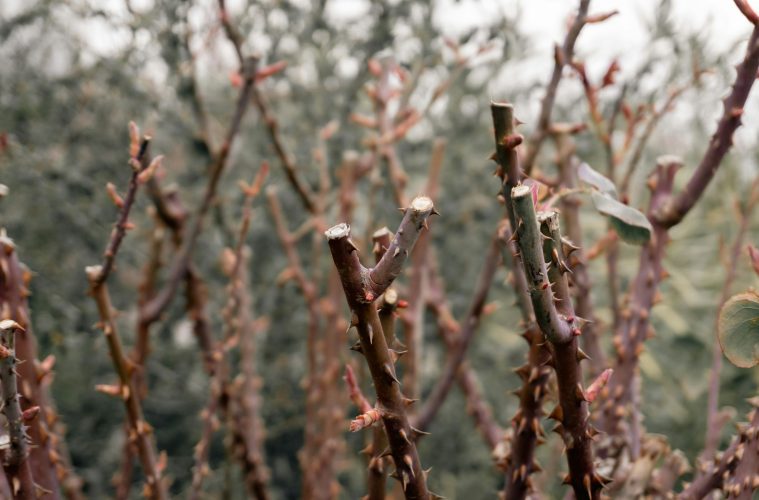
Once you’ve finished pruning, it’s worth taking a few extra minutes to seal your cuts, especially on thicker canes. Fresh pruning wounds can provide an entry point for pests and diseases, and in South Africa, they’re particularly vulnerable to the banded fruit weevil, whose larvae can bore into the stems and cause dieback.
Apply a specialised pruning sealer or wound dressing to larger cuts (generally those thicker than a pencil) as soon as you’ve finished pruning. A small paintbrush makes the job quick and easy. While not every gardener seals every cut, many South African rose growers recommend doing so as an added layer of protection during winter pruning. It’s a simple step that can help keep your roses healthy while they prepare to burst back into growth in spring.
What about climbing roses?
Climbing roses need a gentler approach. Rather than cutting the whole plant back, keep the main framework of healthy canes and remove only old, unproductive or damaged stems. Side shoots can then be shortened to encourage fresh flowering growth.
If possible, tie the main canes horizontally along a fence or trellis. This encourages more flowering shoots to develop along the length of each stem instead of only at the tips.
Don’t forget the leaves
Even after pruning, some old leaves may still cling to the plant. Remove these by hand, especially if they’ve been affected by black spot or other fungal diseases. Old foliage can harbour pests and fungal spores over winter, so clearing it away gives your roses a much cleaner start to spring. Be sure to collect all the prunings and fallen leaves from around the base of the plant too.
Common rose pruning mistakes
Even experienced gardeners get it wrong from time to time. Here are a few mistakes worth avoiding:
- Pruning too early in areas that still experience late frosts.
- Using blunt secateurs that crush stems instead of making clean cuts.
- Leaving dead or diseased branches on the plant.
- Cutting too close to a bud or leaving long stubs behind.
- Being too cautious. Roses are remarkably resilient and generally respond well to a confident prune.
Watch it in action
Still unsure where to make each cut? Watch our reel below for a simple step-by-step demonstration of how to prune your roses this winter.
Your roses might look a little bare once you’re finished, but don’t panic. A good winter prune is one of the best gifts you can give them. With a little patience, plenty of sunshine and the first signs of spring, those seemingly harsh cuts will soon give way to healthy new shoots and a spectacular flush of blooms.
ALSO SEE: How to grow a thriving bougainvillea
Feature image: Unsplash
