
 Bianca Muller
There’s a good chance you’ve spotted a Fiscal Shrike perched on a fence post, telephone wire or the highest branch in your garden, quietly scanning the ground below. With its striking black-and-white plumage and bold personality, the Fiscal Shrike (commonly known as the Janfiskaal or Southern Fiscal) is one of South Africa’s most familiar garden birds – and one of the most fascinating.
Despite its modest size, this little bird has earned a reputation as a fearless predator, often taking on prey much larger than you might expect. It’s intelligent, adaptable and plays an important role in keeping garden pests under control, making it a welcome visitor for many gardeners.
How to identify a Fiscal Shrike
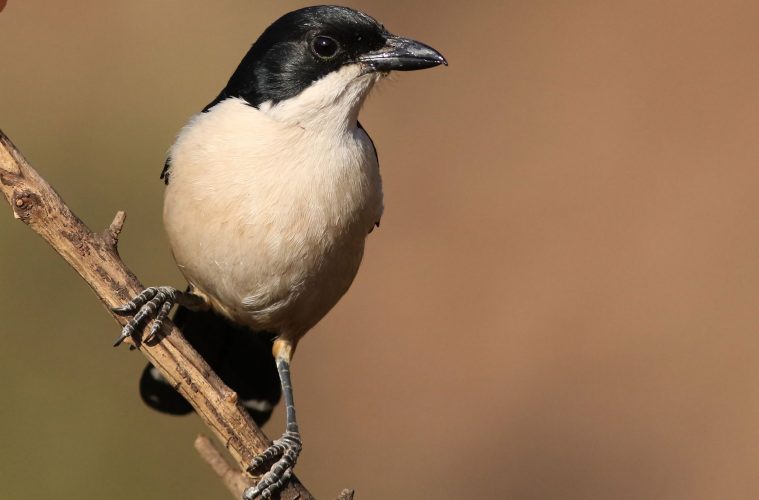
The Fiscal Shrike is easy to recognise once you know what to look for. It has a crisp black-and-white colour pattern, with black upperparts, a black head and face, and bright white underparts. A distinctive white “V” across its back is often visible when it’s perched, while its long black tail is edged with white.
Adults measure around 21 to 23cm long, making them one of the larger shrikes found in South Africa. Males and females look almost identical, although females can sometimes appear slightly browner.
Unlike many birds that constantly flit through shrubs, Fiscal Shrikes prefer to sit out in the open where they have a clear view of their surroundings. From these lookout points, they launch swift attacks on unsuspecting prey.
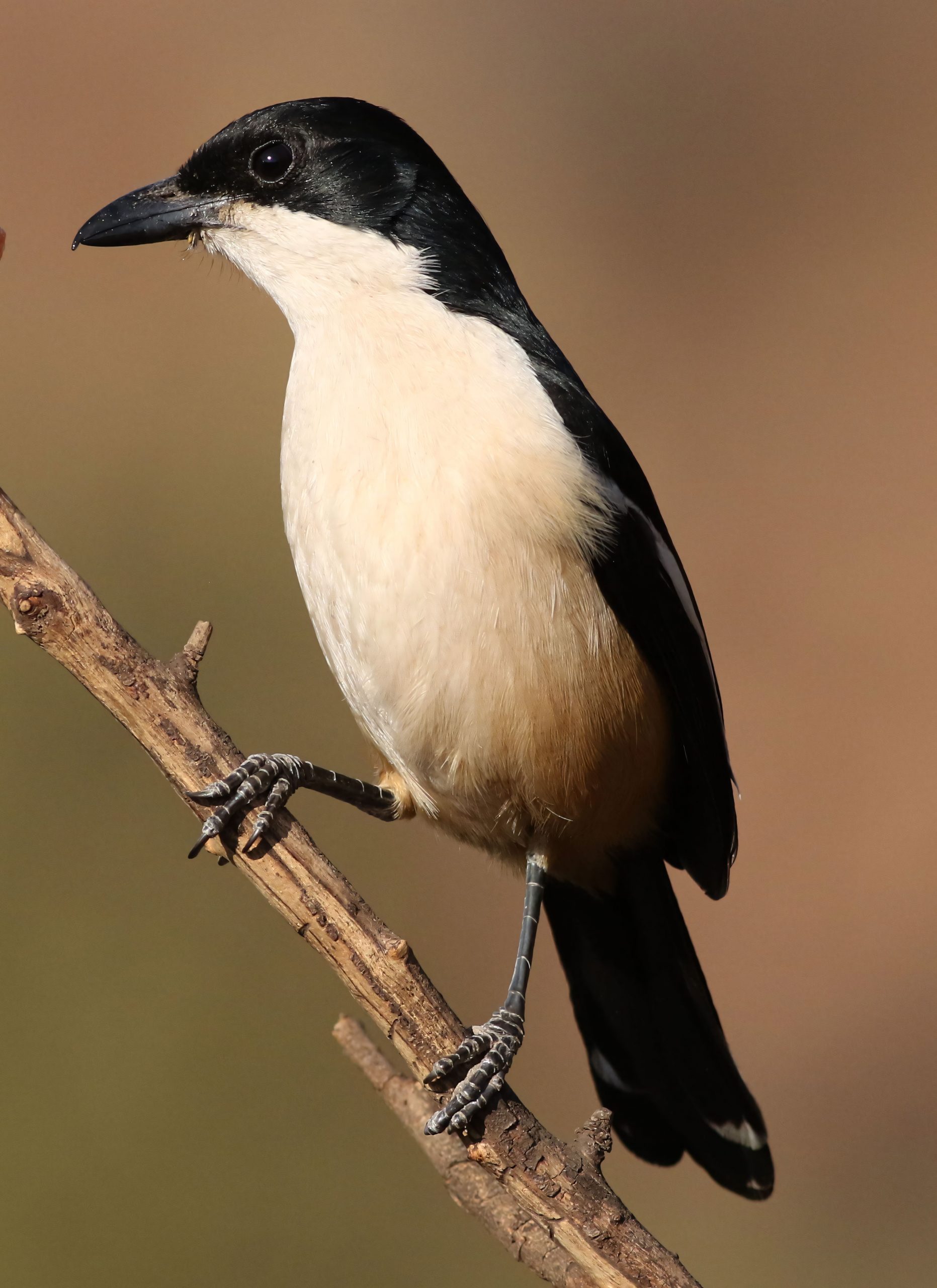
Photo: Pexels
Also known as “butcher birds”
Shrikes around the world are often nicknamed “butcher birds”, and the Fiscal Shrike is no exception. Unlike birds of prey, shrikes don’t have powerful talons to hold onto their catch while feeding. Instead, they’ve developed an ingenious solution: they impale prey on sharp thorns, barbed wire or pointed twigs.
This behaviour allows them to tear food into manageable pieces and sometimes even store meals for later. While it may sound dramatic, it’s simply one of nature’s clever adaptations and is one of the defining characteristics of the shrike family.
What does a Fiscal Shrike eat?
Fiscal Shrikes are carnivorous and have an impressively varied diet.
They commonly feed on:
- Beetles
- Grasshoppers
- Crickets
- Caterpillars
- Spiders
- Lizards
- Small rodents
- Frogs
- Small snakes
- Other small birds and nestlings on occasion
Most of their hunting starts with patient observation. They’ll remain perfectly still before swooping down to grab prey on the ground or in low vegetation.
For gardeners, this appetite for insects can be particularly beneficial, especially when it comes to grasshoppers, caterpillars and other plant-damaging pests.
ALSO SEE: Cape White-Eyes in your garden: friend or foe?
Feature image: Pexels
