
 Jade Mcgee
There is an important distinction between a vegetable that is difficult to grow and one that is simply planted at the wrong time or in the wrong conditions. Many of the crops in this list fall squarely into the second category: they perform well in SA gardens when conditions are right, but badly when those conditions are wrong by even a small margin. Timing and climate matching account for most home garden vegetable failures, which means that the first question to ask when a crop underperforms is not what you are doing wrong, but whether you are growing it in the right season at all.
That said, some crops are genuinely technically demanding regardless of timing: they have precise temperature requirements, they are prone to pest problems, they need specific soil conditions or they have structural needs that most home gardens cannot easily satisfy. These are the ones to approach with realistic expectations and specific knowledge.
Arugula (rocket)
Arugula is not a difficult vegetable. It is a cool-season crop that bolts immediately in heat, which makes it difficult for any SA gardener who tries to grow it in summer. In the cool months, from March through September across most of SA, it germinates quickly and grows without significant challenge. The flavour of summer-stressed, bolted arugula is unpleasantly intense; the flavour of cool-grown arugula is mild and pleasant. Sow it in autumn and again in late winter, and it requires almost no attention between sowing and harvest.
Broccoli
Broccoli needs a long cool growing period to form a good head: two to three months of temperatures below 25 degrees Celsius during the heading stage. In Gauteng, this means sowing in February or March for a May to June harvest. Sowing later produces plants that are trying to form heads as temperatures rise in spring, and the heads either button up into tiny, useless clumps or bolt directly to flower. In the Western Cape, the longer cool season provides more flexibility. Start from seed in trays in late summer or early autumn, and do not transplant until the seedlings are 10 to 15 centimetres tall and well-established.
Cabbage
Cabbage bolts under heat stress, producing a loose, leafy plant that flowers rather than forming the compact head you want. The solution is the same as for broccoli: grow it through the coolest part of the year and do not attempt a summer planting. Cabbage is also more heavily targeted by caterpillars than most vegetables; checking the undersides of leaves daily and removing eggs and early instar caterpillars by hand is the most effective management approach, since chemical control of caterpillar pressure on a brassica in full growth is challenging to time well.
Carrot
Carrots have one specific difficulty that defeats many home gardeners: the seed requires consistently moist conditions at the soil surface for the two to three weeks of germination, during which time the seed is very small and the seedling very vulnerable. A single missed watering during germination can kill an entire sowing. The practical solution is to sow into a well-prepared, finely raked seedbed, water thoroughly, lay a single layer of damp hessian or cardboard over the surface to maintain consistent surface moisture, check daily and remove the cover as soon as the first seedlings emerge. Sow in winter to spring for the best results in most regions.
Cauliflower
More demanding than broccoli in its temperature precision and its need for consistent moisture, cauliflower forms heads only when temperatures are reliably cool and does not forgive irregular watering. The developing curd needs to be protected from sunlight once it reaches golf-ball size, which is done by bending a leaf over the curd and securing it lightly: exposure to direct sun causes discolouration. Early-maturing varieties, which are ready in 70 to 80 days rather than the 90 to 120 of standard types, significantly reduce the window during which things can go wrong.
Celery
Celery is among the technically demanding vegetables for home gardeners. It needs a long, cool growing season, consistent moisture and very high nutrient availability, conditions that are difficult to maintain simultaneously in most home gardens. It also requires blanching, the process of shading the stalks to reduce bitterness and produce the pale green colour that makes it useful in cooking. Start from seed in pots in early autumn, transplant into a rich, moisture-retentive bed, and keep the soil consistently moist throughout the growing season. Expect inconsistency until you have grown it through several seasons.
Corn
Corn is a summer crop in SA, requiring warm temperatures, full sun and a growing season of at least 90 to 120 days of sustained warmth. The genuine difficulty with home-garden corn is pollination: corn is wind-pollinated, and a single plant or a long thin row does not pollinate efficiently. Plant in blocks of at least 12 plants, arranged in multiple short rows rather than one long row, to maximise the chance that windblown pollen reaches the silks of adjacent ears. Individual plants that are not well-pollinated produce ears with missing or poorly filled kernels regardless of how well everything else has gone.
Cucumber
Cucumbers are a warm-season crop that suffer in cool conditions and struggle with inconsistent moisture: too dry, the fruits become bitter and the plant sheds its flowers; too wet, the roots rot and fungal disease establishes. They also need consistent pest management, since cucurbit plants are heavily targeted by aphids, cucumber beetles and mildew in warm conditions. Train them vertically on a trellis rather than allowing them to sprawl, which improves air circulation and reduces fungal pressure, and water at the base rather than overhead to keep foliage dry.
Melons
Melons need the same conditions as cucumbers but with even longer warm-season requirements: a consistently hot growing period of 80 to 100 days, excellent drainage, and the structural support of a strong trellis for the heavy fruits as they develop. Their biggest challenge in SA is the period between the formation of the fruit and its ripening: any temperature drop during this period slows ripening significantly, and cold snaps in early autumn can damage or destroy fruits that are only weeks from harvest. Grow in a warm, sheltered position and plan your planting date to ensure fruits can ripen fully before the first cool nights arrive.
Spinach
Spinach bolts in heat, producing flowers and seeds rather than the leaves you want, which makes it a cool-season crop in SA. It performs best sown in autumn for a winter harvest, or in late winter for a spring harvest before temperatures rise again. In partial shade during the warmer edge of its preferred season, spinach stays productive for longer than in full sun. Sow in succession, every three to four weeks, to maintain continuous supply rather than relying on a single sowing that will run out or bolt within a few weeks.
Watermelon
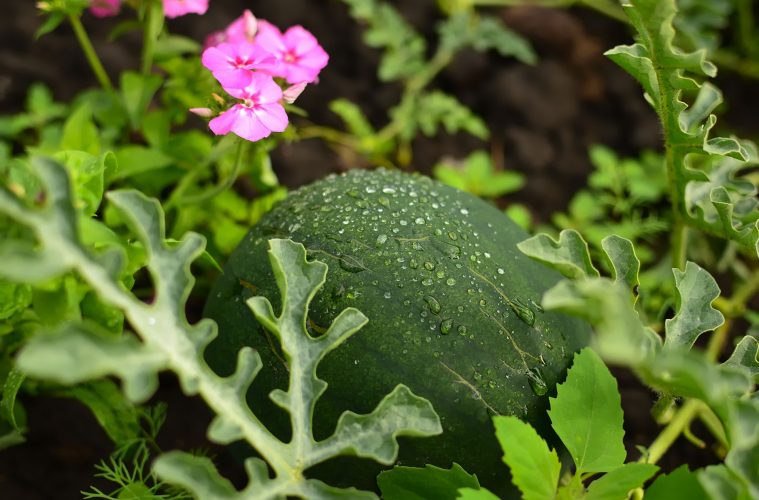
Watermelon requires a very long hot season, needing 75 to 90 days of sustained warmth to reach maturity, and a significant amount of space: a single vine can spread two to three metres in each direction. It also dislikes transplanting, which means direct sowing is preferred over starting in pots. Sow in late spring, once soil temperatures have risen above 20 degrees Celsius, directly into a prepared mound or raised bed with excellent drainage. For gardens where space is genuinely limited, compact varieties that produce smaller fruits on shorter vines are a more practical choice than full-size types.
ALSO SEE:
Featured Image: Pexels
