
 Bianca Muller
If you’ve ever spotted a delicate green insect fluttering around your garden lights at night, chances are you’ve already met one of the hardest-working little heroes in the plant world: the lacewing.
Often overlooked because of their fragile appearance, lacewings are actually powerful natural pest controllers that can help keep your plants healthy without the need for harsh chemicals. And while the adults are beautiful in their own right, it’s their larvae (sometimes called “aphid lions”) that truly steal the show.
From their appetite for common garden pests to their surprisingly clever camouflage techniques, here’s why lacewings deserve a place in every South African garden.
What do lacewings look like?
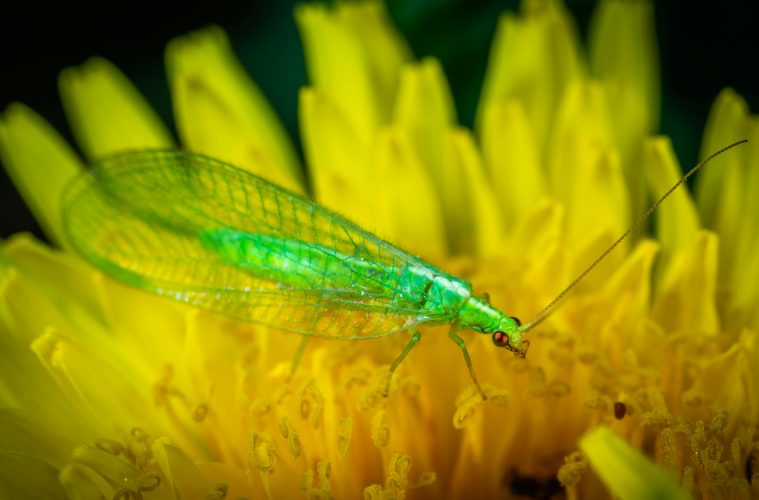
Adult lacewings are small, soft-bodied insects with large transparent wings that resemble delicate lace, hence the name. Most species found in gardens are pale green, although some can appear brown depending on the species and season.
They have:
- Long, slender bodies
- Large golden or copper-coloured eyes
- Two pairs of intricate transparent wings
- Fine antennae
- A gentle, fluttery flight pattern
Because they’re nocturnal, you’ll often notice them around outdoor lights on warm evenings.
Their eggs are equally fascinating. Female lacewings lay tiny white eggs on the tips of thin silk-like stalks attached to leaves. This unusual method helps protect the eggs from predators (and even from hungry siblings once the larvae hatch).
Why lacewings are beneficial to plants
Lacewings are considered one of the most beneficial insects you can have in your garden because they naturally control destructive pests that damage plants. The real pest-fighting power comes from the larvae. Once hatched, these tiny predators begin hunting almost immediately, feeding on soft-bodied insects that gardeners constantly battle with.
Lacewing larvae commonly feed on:
- Aphids
- Spider mites
- Whiteflies
- Mealybugs
- Thrips
- Caterpillar eggs
- Scale insects
A single lacewing larva can eat hundreds of aphids during its lifetime, making them an excellent natural alternative to chemical pesticides. This is especially helpful in South Africa during warmer months when aphid populations tend to explode in vegetable gardens, rose beds and indoor plants.
Because lacewings help maintain the balance of pests naturally, they’re often encouraged in organic and eco-friendly gardening practices.
The fascinating “aphid lion” stage
Lacewing larvae look completely different from the delicate adults. Instead of soft green wings, the larvae are small, elongated creatures with spiny bodies and curved jaws designed for hunting. They resemble tiny alligators, which is why many gardeners are surprised to learn they eventually transform into graceful flying insects.
Their jaws inject digestive enzymes into prey before sucking out the contents, making them extremely efficient predators despite their tiny size. It sounds dramatic, but for your plants, it’s excellent news.
View this post on Instagram
Their clever camouflage
One of the most fascinating things about lacewing larvae is their ability to camouflage themselves. Some species are known as “trash-carrying lacewings” because the larvae collect debris and pile it onto their backs to disguise themselves from predators.
This camouflage can include:
- Dead aphids
- Plant debris
- Dust
- Lichen
- Bits of leaves
- Insect remains
Using specialised bristles on their backs, the larvae essentially create tiny moving disguises that help them blend into their surroundings while they hunt. Not only does this protect them from predators like birds and ants, but it also allows them to sneak up on unsuspecting prey more easily.
View this post on Instagram
How to attract lacewings to your garden
If you want more lacewings in your garden, the key is creating an environment where beneficial insects feel safe and welcome. Here are a few simple ways to attract them:
Plant insect-friendly flowers
Lacewings are attracted to pollen and nectar-producing plants, especially:
- Dill
- Fennel
- Cosmos
- Coriander
- Alyssum
- Marigolds
- Yarrow
These flowers also attract other beneficial pollinators and predatory insects.
Avoid harsh pesticides
Chemical sprays often kill beneficial insects along with pests. Reducing pesticide use gives lacewings a chance to thrive naturally.
Leave parts of the garden slightly wild
A perfectly manicured garden may look neat, but biodiversity-friendly spaces encourage beneficial insects to settle in.
Add outdoor lighting carefully
Adult lacewings are attracted to lights at night, which is often how people first notice them.
ALSO SEE: Waterlogged soil after heavy rain? Here’s what to do
Feature image: Pexels
