
 Jade Mcgee
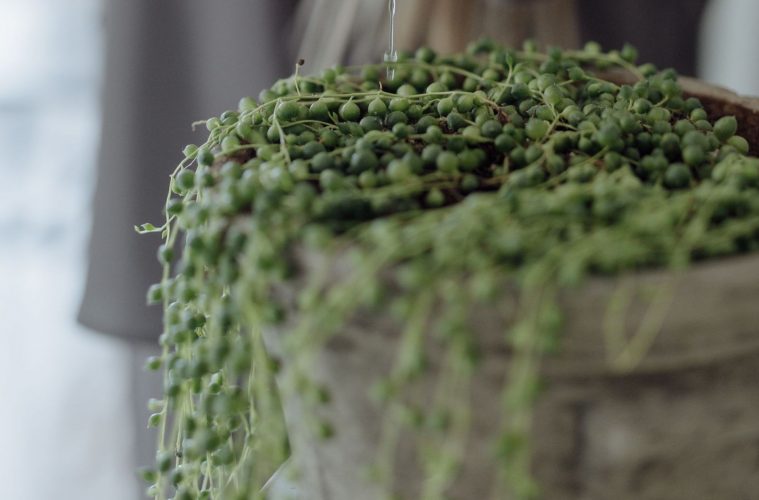
String of pearls is one of those plants that looks too unusual to be real: long, trailing stems covered in small spherical leaves that resemble a beaded necklace cascading from a hanging basket or high shelf. Native to the semi-arid regions of East Africa, it is naturally a terrestrial plant that forms ground cover in its habitat, but it has become one of the most popular hanging succulents grown indoors globally, and with good reason. In appropriate conditions, it grows vigorously, produces fragrant flowers in spring, and propagates easily enough to share with everyone you know.
Its botanical name is Curio rowleyanus, formerly classified as Senecio rowleyanus. Both names appear in garden centres. Note that this plant is toxic to people and pets if ingested.
Light
String of pearls thrives on a combination of direct and indirect sunlight totalling between six and eight hours daily. The ideal placement is where it receives direct morning sun, which is gentler, and indirect or partial shade during the hotter afternoon hours. In South African homes, an east-facing windowsill or a position that catches morning sun before the direct afternoon light arrives suits it well. Insufficient light produces pale, stretched or widely-spaced pearls and weak trailing growth.
Watering
Overwatering is the most common way to kill a string of pearls. In the growing season from spring through summer, water when the top centimetre of soil feels dry, typically every seven to fourteen days depending on conditions. In winter, reduce watering significantly, watering only when the leaves begin to flatten slightly or lose their spherical firmness.
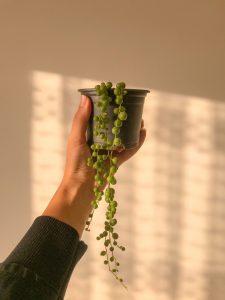
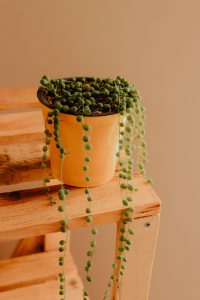
When you do water, water thoroughly and allow all excess to drain completely. This plant is highly susceptible to root rot and must never sit in water. Terracotta or unglazed ceramic pots are ideal because they allow moisture to evaporate through the walls, keeping the root zone appropriately dry between waterings.

Temperature and humidity
String of pearls prefers warm conditions, above 21 degrees Celsius, through spring, summer and autumn, and cooler conditions between 10 and 15 degrees Celsius in winter. It does not tolerate frost: in cold regions, bring it indoors during winter months. It actively dislikes high humidity, so avoid placing it in bathrooms, kitchens or any consistently humid area of the home. In the dry highveld winter, it is well suited to most indoor conditions.
Soil and potting
A well-draining succulent or cactus potting mix is the appropriate growing medium. A three-to-one ratio of standard potting soil to coarse sand provides the quick drainage this plant requires. Avoid heavy or water-retentive soils. Repot annually in early spring into a container one or two sizes larger, always with drainage holes. Terracotta is preferred over plastic or glazed ceramic for the moisture-wicking effect.
Feeding
During the growing season, feed every two weeks with a balanced liquid fertiliser diluted to approximately half the recommended strength. During dormancy in winter, reduce feeding to once every six weeks. Do not feed a plant that is very dry, recently repotted or showing signs of stress.
Propagation
String of pearls propagates easily and is best done in spring, summer or early autumn. Take several cuttings of four to five centimetres, cutting just below a leaf node. Remove the last two leaves and allow the cut ends to dry and callus for one to two days before planting. Insert the cut ends into slightly moist succulent soil, at least a centimetre deep. Place in a bright spot without direct sun and water only when the soil has completely dried. Roots typically develop within three to four weeks.
Getting it to bloom
String of pearls produces small, daisy-like white flowers with a sweet, cinnamon-like scent in summer, though it rarely blooms indoors without the right conditions. To encourage flowering, allow the plant a cool and relatively dry dormant period in winter, then increase feeding and light as spring arrives. A bright windowsill with some direct morning sun is the best indoor position for a plant you want to bring into bloom.
Common problems
Shrivelling, flat or wilting pearls usually indicate either underwatering or overwatering. Check the soil: if dry, water thoroughly; if soggy, allow to dry out completely and address drainage. Yellowing or grey-toned pearls often signal insect activity, particularly aphids, spider mites or mealybugs. Regular inspection and treatment with neem oil solution at the first sign of pests keeps populations manageable. Mushy stems indicate overwatering and possible root rot: remove healthy cuttings, allow to callus and propagate in fresh clean soil.
ALSO SEE:
Featured Image: Pexels
