
 Bianca Muller
With its smart black-and-white plumage, quiet nature and impressive insect-catching skills, the Fiscal Flycatcher is a lovely bird to spot in a South African garden. Look out for it perched on a fence post, tree branch or telephone wire, keeping a watchful eye on the ground below.
What does a Fiscal Flycatcher look like?
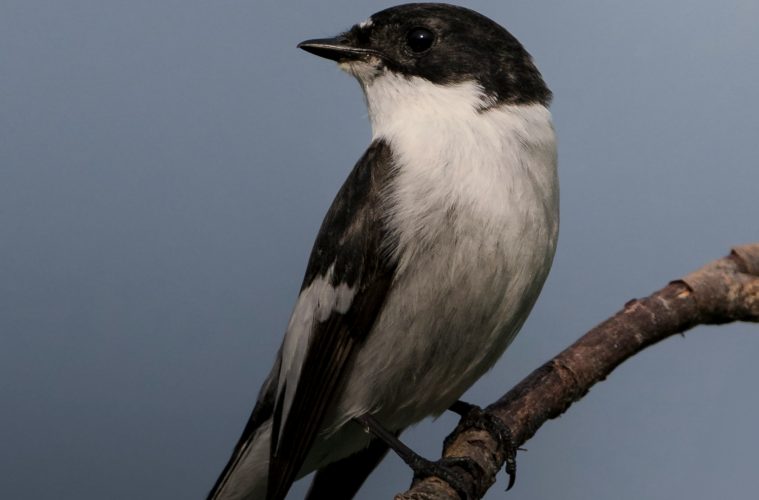
The Fiscal Flycatcher (Sigelus silens) is a small to medium-sized bird, measuring around 17–20cm long. Males are particularly striking, with glossy black upperparts, white underparts and a distinctive narrow white stripe across the wings.
Females look similar but have greyish-brown upperparts and softer, off-white underparts. Juveniles are duller still, with mottled brown feathers.
It is often confused with the Southern Fiscal, another familiar black-and-white garden bird. However, the Fiscal Flycatcher has a slimmer, straighter bill and a narrower white wing marking. It is also slightly smaller.
What sound does it make?
Despite its name, the Fiscal Flycatcher is generally a quiet bird. Its scientific name, silens, comes from the Latin word for silence, a fitting description of its understated nature.
Males make soft, high-pitched calls that sound something like ‘tswee’ and ‘sooo’. They are often heard from an exposed perch, where the bird can keep an eye on its surroundings.
An interesting ability is that males sometimes imitate the calls of other bird species. One recorded bird even copied the calls of a Cape Robin-Chat so convincingly that it prompted a territorial response from the real thing!
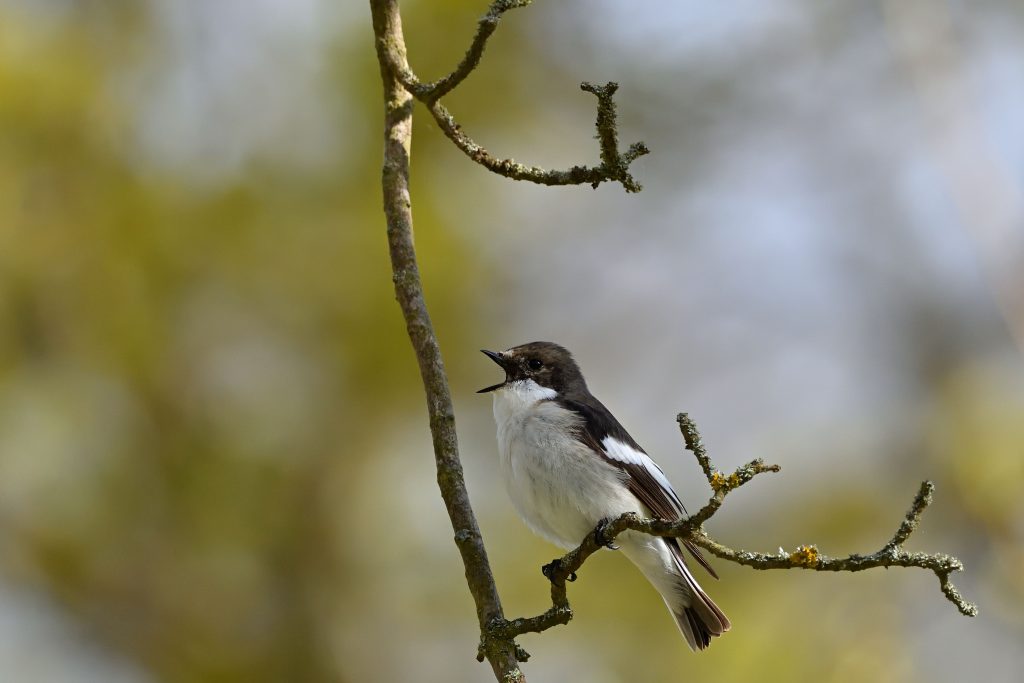
Photo: Pexels
Where does it nest?
Fiscal Flycatchers usually form monogamous pairs during the breeding season. The female builds the nest herself, making a sturdy, open cup from grass stalks, plant material and other natural fibres.
Nests are generally tucked away in dense shrubs or bushes, often close to more open areas where the birds can hunt for food. They line the inside with softer materials such as feathers, wool, rootlets and even animal hair.
The female typically lays two to four eggs, with breeding taking place between July and February. October to December is the peak egg-laying period.
What does it eat?
These birds are mainly insectivorous, helping keep garden insect populations in check. Their diet includes flies, ants, termites, grasshoppers, moths, beetles and other small invertebrates.
Their hunting technique is easy to recognise. They sit patiently on a high perch, watching for movement before swooping down to catch an insect on the ground or darting into the air to catch one in flight.
They also eat fruit and have been recorded drinking nectar from flowering mountain aloes. In suburban gardens, they have even been spotted eating dog food!
Where can you find them in South Africa?
The Fiscal Flycatcher is endemic to southern Africa and occurs across much of South Africa, as well as Lesotho, Eswatini, southern Botswana and southern Mozambique.
It favours open habitats with scattered trees and shrubs, including grasslands, savannas, fynbos, woodland edges and Karoo scrub. It is also a familiar visitor to gardens, parks and farmyards.
In parts of the Western Cape and southern Karoo, it can be found in suburban gardens throughout the year. In other areas, it is more likely to visit gardens during winter.
Don’t confuse it with the Fiscal Shrike
Despite the similar names and black-and-white colouring, the Fiscal Flycatcher is not the same bird as the Fiscal Shrike (Common Fiscal). The Fiscal Shrike is larger, has a noticeably hooked bill and is known for impaling its prey on thorns or barbed wire. The Fiscal Flycatcher has a slimmer, straighter bill and catches insects by swooping down from a perch or snatching them out of the air.
A few more interesting facts
- A helpful garden visitor: By feeding on insects such as termites, ants and moths, Fiscal Flycatchers help regulate insect populations.
- A little seasonal movement: Although many populations are resident, some birds move to lower-lying and coastal areas during winter.
- Not always alone: During winter, they sometimes gather in small groups around food sources, particularly fruit trees. Groups of up to 10 birds have been recorded.
- A surprisingly long-lived bird: The oldest recorded Fiscal Flycatcher lived to nine years and nine months.
- A clever lookalike: Its resemblance to the Southern Fiscal may offer some protection, as other birds sometimes mistake it for the more aggressive shrike.
ALSO SEE: Garden bird of the week: Speckled mousebird
Feature image: Unsplash
