
 Jade Mcgee
The assumption that fruit trees require a large garden has sent many would-be growers back indoors. But once you understand how container growing actually works, that assumption starts to crack. A patio, a courtyard or even a generously sized balcony can support a small but genuinely productive orchard, one that produces real fruit with the right approach.
Understand your space first
Before selecting a single tree, spend time observing how your space works. Most fruit trees require at least six hours of direct sunlight daily. In the Southern Hemisphere, north-facing walls and spaces receive the most consistent sun, making them the best positions for fruit trees in containers.
Wind is worth factoring in too, particularly on higher-level balconies or exposed rooftops. Consistent wind dries out containers quickly and can damage branches. Positioning containers against a wall or solid structure reduces exposure. For balconies, weight capacity is worth checking before loading up multiple large pots.
Choose the right varieties
Dwarf fruit trees are the foundation of any container orchard. These are standard fruit varieties grafted onto rootstocks that control size while keeping the fruit full-sized. In South Africa, a range of dwarf citrus, fig, apple and pear varieties are available from specialist nurseries.
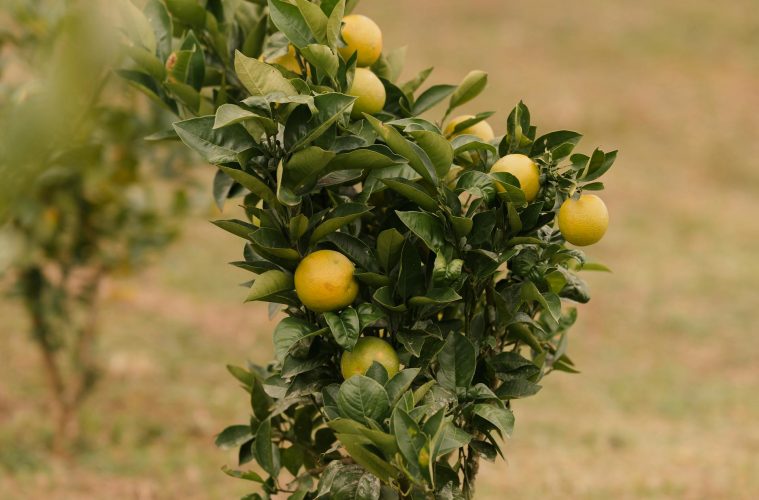
The most critical question before buying is whether your chosen tree is self-fertile. Self-fertile varieties produce fruit without a pollination partner nearby. Meyer lemons are reliable container performers and can fruit for a decade or more with proper care. Figs do surprisingly well in pots and can actually produce better fruit with restricted root systems. Dwarf apples and pears are possible but require more attention to rootstock selection for the South African climate.
Selecting containers
For fruit trees, size matters. A container that is too small will stress the tree through inconsistent moisture and restricted roots. For most dwarf fruit trees, a container of at least 50 to 60 litres is a good starting point, moving up to 100 litres as the tree matures.
Ceramic and terracotta pots are attractive and stable in wind, but they are heavier and more porous, meaning the soil dries out faster and watering is more frequent. Large food-grade plastic containers offer good moisture retention and are easier to move. Whatever the material, drainage holes are non-negotiable. A fruit tree in waterlogged soil will develop root rot quickly.
Getting the soil mix right
Standard potting soil is not ideal for container fruit trees. A mix of quality potting soil, perlite and coco coir in roughly equal portions provides the drainage and structure that fruit trees need. The perlite prevents waterlogging and keeps oxygen reaching the roots. Coco coir adds long-term structure to the mix and prevents it from compacting over time.
For citrus and blueberries, which prefer more acidic conditions, a citrus-specific potting medium is worth using. Refresh the top few centimetres of mix each year and repot the tree into a larger container every two to three years as the roots require more space.
Caring for your container orchard
Container fruit trees need more frequent attention than in-ground trees because their roots cannot forage for water and nutrients. In summer, large pots may need watering every day or two. Checking the top few centimetres of soil with your finger remains the most reliable guide.
Feeding is essential from spring through to late summer. A balanced slow-release fertiliser applied in spring, supplemented with a liquid feed every two to four weeks during the growing season, keeps the tree productive. Citrus trees are heavy feeders and benefit from a formula that includes micronutrients.
Annual pruning in late winter, while the tree is dormant, removes dead wood and crossing branches and keeps the tree to a manageable size. A light trim in summer can also help control growth.
The reward
A container orchard is not going to rival a full-scale farm in output, but the satisfaction of picking a fig or slicing a lemon that grew on your own balcony is entirely real. With the right varieties, adequate containers and consistent care, a container orchard is a genuine and achievable goal.
ALSO SEE:
Featured Image: Pexels
