
 Jade Mcgee
The most natural way to refresh a home is to look at what the garden is doing and follow its lead. In autumn, that means a shift from the sharp brightness of summer towards something softer: the warm russets and golds of turning leaves, the last flush of dahlias and salvias, the silvery seed heads that catch the lower-angle light. These are not just things to observe from a window. They are a palette and a source of material that can move directly from the garden into the home.
Bringing the garden indoors does not require a decorating overhaul. It requires attention to what is available, and a few deliberate choices about how to use it.
Cut what the garden is offering right now
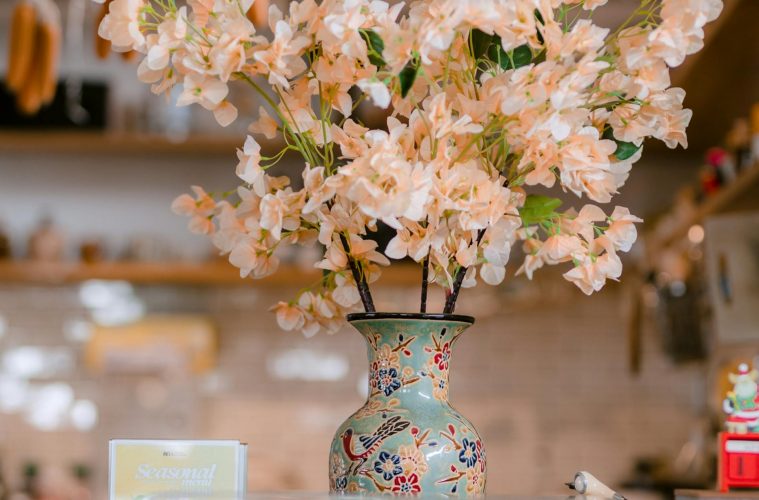
Autumn in South Africa does not mean an empty garden. Dahlias, salvias, cosmos and many ornamental grasses are still performing strongly in March and April, and the quality of the light at this time of year, lower and more golden than summer, makes even simple arrangements look considered. A loose handful of whatever is flowering, placed in a simple vessel where it catches the morning light, changes the atmosphere of a room more immediately than almost any purchased item.
Foliage and seed heads work just as well as flowers. Branches with interesting form, dried seed heads, grasses and even the fading flower heads of agapanthus or aloes add organic texture and a direct connection to what is happening in the garden outside. These arrangements do not need to be formal or fussy. The looser and more natural they are, the better they tend to look in a home environment.
Let the seasonal palette guide your colour choices
Autumn’s garden palette, warm terracottas, deep ochres, burnished golds, olive greens and the deep plummy tones of turning foliage, translates directly into interior colour. You do not need to repaint or reupholster to bring this palette in. A throw in a deep rust tone, cushions in warm olive or mustard, a ceramic vase in an earthy terracotta: small, targeted additions shift the mood of a room in the direction of the season without requiring significant investment or commitment.
The most effective approach is to introduce one or two colours from the autumn palette rather than trying to replicate the whole thing. A single deep-toned accent against a neutral backdrop, a terracotta pot on a pale shelf, a dark olive cushion on a light sofa, registers clearly and feels intentional. Layering too many warm autumnal tones at once tends to produce a heavy, cluttered effect that is harder to live with than it is to look at in a photograph.
Use texture to carry warmth
As the evenings cool, the tactile quality of a room matters more. Swapping lightweight summer textiles for slightly more substantial alternatives, a cotton-knit throw in place of a linen one, a heavier cushion cover, a wool-blend rug over a flatweave, adds warmth to a space without changing its colour scheme or requiring new furniture. The visual weight of these textural additions also shifts subtly with the season in a way that feels appropriate rather than forced.
Natural materials, terracotta, stone, rattan, timber, unglazed ceramics, carry the warmth and organic quality of the garden interior without any of the maintenance that actual plants require. A collection of unglazed pots, a wooden tray, a stone vessel, these bring the materiality of the garden into the home in a form that works year-round and ages beautifully.
Give the garden a dedicated spot inside
One of the most effective ways to maintain the connection between garden and home as the seasons shift is to designate a particular surface or corner as the place where the garden comes inside. A windowsill, a side table, a shelf near the back door: somewhere that always holds a seasonal arrangement, a potted herb, a collected seed head or a branch of interesting foliage. This is not about having the perfect arrangement at all times. It is about maintaining the habit of noticing what the garden offers and bringing some of it in.
The shift from summer to autumn is one of the more quietly beautiful transitions in the South African garden calendar. The light changes, certain flowers finish, and others come into their own, and the garden acquires a different kind of interest that is less about abundance and more about form and texture. Reflecting that shift inside the home, even in small ways, is one of the simplest and most satisfying things a keen gardener can do.
ALSO SEE:
Featured Image: Pexels
