
 Jade Mcgee
Few activities sit at the intersection of physical effort, sensory engagement, creativity and direct connection with living things in the way gardening does. It is not surprising, then, that a growing body of research links regular gardening with meaningful improvements in mental health: reduced anxiety and depression, better stress management, improved sleep, stronger social connections and a more grounded relationship with the pace of daily life.
Practising acceptance
Gardening is one of the most effective everyday practices for learning to accept what is beyond your control. A garden operates on its own schedule and according to its own logic, which intersects only partially with your intentions for it. A late frost, a pest, a month of irregular rain: these are not failures of planning but the natural conditions of working with living systems. Gardeners who engage with this reality rather than fighting it tend to develop a more relaxed relationship with uncertainty generally, which carries over into how they manage the unpredictable conditions of ordinary life. The garden does not ask you to be perfect. It asks you to show up and respond to what is actually there.
Moving beyond perfectionism
Related to the above is what consistent gardening does to perfectionism. The experienced gardener learns quickly that pursuing a perfect garden is not only impossible but counterproductive: the energy spent trying to prevent every possible failure is better spent preparing the best conditions you can and then allowing the process to unfold. This mental shift, from trying to control outcomes to focusing on what you can actually influence, is transferable to most other areas of life and is among the more practically useful things a garden teaches.
Developing a growth mindset
Psychologist Carol Dweck’s distinction between fixed and growth mindsets has become one of the more influential frameworks in applied psychology. Gardening is a natural setting in which a growth mindset is continuously reinforced, because the activity is structured around seasons, cycles and the assumption that what does not work this time produces information for the next attempt. A failed germination, a plant that did not thrive in a particular position, a crop eaten before harvest: each of these is information rather than failure in the way an active gardener tends to process them. The learning orientation that produces this reading of difficulty is one that research associates with resilience and improved wellbeing.
Connecting with others
Few things accelerate a friendship between strangers as reliably as discovering a shared garden interest. Gardening communities, whether informal neighbourhood exchanges or organised community garden projects, create the kind of consistent social contact and cooperative purpose that research consistently associates with better mental health outcomes. The subject matter of gardening, practical, detailed, seasonal and endlessly variable, gives people things to discuss, share and teach each other across significant differences in background and circumstance. This social function of gardening is particularly significant in research conducted in sub-Saharan African contexts, where community gardening has been identified as a meaningful vehicle for social cohesion and peer support.
Forest bathing and green immersion
The Japanese practice of shinrin-yoku, or forest bathing, describes the experience of immersion in green natural environments and the physiological and psychological effects that follow from it. A substantial body of research has documented reduced cortisol levels, lower blood pressure, decreased anxiety and improved mood as responses to time spent in green environments, even brief exposures. A garden, by bringing a green living environment directly adjacent to the home, offers something close to continuous access to these effects for anyone who spends regular time in it. Studies have found that even being able to look out at a green space from a window produces measurable benefits for recovery from illness and surgery, and for daily stress levels.
Mindful presence
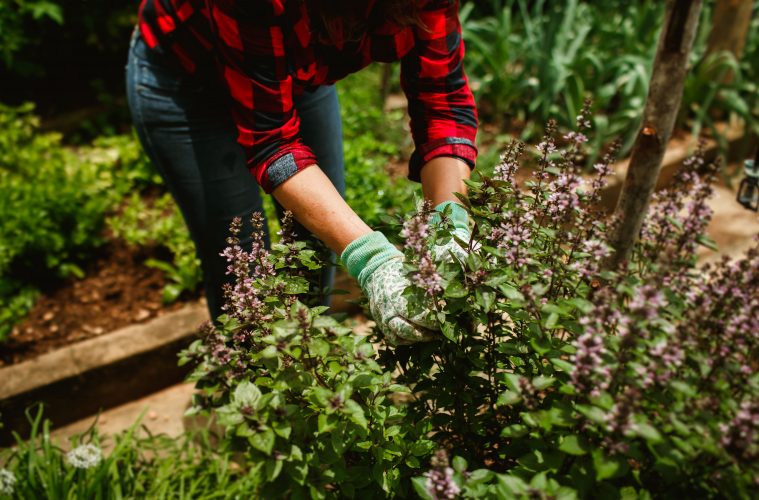
Gardening creates conditions for mindful attention that require very little deliberate effort. The specificity of working with plants, noticing the state of a particular plant, responding to what is actually present rather than what was expected, the smell of soil and cut leaves, the tactile quality of working with earth: all of these anchor attention to the present moment in a way that activities without sensory richness rarely achieve. Time in a garden tends to produce what many gardeners describe as a quality of ease or calm that arrives without being sought, as a byproduct of sustained engaged attention to living things.
Physical activity and mood
The mood benefits of physical exercise are among the most consistently replicated findings in health psychology, and gardening provides varied, low-to-moderate intensity physical activity that is sustained throughout the growing season without requiring a gym or structured exercise plan. The physical demands of gardening include a range of movement patterns, bending, kneeling, lifting, digging and carrying, that provide full-body engagement and are associated in research with reduced perceptions of stress and improved mood, independently of the other psychological mechanisms at work in a garden context.
Getting started
None of the benefits above requires a large garden or significant horticultural knowledge. Research consistently suggests that the mental health benefits of gardening are available from the earliest stages of involvement: the act of tending something living, of committing attention to a plant and watching it respond, produces psychological effects that are not reserved for the experienced or the green-thumbed. Starting with a single container on a balcony, a window box of herbs or a small raised bed is enough. The benefits accumulate with time in the garden, and the garden grows alongside the gardener.
ALSO SEE:
Featured Image: Pexels
