
 Bianca Muller
Whether it’s a trusty snake plant in the hallway or a thriving pothos trailing across a bookshelf, houseplants don’t stay the same size forever. While many indoor plants are happy in slightly snug conditions, there comes a point when they outgrow their pots and need a little more room to flourish.
Knowing when to repot can make the difference between a plant that merely survives and one that truly thrives.
How often should houseplants be repotted?
As a general rule, most houseplants benefit from repotting every one to three years, depending on their growth rate. Fast-growing plants tend to need more frequent repotting, while slower growers can remain in the same pot for years.
Snake plant (Sansevieria)
One of the easiest houseplants to care for, snake plants actually enjoy being somewhat root-bound. Repot every 2 to 5 years, or when roots begin pushing against the pot’s sides.
Peace lily (Spathiphyllum)
Peace lilies grow relatively quickly and typically need repotting every 1 to 2 years. If flowering becomes sparse or growth slows noticeably, it may be time for a larger container.
Pothos (Epipremnum aureum)
This vigorous grower often needs repotting every 1 to 2 years, especially in bright indoor conditions where growth is more active.
Spider plant (Chlorophytum comosum)
Spider plants produce thick, fleshy roots that can quickly fill a pot. Repot every 1 to 2 years to keep them looking their best.
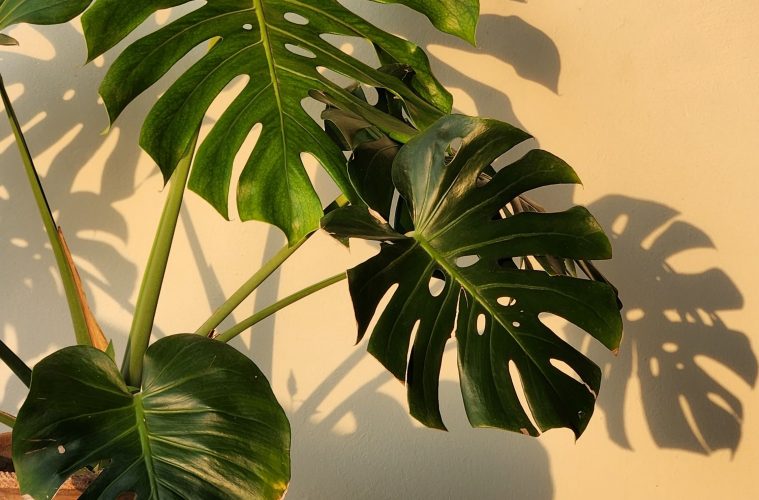
Monstera
Popular in South African homes, monsteras usually need repotting every 2 to 3 years, although younger plants may require more frequent upgrades while actively growing.
Signs your houseplant needs repotting
Your plant will often tell you when it’s becoming uncomfortable in its current home.
Roots are growing out of drainage holes
This is one of the clearest indicators that roots have filled all available space and are searching for somewhere else to grow.
Water drains straight through
If water rushes through the pot without soaking into the soil, the root system may have displaced much of the potting mix.
Growth has slowed
A plant that has stopped producing new leaves during its active growing season could be struggling with limited root space.
The plant dries out unusually quickly
If you’re watering far more frequently than usual, crowded roots may be absorbing moisture almost immediately.
Roots are circling the root ball
When you remove the plant from its pot and see a dense network of roots spiralling around the outside, it’s likely root-bound and ready for a larger container.
When is the best time to repot?
In South Africa, the ideal time to repot most houseplants is during spring and early summer, when plants are entering their active growth phase. The warmer weather allows roots to establish more quickly and recover from transplant stress. Avoid repotting during the coldest part of winter unless the plant is severely root-bound or showing signs of distress.
Common repotting mistakes to avoid
Choosing a pot that’s too large
It may seem logical to move straight to a much bigger container, but excess soil can hold too much moisture and increase the risk of root rot. Instead, choose a pot that is only 2 to 5cm wider than the current one.
Reusing old potting soil
Old soil loses structure and nutrients over time. Refreshing with quality potting mix gives roots the best possible start.
Repotting stressed plants unnecessarily
If a plant is struggling due to pests, disease or incorrect watering, repotting may add further stress. Address the underlying issue first where possible.
ALSO SEE: South African indigenous plants that peak in winter
Feature image: Unsplash
