
 Jade Mcgee
The vegetable garden doesn’t have to go dormant just because winter has arrived. South Africa’s cold season is actually an excellent growing period for a wide range of crops, including brassicas, leafy greens, root vegetables, peas and broad beans. The challenge is managing the frost risk, particularly on the Highveld and in the KwaZulu-Natal Midlands, where night temperatures can drop to well below zero between May and August.
The right protection extends the range of what you can grow, keeps existing crops productive through the coldest months, and in some cases allows you to harvest right through winter into spring. The methods range from quick and inexpensive to more substantial investments, and the level of protection each provides scales roughly with the effort required to set it up.
Frost cloth and row cover
Frost cloth, sometimes called row cover or horticultural fleece, is the most practical and widely available protection method for most home vegetable gardens. It consists of a lightweight polyester fabric that allows air, moisture and light to pass through while trapping enough warmth beneath it to protect tender crops from frost. A single layer typically offers protection to around minus two or minus three degrees Celsius.
To work correctly, the cloth must extend all the way to the ground on all sides. Drape it loosely over entire beds or individual rows, anchor the edges with bricks, stakes or soil, and ensure it’s not pressing tightly against the foliage. Frost cloth is effective for protecting leafy greens, lettuce and brassicas from light to moderate frost, and it can be left in place during cold spells and removed during milder days.
Cloches
A cloche is a covering that protects a single plant, creating a miniature greenhouse effect. Traditional glass cloches are beautiful and effective, but can be expensive. A very effective alternative is a clear plastic bottle with the base cut off, placed over individual seedlings. Old mason jars work for smaller plants. The covering traps heat during the day and releases it gradually through the night.
Because cloches seal in air, they need to be lifted or ventilated on milder days to prevent the plant from overheating. On the Highveld, this is important: winter days can be warm and sunny even when nights are freezing, and a plant left under a cloche in full winter sun can overheat quickly. Remove them in the morning once temperatures rise and replace them before sunset when frost is forecast.
Cold frames
A cold frame is a low, boxed growing structure with a transparent lid, typically made of glass or clear plastic, that can be opened and closed. It sits directly on the soil and provides protection from frost, wind and rain while still allowing light to reach the plants inside. In South Africa’s dry Highveld winters, the protection from desiccating winds is as valuable as the frost protection.
Cold frames work particularly well for hardening off seedlings that have been started indoors. Placing them in the cold frame for a week or two before transplanting into the open garden allows them to adjust gradually to outdoor conditions without the shock of full exposure. They are also excellent for extending the harvest of salad crops through the coldest months.
Hoophouse
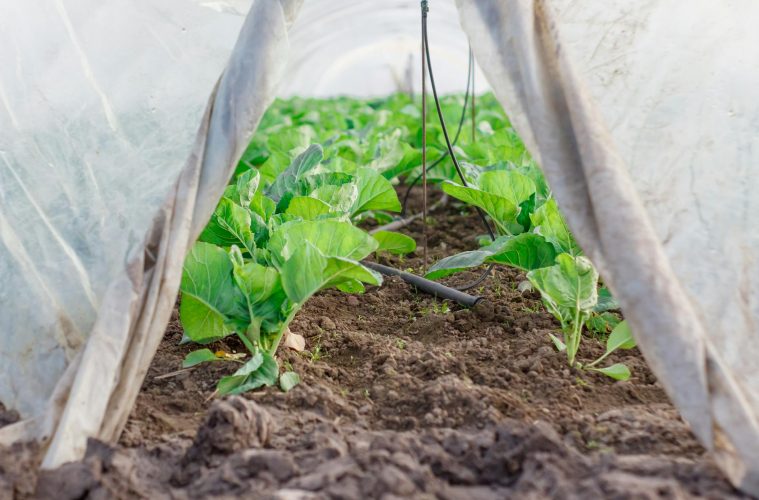
A hoophouse is a more substantial structure than a cold frame: a series of metal or PVC hoops inserted into the ground over a bed, covered with clear UV-resistant polyethene plastic or horticultural fleece. It functions like a miniature tunnel greenhouse, trapping significantly more warmth than surface-level coverings.
In South African gardens, hoophouses allow you to grow cold-sensitive crops like kale, beet, spinach and turnips through the harshest Highveld frosts. Setting one up over a raised bed takes an afternoon and the materials are widely available at nurseries and irrigation suppliers. Replace the plastic covering every few years as UV exposure degrades it.
Unheated greenhouse
For the serious vegetable grower, an unheated greenhouse represents a permanent, significant upgrade to winter growing capacity. A well-built glass or polycarbonate greenhouse traps solar heat during the day and releases it slowly through the night, keeping the interior several degrees warmer than the ambient outdoor temperature.
In frost-prone South African regions, an unheated greenhouse makes it possible to grow tomatoes through the winter given adequate sunlight, and to maintain productive beds of leafy greens, herbs and root vegetables through all but the most severe cold snaps. Ventilation is essential: open vents or doors daily to prevent fungal disease and prevent excessive heat buildup on sunny winter days.
Mulch
Mulch is the most accessible protection method and the one most frequently underused. A generous layer of coarse compost, bark chips, dry leaves or straw spread around the root zone of established vegetable plants provides meaningful insulation for the soil and roots, even when it provides no direct protection for the foliage above.
Apply mulch to a depth of about 7 to 10 centimetres around the base of brassicas, root vegetables and leafy greens. Keep it away from the base of plant stems to prevent rotting. Mulch also conserves the limited winter moisture in the soil, which matters particularly in the dry Highveld winter where irrigation may be necessary.
Moving potted plants under cover
Container-grown vegetables have the significant advantage of being portable. A covered veranda, an unheated garage with a window, a sheltered patio corner: any of these can serve as temporary accommodation for frost-tender potted plants on the nights when temperatures are predicted to drop sharply. The covering needs to allow enough light for the plants to continue growing, so enclosed dark spaces aren’t suitable for an extended stay.
Herbs like basil and tomatoes in containers benefit enormously from this approach. Move them out during the day for maximum light and bring them under cover before dark when frost is expected. Consistent light, even through a covered patio, keeps them productive well into winter.
ALSO SEE:
Featured Image: Pexels
