
 Jade Mcgee
A weed is not a botanical category. It is simply a plant growing somewhere you didn’t intend it to, and a surprising number of these uninvited guests do an excellent job of disguising themselves as ordinary lawn grass until they’ve already taken hold. Some genuinely are grasses behaving badly. Others are unrelated plants that have simply evolved a similar look. Either way, knowing what you’re dealing with is the first step toward deciding whether to remove it, manage it, or in a few cases, let it be.
Bamboo
When young, almost all bamboo species pass convincingly for an ordinary grassy shoot. As it matures, the stems thicken, turn woody and become hollow, and the difference becomes obvious within a single season. Bamboo spreads aggressively through underground rhizomes rather than seed, and several species are considered invasive in South African gardens once they escape their intended bed. The only reliable way to remove an established patch is to dig it out repeatedly over time, since any fragment of rhizome left behind will resprout.
Yellow nutsedge
This is one of the more frustrating invaders in South African gardens, spreading rapidly through underground rhizomes and storing energy in small tubers that make it notoriously difficult to eradicate completely. It looks indistinguishable from grass while young, with upright stalks and a fan of blades at the tip, and only becomes identifiable once it flowers and sets seed in the warmer months. Don’t pull it: dig out the entire clump along with its rhizomes and any small tubers that pop loose, then check the area again after a week or two and remove any regrowth promptly.
Kikuyu grass in the wrong place
Kikuyu is a familiar and often deliberately planted lawn grass across much of South Africa, but it becomes a genuine weed problem the moment it escapes the lawn and invades flower beds, vegetable patches or borders. It spreads through both surface runners and underground rhizomes with remarkable speed, rooting at every node it touches along the way. Once established in a garden bed, it requires persistent digging out of every runner and rhizome fragment, since any piece left in the soil will simply regrow. A physical barrier, such as edging sunk well below the soil surface, is the most reliable long-term prevention between lawn and bed.
Crabgrass
A common sight in lawns with thin or bare patches, crabgrass spreads wide rather than tall, crowding out more desirable grass through finger-like stems that root and form new shoots wherever they touch soil. In South Africa’s warmer, frost-free regions it can persist and spread year-round rather than dying back in winter. Dig out established patches, and on lawns, raising the mowing height slightly allows healthier grass to outcompete young crabgrass seedlings before they mature.
Couch grass invading garden beds
Couch grass (Cynodon dactylon) is, like kikuyu, a common and often intentional lawn grass in South African gardens, but it becomes an unwelcome weed the moment it spreads into beds where it isn’t wanted. It travels through shallow, fast-spreading rhizomes and, once established among ornamentals or vegetables, is genuinely difficult to remove completely by hand, since any rhizome fragment left in the soil can resprout. Repeated digging through a full season generally exhausts it, and a physical edging barrier between lawn and bed prevents it from migrating in the first place. Avoid composting any rhizome material you remove, since it can survive and resprout even in a finished compost heap.
Horsetail
An ancient plant group with no close relatives among modern weeds, horsetail reproduces through spores rather than seed and forms distinctive jointed, hollow stems rather than true blades. It tends to favour damp, poorly drained corners of the garden and is notoriously difficult to eradicate fully once established. Persistent pulling combined with smothering the area under a tarp for an extended period, repeated across more than one season, is usually necessary. Many gardeners eventually settle for managing it rather than fully eliminating it.
Annual bluegrass
More of a persistent nuisance than a serious threat, annual bluegrass produces fine, needle-like blades and small white seed heads, typically appearing as the weather cools. It germinates readily and spreads quickly but is not especially difficult to remove. Pull plants as soon as you spot them and mulch any bare soil left behind to prevent the next wave of seedlings from establishing.
Pampas grass
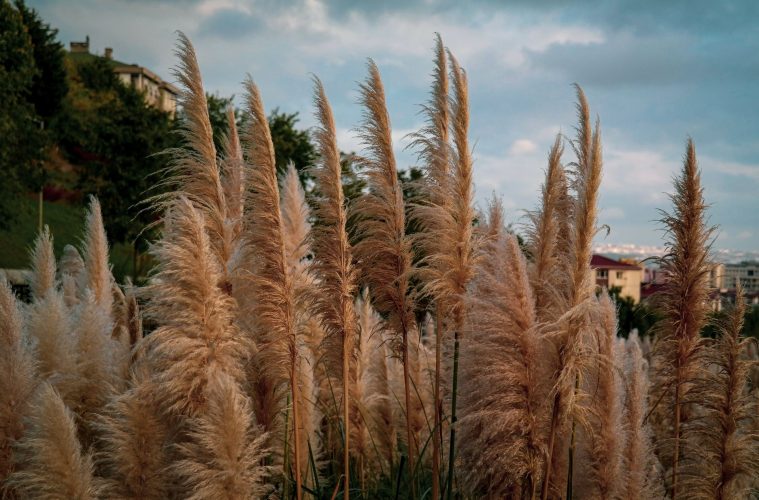
Pampas grass is strikingly beautiful in full plume and equally capable of becoming a serious garden problem. It is listed as an invasive species under South African legislation in several provinces, and for good reason: a single mature plant can produce enormous quantities of windblown seed that establishes readily in disturbed ground, roadsides and natural areas. The sharp-edged leaves can cut skin on contact, so removal requires gloves, long sleeves and ideally a second pair of hands for anything beyond a young plant. Established clumps need to be dug out completely, and any fractured root sections left behind are likely to resprout.
Paspalum
A common sight in lawns and disturbed ground across much of South Africa, paspalum forms dense, coarse-bladed clumps that are easy to mistake for ordinary grass until its distinctive seed heads appear. It spreads primarily by seed and tends to colonise bare or thin patches in lawns rapidly. Digging out clumps before they set seed is the most effective control, and improving the density of the surrounding lawn through proper feeding and overseeding reduces the bare ground paspalum needs to establish.
Foxtail
Foxtail grasses are a genuine hazard for dogs, since the bristly seed heads have backward-facing hooks that can burrow into paws, ears and noses, sometimes requiring veterinary removal if left unnoticed. They colonise bare and disturbed soil readily through seed, so any vacant patch of garden is a potential foothold. Cut plants down before the seed heads mature, then smother the area with cardboard topped with soil to prevent regrowth, and keep an eye on pets in any area where foxtail has been spotted.
Goosegrass
Goosegrass spreads through windmill-like flowering stems that scatter seed readily, and the fibrous root systems anchor it firmly enough to make pulling mature clumps a genuine effort. It establishes quickly in warm, wet conditions and is best tackled while plants are still young and the roots haven’t yet developed their full grip on the soil. Avoid composting removed goosegrass, since viable seed can survive the process and reappear wherever the finished compost is spread. Burying the waste well below the soil surface, or disposing of it with general garden waste, is the safer route.
ALSO SEE:
Featured Image: Pexels
