
 Jade Mcgee
A rubber plant has a way of making even a quiet corner feel finished. Its broad, polished leaves bring height and structure to a room without demanding the attention of a more delicate houseplant. Ficus elastica is relatively forgiving, but it grows best when its care is consistent rather than enthusiastic. The secret is finding a bright spot, resisting the urge to water on a fixed schedule and giving the roots room to breathe.
Give your rubber plant bright, filtered light
Rubber plants appreciate generous light, although strong midday sun through glass can scorch foliage, especially on pale variegated varieties. An east-facing window is often a useful starting point. A north-facing room receives stronger sunlight in South Africa, so position the plant back from the glass or use a light curtain if the leaves are exposed to harsh rays. Dark green varieties generally tolerate slightly lower light than variegated forms, but prolonged shade can result in slow, leggy growth.
Water according to the soil, not the calendar
Allow the upper few centimetres of potting mix to dry before watering thoroughly. Let surplus water run through the drainage holes and empty the outer pot or saucer afterwards. Constantly damp roots are vulnerable to rot, while prolonged dryness can cause wilting and leaf loss. During spring and summer, inspect the pot more frequently as growth speeds up. In cooler months, the soil may remain moist for much longer. Yellowing leaves can indicate excess water, but check the soil before assuming the cause.
Choose a well-draining potting mix
A good-quality indoor potting mix with added perlite or bark provides moisture without staying waterlogged. Select a container with drainage holes rather than relying on a layer of stones at the bottom. Repot when roots circle densely inside the pot or watering becomes difficult, usually moving up only one modest pot size. An excessively large pot holds more damp compost than young roots can use.
Keep the leaves clean and the shape balanced
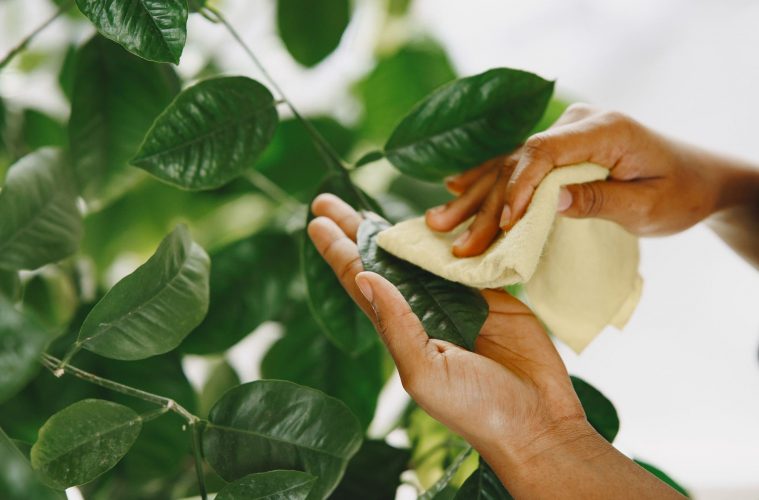
Gently wipe dust from leaves with a soft damp cloth. There is no need for leaf-shine products, which may leave residue. Rotate the pot periodically so growth remains even, but avoid moving it constantly between very different light conditions. If the stem becomes too tall, pruning just above a leaf node can encourage branching. Wear gloves: the milky sap can irritate skin and is harmful if chewed by pets. Keep the plant out of reach of children and animals.
Look for early warning signs
Drooping leaves and consistently wet compost point to a drainage problem. Brown, crispy patches can follow sun scorch or prolonged dryness. Inspect leaf undersides for scale insects and mealybugs, especially where leaves meet stems. A healthy rubber plant will not produce a new leaf every week, so judge its condition by firm leaves and steady seasonal growth rather than speed alone.
