
 Jade Mcgee
It is easy to assume a wilting houseplant needs a drink. But when the soil is already damp and the leaves continue to droop, adding more water may be the very thing that makes the problem worse. Root rot is a common consequence of persistently wet growing conditions, and catching it early can make the difference between losing a plant and helping it recover.
What happens when roots begin to rot?
Roots need oxygen as well as water. When the spaces between particles of potting mix remain filled with water for too long, oxygen becomes limited, and roots may begin to die. Wet conditions can also favour root-rotting organisms, including fungi and fungus-like water moulds.
As damaged roots lose their ability to absorb water and nutrients, the foliage can wilt even though the potting mix is wet. This is why a plant suffering from root rot can look surprisingly similar to one that has been left unwatered.
Recognising the signs above the soil
Yellowing leaves, unusually slow growth and unexpected leaf drop are all reasons to investigate. A plant that looks limp for days after watering, or a pot that remains heavy and damp long after a drink, may be experiencing drainage problems.
These symptoms alone do not prove root rot. Poor lighting, underwatering and other stresses can produce similar effects. The most reliable home check is to inspect the root system itself.
How to check your plant’s roots
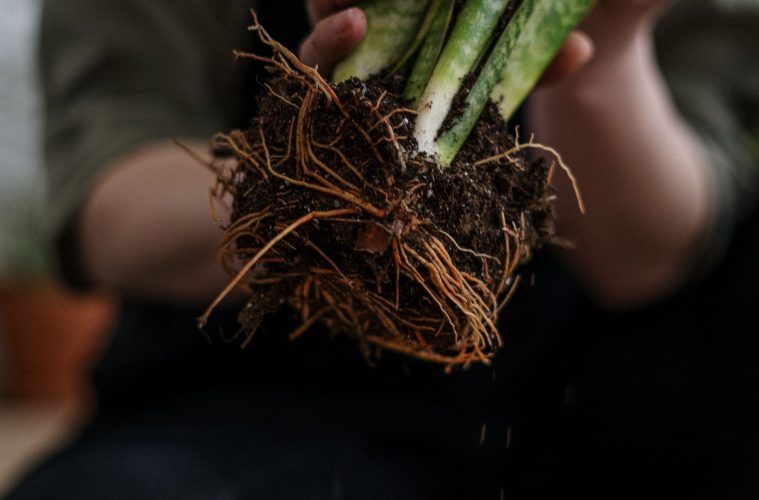
Work over newspaper or a washable surface. Tip the container gently while supporting the plant near its base, easing out the root ball without tugging on the stems. Brush away enough loose mix to see the roots clearly.
Healthy roots usually feel firm. Their colour varies between species, so a naturally brown root is not necessarily diseased. Look instead for roots that are soft, hollow, slimy or disintegrate when touched. An unpleasant decaying smell may accompany widespread rot.
Can a plant with root rot be saved?
If some firm roots remain, recovery may be possible. Remove the old saturated mix and use clean, sharp scissors to cut away soft, decaying roots. Disinfect the tool before using it on another plant. Remove clearly dead foliage, but retain as much healthy growth as possible.
Repot into a clean container with drainage holes and fresh mix suited to the species. If substantial root loss has occurred, a smaller container may be appropriate, since an oversized pot holds more moisture around the remaining roots.
Keep the plant in suitable light while it recovers, avoiding harsh conditions and unnecessary fertiliser until healthy new growth appears. If the entire root system has deteriorated, consider taking healthy cuttings where the species can be propagated that way.
Preventing root rot in future
Check the moisture in the potting mix before watering rather than relying on the calendar. Succulents need longer drying periods than moisture-loving tropical plants. Empty decorative outer pots after watering and make sure the nursery pot never sits in a pool of water.
Choose a growing medium with sufficient air spaces, and adjust your watering as temperatures and daylight change. A plant receiving less light may use water much more slowly. The best protection is a consistent balance between moisture, drainage and the needs of the individual plant.
ALSO SEE:
Featured image: Pexels
