
 Jade Mcgee
You do not need a sprawling garden to support wildlife. A balcony, courtyard, townhouse patch or narrow side bed can become part of a much bigger ecological network.
Small wildlife gardens act like stepping stones. They offer food, shelter and water to birds, bees, butterflies and beneficial insects moving through built-up areas. The trick is choosing plants and features that do more than one job.
A wildlife garden is not about perfection. It is about life.
Start with locally indigenous plants
The best wildlife gardens begin with plants that belong. Locally indigenous plants are adapted to the climate and are far more useful to local insects and birds than many exotic ornamentals. They also tend to need less water and fuss once established.
Botanical guidance consistently recommends indigenous planting to support pollinators because these plants provide familiar nectar, pollen, seeds and habitat for local species.
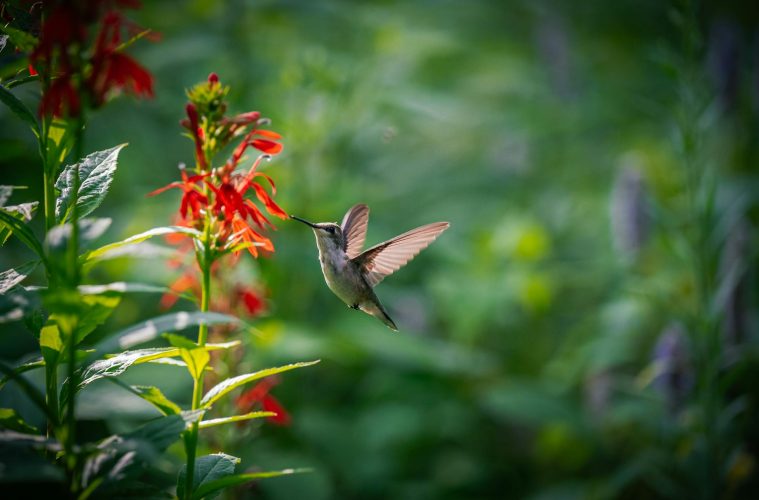
For small spaces, choose compact, multi-purpose plants. Wild dagga, Cape honeysuckle, aloes, vygies, pelargoniums, plectranthus and gazanias can all bring colour while supporting pollinators, depending on your light and space. Tubular flowers are especially useful for sunbirds, while daisy-like flowers offer easy landing pads for bees and butterflies.
Think in layers, even in pots
A small space feels richer when it has layers.
Use a tall container plant or small shrub as your anchor. Add flowering perennials at mid-height. Let trailing plants soften the edges of pots or walls.
On a balcony, this might mean one large pot with a compact shrub, two medium pots with flowering perennials and a hanging basket for trailing plants. In a townhouse garden, it might mean a narrow border with a small tree, grasses and low-growing flowers.
Vertical space matters. Wall planters, rail baskets and trellises allow you to create habitat without using much floor space.
Add water
Water is one of the simplest ways to make a small garden more wildlife-friendly.
A shallow birdbath, ceramic dish or small fountain can support birds and insects. Keep it clean, place a few stones inside so bees can land safely, and position it where birds have visibility and nearby cover.
In hot weather, shaded water is best. It stays cooler and evaporates more slowly.
Create shelter, not just flowers
Flowers bring visitors. Shelter keeps them coming back.
Leave some seed heads standing after flowering. Allow a small corner of leaf litter to remain. Use hollow stems, twigs or a small bundle of untreated sticks to create hiding places for insects.
If space allows, add a bird box suited to small garden birds. Avoid placing it where cats or harsh afternoon sun can reach it.
A wildlife garden should not be too tidy. Chewed leaves, fallen petals and hollow stems are signs that the space is functioning.
Avoid chemicals
Pesticides do not only affect problem insects. They can harm bees, butterflies and the beneficial predators that keep pests under control naturally.
Instead, encourage balance. Ladybirds, lacewings, spiders and birds all help manage pests when given habitat and food sources.
Healthy soil also matters. Use compost, mulch and organic feeding methods where needed. In containers, refresh soil seasonally and avoid letting plants become stressed, as stressed plants attract more pests.
Make it beautiful for you too
A wildlife garden should still feel like a place you want to spend time in.
Choose a simple colour palette. Repeat plants in clusters. Use attractive pots, natural textures and a small seat if space allows.
Wildlife-friendly does not mean messy in a careless way. It means relaxed, layered and alive.
A small wildlife garden can be as simple as a balcony of nectar-rich pots, a birdbath and a few seed-producing flowers.
Choose locally indigenous, non-invasive plants. Add water. Create shelter. Stop over-tidying.
Even the smallest outdoor space can become part of something bigger.
ALSO SEE:
Featured Image: Pexels
