
 Jade Mcgee
A kitchen has plenty of straight lines before the decorating even begins. Cabinets, worktops, appliances and splashbacks all bring strong edges into the room. Introducing a curve, even in one carefully chosen place, can make the whole scheme feel more relaxed and welcoming. The appeal is not about turning every surface into a statement; it is about giving a hardworking room a gentler rhythm.
Start with the kitchen island
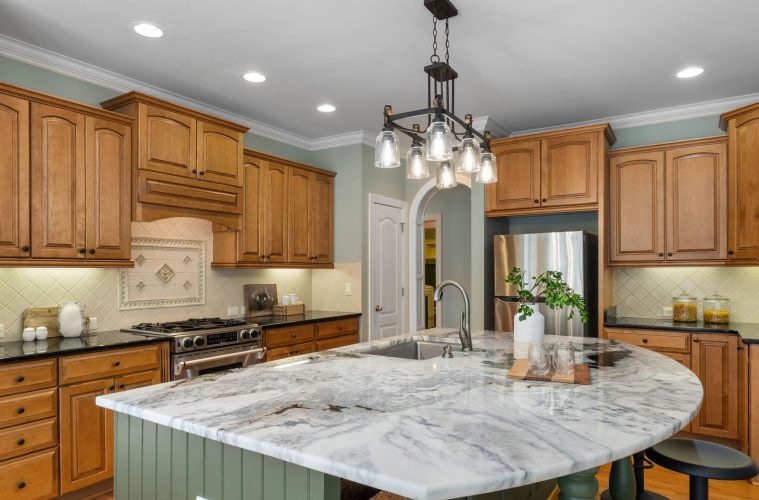
The island is often the visual centre of an open-plan kitchen, which makes it a natural place to explore a softer silhouette. Rounded corners or a curved end can help a large island feel less imposing, especially where people frequently walk past it. The curve can be echoed in the worktop overhang or a rounded seating area rather than built into the whole cabinet.
Keep practical clearances in mind. A beautiful end detail is of little benefit if stools block the route to the fridge or dishwasher. Where floor space is limited, a small radius on exposed corners may offer the look without losing valuable storage.
Consider arched openings and cabinetry
Arches can introduce a sense of architectural character, particularly where the kitchen connects to a dining nook or pantry. An existing doorway may be softened with an arched finish, although structural changes should be assessed by a qualified professional. In smaller renovations, arched glass-fronted cupboards or curved open shelves can provide the same visual idea with far less disruption.
Curved joinery is often more expensive than straight cabinetry because it requires specialist fabrication and sometimes reduces the usable space inside cupboards. Keeping the rest of the cabinets simple allows one curved feature to feel intentional rather than busy.
Use curves in the finishing touches
There are inexpensive ways to test the idea before committing to built-in elements. A circular pendant, softly shaped bar stools, an oval table, rounded cupboard handles or a curved tap can counterbalance the hard lines of a kitchen. Even the profile of a worktop edge changes how the surface looks and feels.
Materials make a difference, too. Warm timber, textured plaster, natural stone and gently varied tiles reinforce the softer effect. They need not all be used together. Two or three complementary finishes will feel calmer than a collection of competing shapes and textures.
Make the look last beyond a trend
Curves have appeared in interiors across many design periods, from traditional architecture to twentieth-century furniture. That longevity is one reason to approach them as a design tool rather than a passing fashion. Choose forms that suit the proportions and age of the home. A restrained arch may look at ease in a character property, while a simple rounded island can sit beautifully in a modern kitchen.
The most successful schemes retain the clarity that makes a kitchen easy to use. Straight lines provide order; curved details add ease. Together, they create a space that feels considered, functional and genuinely comfortable to spend time in.
ALSO SEE:
Featured Image: Unsplash
