
 Bianca Muller
There is a certain pleasure in a garden that doesn’t insist on being perfect. At Wildekrans Country House, beneath the Houw Hoek Mountains in the Elgin Valley, mature trees cast long shadows over the lawns, streams and ponds wind through the grounds, and contemporary sculptures appear among the greenery. The garden is spacious, informal and full of surprises, with a character that has developed over more than two centuries.
And then there is the wildlife. Porcupines have a taste for the arums, buck nibble the rosebuds and guinea fowl have proved particularly determined opponents in the battle to establish a meadow. It’s all part of the charm of this historic country garden, which opens its gates to the public during Elgin Open Gardens on 31 October and 1 November, and again on 7 and 8 November 2026.
For owners Alison Green and Barry Gould, the garden is a living project rather than a finished picture. Their approach is to work with the landscape, allow nature some freedom and make thoughtful changes that respect the property’s history.
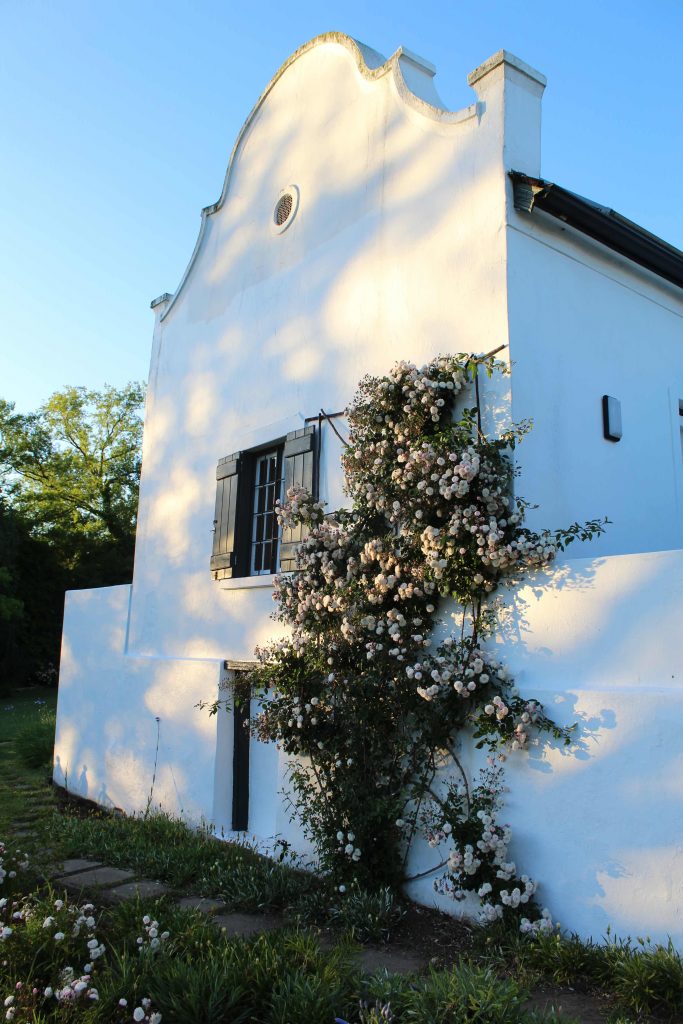
Cape Dutch Gable’s rambling roses at Wildekrans Country House
A garden with roots in 1811
Wildekrans Country House dates back to 1811 and has passed through three families. Alison’s parents, Eric and Roma Green, bought the property from the estate of local Dr Taylor in the early 1980s, and Roma set about restoring its gardens.
When Alison and Barry moved to Wildekrans in 1999, they continued that work, gradually shaping the grounds to reflect their own ideas while retaining the elements that give the garden its sense of history.
“My mother landscaped the garden retaining some historical aspects, the stone fruit trees and the ‘ha-ha’,” Alison explains.
The couple have since reduced the size of the original rose garden and converted an area of poor soil on the eastern side of the garden into almond trees. The central beds have also been transformed, with indigenous plants now taking centre stage.
The result is a garden that feels connected to its past without being stuck in it. Mature oaks, pecan nut trees, chestnuts, swamp cypresses and melaleucas stand as reminders of those who came before, while the newer plantings reflect a more environmentally conscious approach to gardening.
“The mature trees will always stand tall for the people that came before us,” Alison says.
The water features and heirloom roses, meanwhile, hold a special place in her heart as reminders of her mother. The indigenous plantings and olive groves are the result of Barry’s vision and hard work.
Moving away from the traditional English garden
Elgin is known for its lush gardens, and Wildekrans has plenty of the mature greenery and established planting that make a country garden so appealing. But its owners have also been rethinking what a garden in this part of the Western Cape should look like.
Historically, Alison explains, Elgin gardens often followed the English cottage garden tradition. While beautiful, these gardens can require considerable labour and water to maintain.
“We have moved to a water-friendly wild and informal approach,” she says.
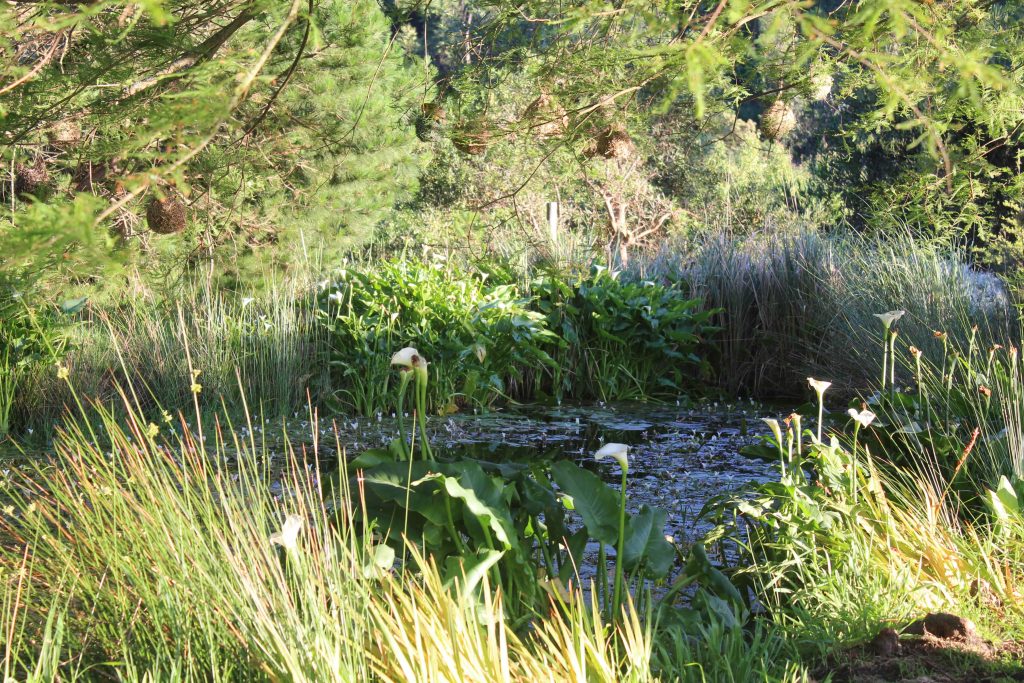
Water gardens of Wildekrans Country House
That doesn’t mean leaving everything to chance. Alison describes the garden as having a “wild, spacious and curious character”, one that continues to evolve organically while still being guided by a clear vision.
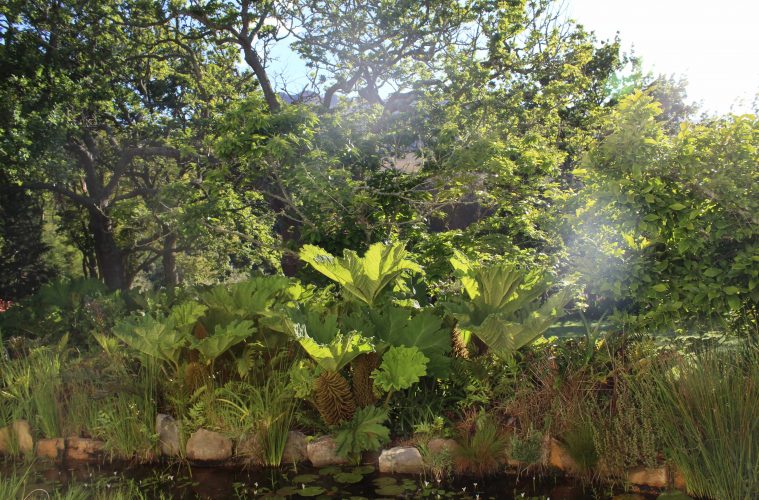
The surrounding Houw Hoek landscape plays an important role. With its abundant water and pockets of rich soil, the area allows for a wide range of planting. One of the garden’s standout features is its impressive Gunnera, a dramatic, large-leaved plant that has become a favourite with visitors.
Still, much of the gardening involves knowing when not to intervene.
“A large amount of our gardening is about restraint, allowing nature to take its course,” Alison says.
The couple garden naturally, avoiding harsh insecticides and herbicides. They make their own compost, too, occasionally with unexpected results. Tomato seedlings and butternut plants have appeared in flowerbeds, courtesy of whatever has found its way into the compost heap.
This year, they’re also trying products from biological pest management company Real IPM, particularly on the olive trees and roses.
Of course, working with nature has its complications. Porcupines eat the arums, feral pigs dig up soft patches of lawn and buck help themselves to the juicy buds on the roses. An attempt to establish a meadow was thwarted when guinea fowl ate the seeds before they could germinate.
And because the couple avoid herbicides, clearing invasive plants and keeping weeds under control remain ongoing jobs.
It’s a reminder that even an established garden is never quite finished.
Where contemporary art meets the landscape
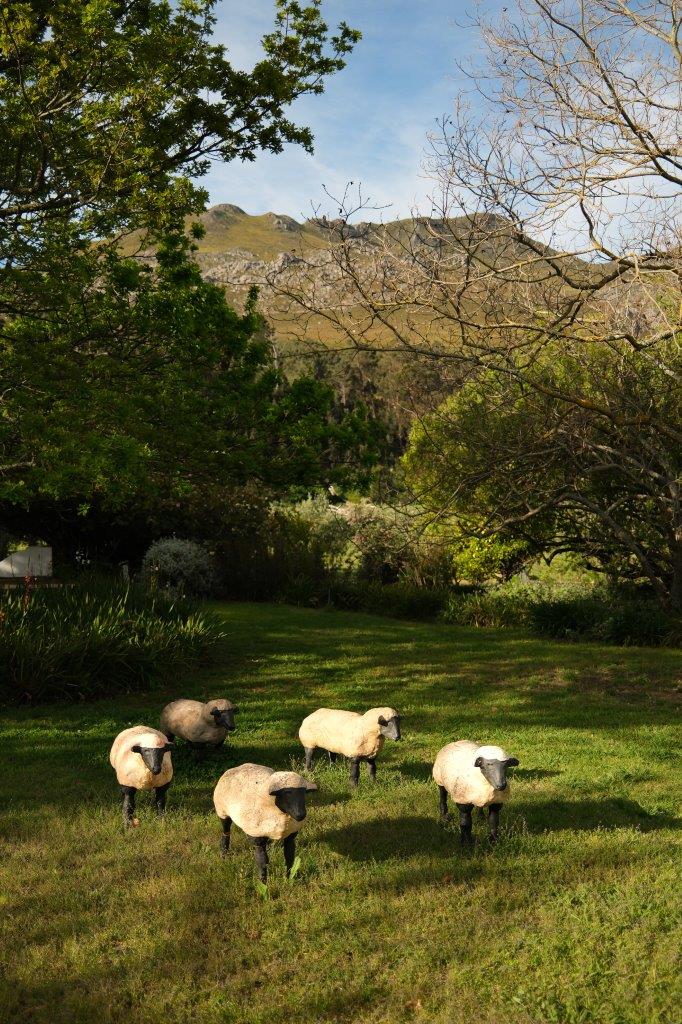
One of the pleasures of walking through Wildekrans is coming across contemporary sculptures set among the trees and planting. The collection reflects Alison and Barry’s interest in art, which stretches back more than 30 years.
With the Houw Hoek Mountains providing such a striking backdrop, choosing artwork for the garden requires a particular eye. The pieces need to hold their own against the landscape rather than disappear into it.
Alison points to the work of Strijdom van der Merwe, Guy du Toit and Wilma Cruise as examples of artists whose sculptures have the presence to stand out against the surrounding scenery.
During Elgin Open Gardens 2026, visitors can look out for Wilma Cruise’s POOR HORACE, which will be a new addition to the field this year.
The relationship between art and nature gives the garden another layer of interest. There are trees, water, planting and changing views to appreciate, but also pieces that invite visitors to pause and look at their surroundings differently.
The joy of opening the garden to visitors
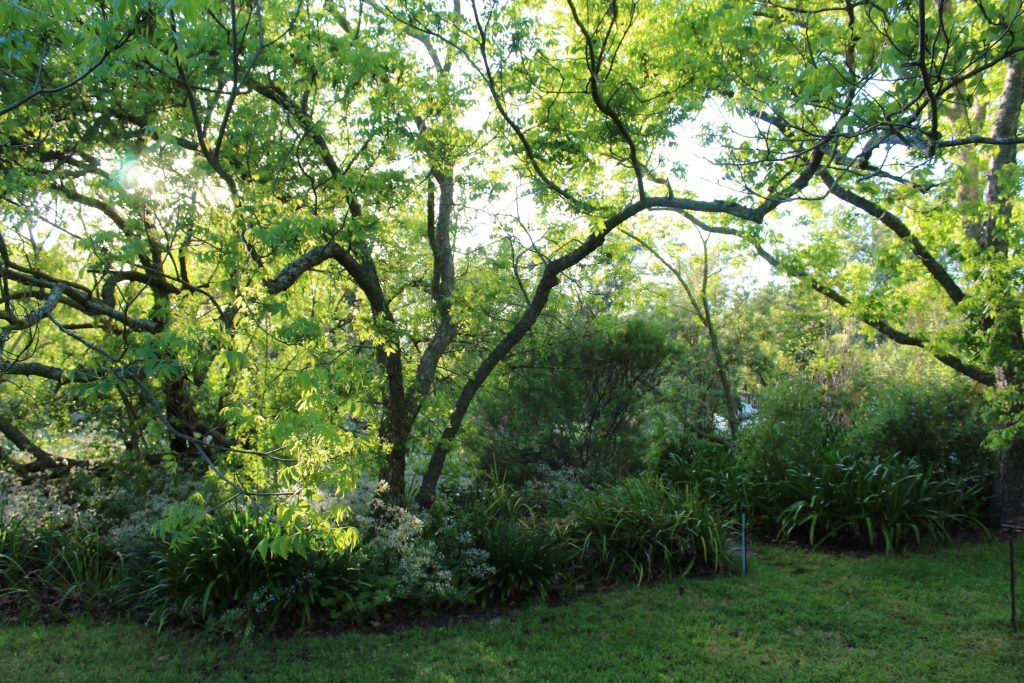
Pecan Nut trees of Wildekrans Country House
For Alison and Barry, one of the rewards of participating in Elgin Open Gardens is seeing how people respond to the property. Visitors often spend a considerable amount of time wandering through the grounds, and their curiosity keeps things interesting.
Over the years, a few encounters have become particularly memorable.
On one occasion, Barry heard a voice but couldn’t see anyone nearby. Looking up, he discovered a visitor sitting high in one of the trees, chatting on a mobile phone.
Another year, an elderly visitor secretly harvested the entire crop of green figs and left with it.
Then there are the quieter moments that make all the hard work worthwhile.
Alison especially enjoys seeing visitors take off their shoes and walk across the lawn, feeling the soft grass between their toes.
It’s an experience that seems to capture the spirit of Wildekrans. This is a garden to wander through rather than simply admire from a distance, with room to linger beneath the trees, follow the streams and see what turns up around the next bend.
Children are welcome, too, and Alison says they particularly enjoy the garden.
What to see at Wildekrans Country House during Elgin Open Gardens
Allow time for a proper walk. A route through and around the garden covers approximately 1.5km, taking in the different artworks, mature trees, streams, ponds and planting.
The established trees and Gunnera are among the features visitors particularly love, while the indigenous beds and olive groves reflect the owners’ evolving approach to the landscape.
This year’s programme also includes a focus on fynbos pollination. Alison and Barry will host 60-minute talks on the subject, which must be booked in advance by emailing [email protected] or calling 028 284 9827.
There will also be plants for sale, along with home-grown, home-baked and homemade preserves. At The Barn, visitors can stop for apple juice, coffee, bran and pecan nut muffins, carrot cake and panini sandwiches for lunch.
It’s worth arriving hungry and leaving enough time to enjoy the garden at an unhurried pace.
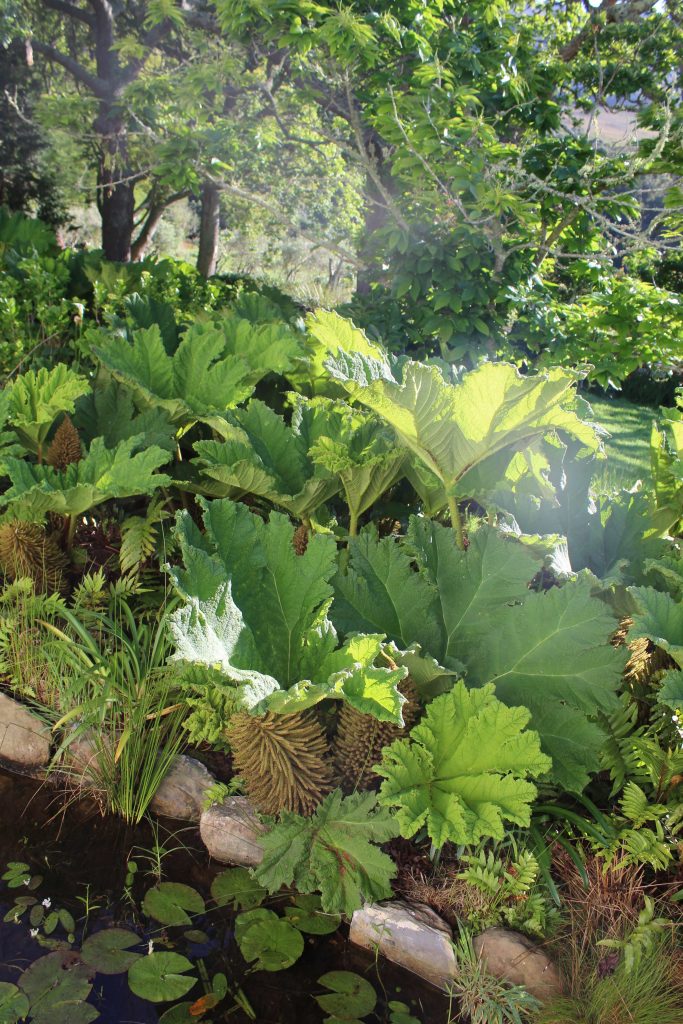
Gunnera at Wildekrans Country House
A garden still growing
The meadow is currently one of the couple’s main projects, although the guinea fowl continue to make progress difficult. Alison and Barry are particularly looking forward to seeing how the sunflowers and grasses planted at the bottom of the meadow develop.
There is another special occasion on the horizon, too. Their eldest daughter is getting married in the garden in December, a prospect that has them bursting with excitement.
For a garden that has been evolving since the early nineteenth century, there is something fitting about this next chapter. Wildekrans Country House has been shaped by generations of family members, and it will continue to change as new memories are made beneath its trees.
For home gardeners hoping to create something similarly established and full of character, Alison’s advice is simple: start now.
“Don’t wait to get going, future generations will benefit the full growth, and you will be rewarded for initiating,” she says.
Her other recommendation is to begin close to the house and gradually work further out as time and budget allow. Mature trees can be bought, she notes, but they come at a higher cost.
Above all, work with the environment rather than against it.
“Allow nature to show you the way and it will look like it has always been so.”
Plan your visit to Wildekrans Country House
Wildekrans Country House will open for Elgin Open Gardens 2026 on four days: Saturday 31 October, Sunday 1 November, Saturday 7 November and Sunday 8 November.
Opening time: From 08:00 on all four days. Alison and Barry open early because they believe the garden is particularly special in the morning.
Suggested donation: R30 per person. All gate donations go to the Bot River Education Foundation, which facilitates learning.
Address and directions: Wildekrans Country House, N2 Houw Hoek, near Botrivier in the Western Cape. Take the N2 turn-off for Houw Hoek Hotel and turn left at the hotel.
Contact: 028 284 9827 or [email protected].
Fynbos pollination talks: The 60-minute talks must be booked in advance by email or telephone.
What to bring: Comfortable walking shoes, a donation for the Bot River Education Foundation and enough time to explore. An appetite for a panini is recommended, too.
With its historic roots, indigenous planting, mature trees, sculptures and wonderfully informal character, Wildekrans is a garden worth taking your time over. As Alison puts it, the rambling nature of the grounds is what makes it special: walk it.
ALSO SEE: Historic art collection Grootbos Florilegium celebrates 25 years of conservation
Historic art collection Grootbos Florilegium celebrates 25 years of conservation
