
 Bianca Muller
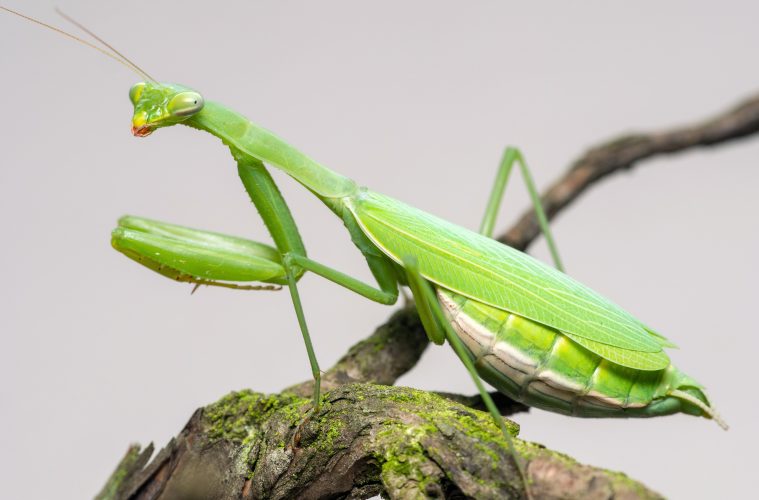
If you’ve ever spotted a praying mantis sitting perfectly still on a leaf with its front legs folded as though it’s deep in thought, you’ll know it’s one of the most fascinating visitors a garden can attract. While its unusual appearance can be a little intimidating at first, this remarkable insect is one of the best natural allies a gardener can have.
Here’s why the praying mantis deserves a warm welcome in your South African garden.
What is a praying mantis?
Praying mantises belong to the order Mantodea and are found throughout South Africa, from suburban gardens to fynbos, grasslands and forests. Their name comes from the distinctive way they hold their enlarged front legs, which resemble hands folded in prayer.
They are masters of camouflage, blending effortlessly into leaves, flowers and branches while patiently waiting for prey to wander within striking distance.
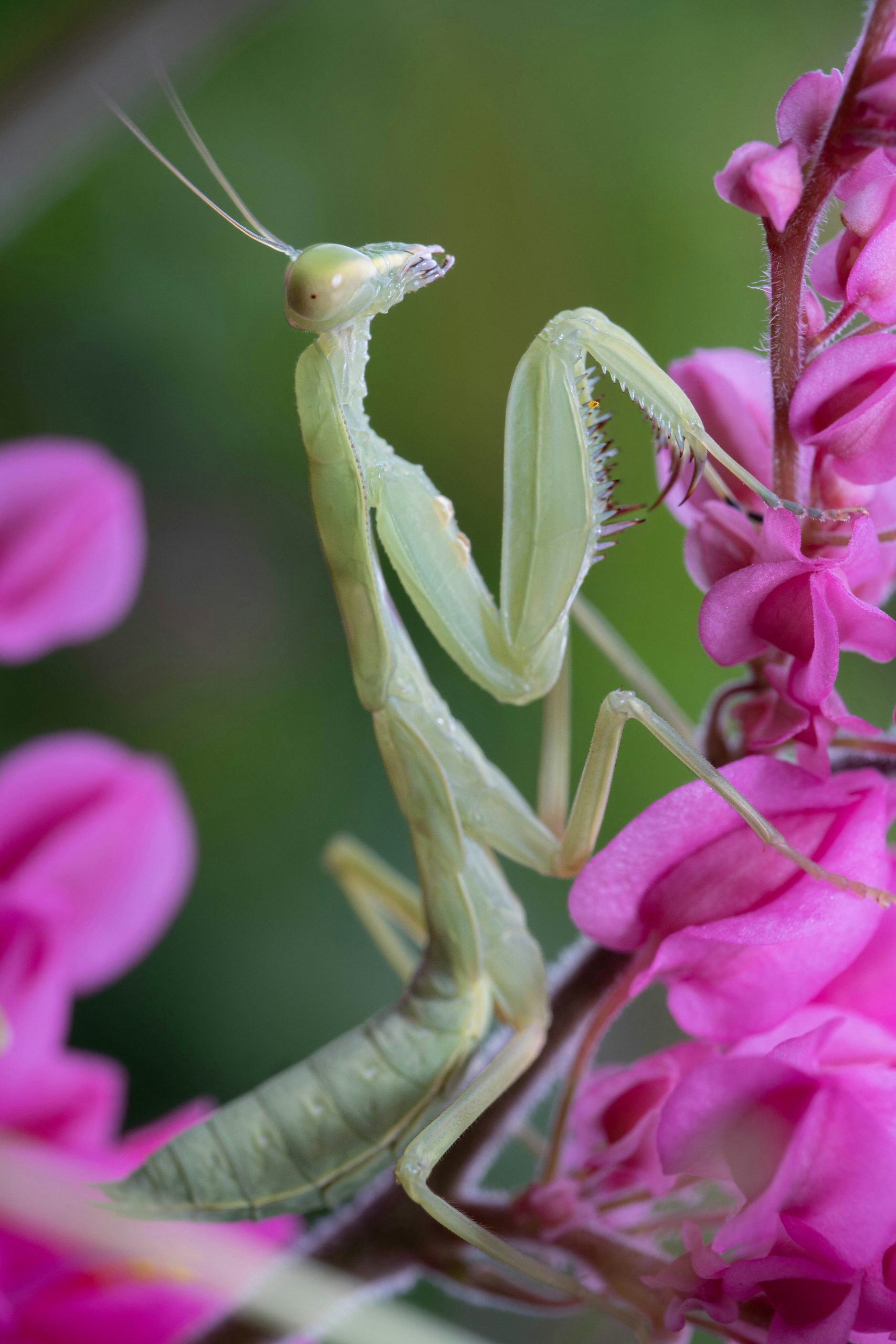
Photo: Unsplash
Is a praying mantis good or bad for your garden?
Praying mantises are considered beneficial insects because they are natural predators. Rather than damaging plants, they feed on many insects that gardeners often struggle to control.
Some of their favourite meals include:
- Aphids
- Caterpillars
- Whiteflies
- Moths
- Beetles
- Grasshoppers
- Leafhoppers
- Flies
Unlike many predators that actively chase their prey, mantises are ambush hunters. They remain almost motionless before launching an incredibly fast attack, grabbing insects with their spiny front legs in a split second.
Not the fussiest eater
One interesting thing about praying mantises is that they aren’t particularly selective.
While they happily eat many common garden pests, they’ll also catch beneficial insects if the opportunity presents itself. Bees, butterflies, lacewings and even ladybirds can occasionally end up on the menu. Larger mantis species have even been observed feeding on small frogs, lizards and tiny birds, although this is uncommon.
For most home gardens, however, the benefits far outweigh the occasional downside.
How to attract praying mantises to your garden
If you’d like more natural pest control, creating a wildlife-friendly garden is a great place to start.
You can encourage praying mantises by:
- Growing a variety of indigenous flowering plants that attract insects.
- Avoiding broad-spectrum pesticides that kill both pests and beneficial insects.
- Leaving some shrubs, grasses and natural vegetation for shelter.
- Providing a shallow water source for wildlife.
- Leaving egg cases (called oothecae) undisturbed when pruning during winter.
A single egg case can contain well over 100 developing mantises, although only a small number will survive to adulthood.
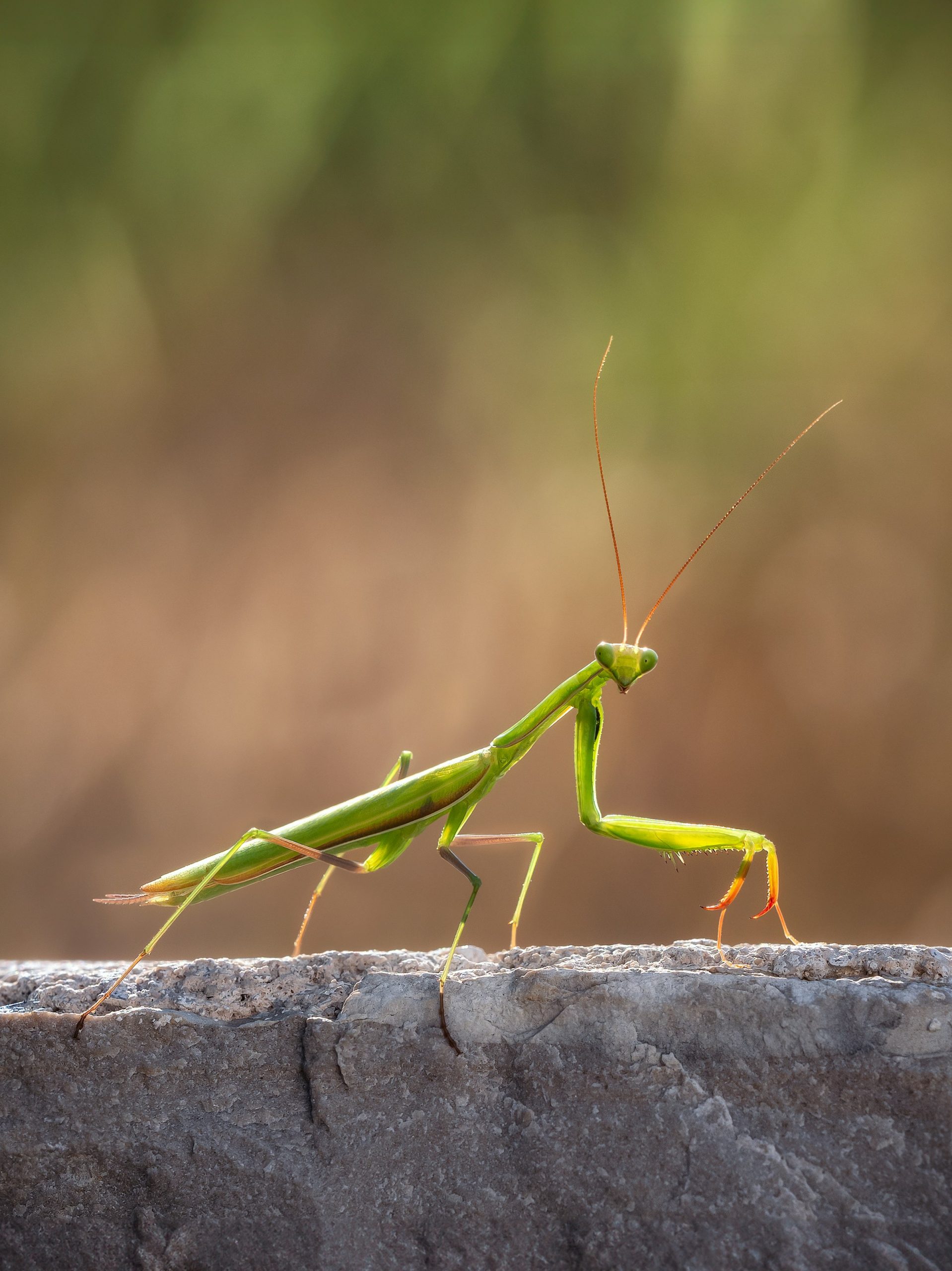
Photo: Unsplash
An insect with incredible camouflage
One of the praying mantis’s greatest survival tools is its ability to disappear into its surroundings.
Depending on the species, mantises can be green, brown or a mixture of both. Some resemble dried leaves, while others mimic flowers or twigs. This camouflage helps them avoid predators while allowing them to surprise unsuspecting prey.
Their triangular heads can also rotate nearly 180 degrees, giving them one of the widest fields of vision in the insect world.
Should you move one if you find it?
If you find a praying mantis in your garden, the best thing to do is leave it exactly where it is.
They’re harmless to people and don’t damage plants. If one has wandered indoors, gently coax it into a container and release it outside among shrubs or flowering plants where it can continue hunting.
Avoid handling them unnecessarily. Although they’re not dangerous, they may pinch with their front legs if they feel threatened.
ALSO SEE: Beneficial bugs: Predatory shield bugs at work
Feature image: Unsplash
