
 Jade Mcgee
Garden furniture that has been well-maintained through several seasons still looks purposeful and cared for. Garden furniture that has been neglected tends to show every one of its outdoor years simultaneously. The difference is not usually a significant effort; it is consistent, season-appropriate attention applied at the right moments across the year.
With winter now underway, this is a useful point at which to review what each material in the garden needs from you.
Metal and wrought iron
Metal outdoor furniture is generally durable, but rust is its characteristic vulnerability. Inspect your metal pieces regularly, paying particular attention to joints, weld points and any areas where the protective coating has been scratched or chipped. Surface rust can be dealt with while it is still minor: sand the affected area gently along the grain of the metal, apply a rust-inhibiting primer and follow with an exterior-appropriate paint or metal sealant in a matching colour. Left unaddressed, surface rust spreads and eventually compromises structural integrity.
For routine cleaning, a solution of warm water and mild dish soap applied with a soft cloth handles most grime and residue. Dry thoroughly after washing, since moisture left sitting in joints is where rust typically begins. Powder-coated finishes are more rust-resistant than painted ones but still benefit from periodic inspection. A light application of outdoor furniture wax or clear protective spray, applied to clean, dry metal once or twice a year, extends the finish’s life considerably.
Teak and hardwood
Teak is the benchmark hardwood for outdoor use because of its naturally high oil content, which resists moisture, insects and decay to a degree that other timbers cannot match. Left untreated, teak weathers to an attractive silver-grey patina that many gardeners prefer. If you want to preserve the original warm brown tone, apply teak oil or teak sealer once or twice a year and allow it to penetrate fully before the furniture is used again.
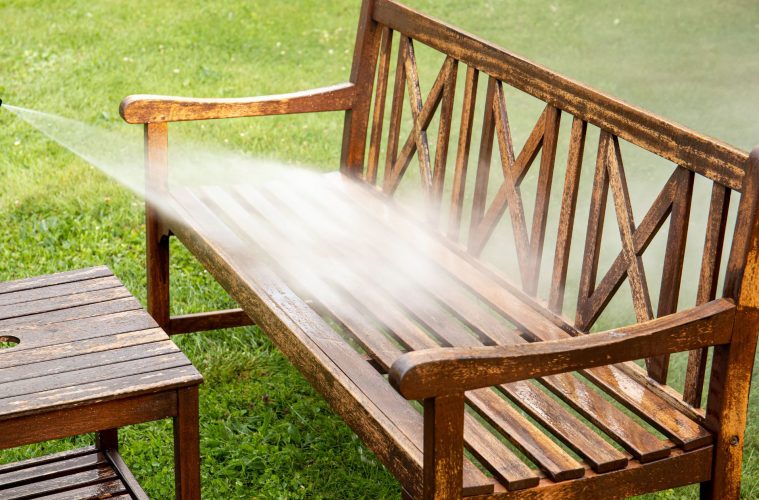
Other hardwoods require more consistent sealing. Check annually for cracks, checking along the grain where splits often begin, and fill small ones with an appropriate exterior wood filler before applying a fresh coat of sealer or weather-resistant varnish. Sand very lightly between coats to ensure adhesion. Never use a pressure washer on wooden furniture; the force dislodges fibres and opens the grain to moisture in a way that accelerates deterioration.
Wicker and rattan
Both natural wicker and synthetic rattan weave benefit from a thorough clean twice a year. Use a soft brush to dislodge dirt from between the weave, then wash with warm, soapy water and rinse well. Allow it to dry completely in the open air before use or storage, since trapped moisture causes both natural and synthetic fibre to mildew.
Natural wicker should be kept dry and is best stored under cover or indoors during the wet months of summer. Mildew on wicker can be treated with a diluted vinegar and water solution applied and left briefly before rinsing, which kills the mildew and slows regrowth. Synthetic resin wicker is considerably more weatherproof and tolerates rain and sun better than natural fibre, though it will fade faster with sustained UV exposure.
Plastic furniture
UV damage is the primary concern with plastic outdoor furniture in South Africa, where solar intensity is high throughout the year. White and light-coloured plastics yellow, and structural integrity weakens over time under sustained UV exposure. Where possible, move plastic furniture into shade during the hottest part of the day, particularly through summer when UV intensity peaks. A regular clean with warm soapy water keeps grime from working into the surface. Avoid abrasive scourers, which scratch the surface and accelerate further yellowing.
Cushions and outdoor fabric
Outdoor cushion fabric accumulates mould and mildew when stored or left in conditions with poor air circulation, particularly over the winter months. Before putting cushions into storage for winter, brush off any loose debris, wash in hot water if the covers are removable, and ensure they are completely dry before stacking or covering them. Acrylic outdoor fabric is the most durable for UV exposure. Cotton holds colour longer but mildews more readily if stored even slightly damp.
During the summer season, UV exposure fades fabric over time regardless of material. A light application of a UV-protective fabric spray, reapplied after washing, slows this process without compromising the fabric’s breathability.
What to do with your furniture now, in winter
SA’s dry, cool winter is actually relatively kind to outdoor furniture compared to the humid heat of summer. The main winter concerns are extended cold nights with frost (relevant to the Highveld and interior regions), strong dusty winds on the Highveld, and winter rain in the Western Cape. For frost-prone regions, bringing wicker and wooden pieces under cover or indoors on hard frost nights prevents the damage that forms when moisture inside joints and fibres expands on freezing. A breathable furniture cover, fitted and secured at the base, is the practical solution for pieces that cannot be brought indoors.
This is also a good winter task: repaint or reseal any furniture that showed wear last summer before the spring entertaining season begins. Doing it now, while the furniture is not in heavy use, allows full curing time and means everything is in good condition by the time the October warm-up arrives.
ALSO SEE:
Featured Image: Canva Stock Images
