
 Jade Mcgee
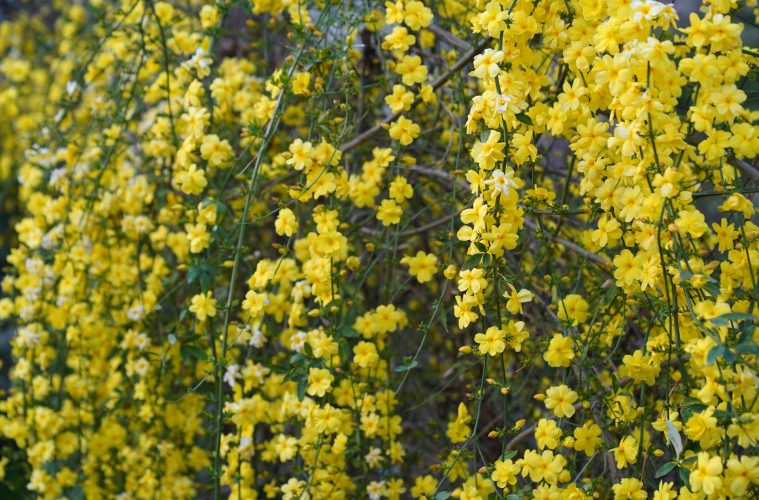
Most plants in the garden take their cue from warm weather, building toward a flowering season that coincides with spring and summer. Winter jasmine reverses this logic entirely. It produces cheerful, butter-yellow flowers on bare stems in the coldest months, blooming when almost nothing else in the garden is doing anything at all. For South African gardeners looking for late-winter colour, this trailing, sprawling plant is worth knowing about.
What is winter jasmine?
Winter jasmine (Jasminum nudiflorum) is native to China and distinct from the more familiar jasmine varieties common in SA gardens. Unlike star jasmine (Trachelospermum jasminoides), it has no fragrance, a fact worth knowing before planting it somewhere you’re expecting perfume. The flowers appear on bare green stems from late winter through early spring, typically around August in South Africa, before any leaves emerge. It’s this unusual sequence, colour before foliage, that makes it such a valued winter-garden specimen.
It is not a true climbing plant. Winter jasmine has long, arching, trailing stems rather than twining growth, and must be trained and tied to a support structure if you want it to grow as a wall shrub or vining plant. Without support, it spreads naturally as a groundcover.
Where it grows well in South Africa
Winter jasmine performs best in the cooler regions of the country: the Highveld, the KwaZulu-Natal Midlands, the Eastern Cape highlands and similar areas where winter temperatures drop low enough to trigger the cold period the plant needs to set its flower buds. A few weeks of temperatures below 15 degrees Celsius in winter generally satisfies this requirement.
It’s a tolerant plant in terms of soil conditions, adapting to sandy, loamy and average garden soil as long as drainage is adequate. Clay-heavy or permanently wet soil is the main thing to avoid. It actually performs well in conditions where more demanding plants struggle, making it a good choice for difficult dry-soil positions.
Sun and positioning
Winter jasmine needs a good amount of light to flower well. Position it against a north-facing wall or fence to maximise winter sun exposure. At least six to eight hours of direct or bright indirect light per day produces the best flower display. In shaded conditions the plant will grow but bloom weakly. A north-facing wall also benefits from the thermal advantage of heat absorbed during the day and released overnight, which creates a marginally warmer microclimate for the plant through cold nights.
Training against a support
Because it isn’t a natural climber, winter jasmine needs to be attached to its support using soft ties, wire or horticultural tape. Training the long arching stems horizontally where possible slows vegetative growth and encourages flowering, much as it does with other vining plants. A wall, solid fence or strong trellis all work well. Alternatively, allow it to cascade over a retaining wall or bank, which is a more natural and low-maintenance approach and shows off the flowering stems well.
Pruning for best results
Timing is critical because winter jasmine blooms on the previous season’s growth. Prune it in early spring, once flowering has finished, and at no other time of year. A post-flowering prune in September or October allows the plant to direct its energy into developing strong new stems that will carry the following winter’s flowers. Remove dead, weak or crossing stems and trim back as needed to control the size. Removing more than 30% of the plant at one time is not advisable.
Propagation
The easiest way to increase your plants is by layering: bend a long stem down to the ground, cover a section of it with soil and hold it in place with a stone or a wire peg. Once roots develop from the buried section, the stem can be cut from the parent plant and transplanted elsewhere. This typically takes several weeks and is best done in spring after flowering.
Pests and common issues
Winter jasmine is generally hardy and problem-free. In SA gardens, watch for the usual suspects: aphids, spider mites and mealybugs, which can be managed with neem oil or insecticidal soap applied promptly. Yellow leaves are most often a sign of overwatering or poor drainage. Leggy, sparse growth with few flowers indicates insufficient light.
ALSO SEE:
Featured Image: Pexels
