
 Jade Mcgee
Few plants change the mood of a garden quite as quickly as a banana. One generous leaf can make a courtyard feel more tropical, while a cluster of broad, arching foliage brings height and movement to a sheltered border. You do not need a plantation, or even a particularly large garden, to enjoy the effect.
For this week’s plant spotlight, consider the dwarf Cavendish banana, a compact selection of Musa acuminata grown as much for its foliage as for its fruit. ‘Dwarf’ is relative: a healthy plant can still reach roughly 2 to 3 metres in favourable conditions. It is also not technically a tree. Bananas are large herbaceous perennials, with a trunk-like pseudostem formed by tightly overlapping leaf bases.
Find a warm, sheltered position
A banana’s enormous leaves catch the wind like sails. Strong gusts can shred them, so choose a protected corner rather than an exposed boundary. A sunny courtyard or a spot near a wall that holds warmth works particularly well, provided there is room for the leaves to spread.
Aim for plenty of light, ideally six or more hours of sun. In exceptionally hot, dry inland gardens, some protection from fierce afternoon heat can help young or newly potted plants settle. Bananas dislike frost, making them easiest to grow outdoors year-round in warm, relatively frost-free areas. In colder regions, a movable container is often the more sensible choice.
Choose the right pot and soil
A dwarf banana makes an impressive container specimen, but a tiny decorative pot will not support vigorous growth. Start with a sturdy pot at least about 45 to 50 centimetres across for a sizeable plant, with generous drainage holes. Move it into a larger container as its roots fill the space.
Use fertile, moisture-retentive potting mix that also drains freely. In the ground, loosen the soil well and work in compost before planting. The aim is consistent moisture without leaving roots sitting in stagnant water. A layer of mulch helps keep the root zone cooler, but leave a little space around the base of the pseudostem.
Water and feed through the growing season
Those large leaves need a reliable water supply, especially during warm, windy weather. Check the soil with a finger rather than watering automatically: when the top few centimetres begin to dry, water thoroughly and allow excess water to drain away. Container plants may need much more frequent attention than bananas planted in garden beds.
During active spring and summer growth, a balanced fertiliser used according to the label can support new leaves. Avoid feeding heavily when growth slows in winter. Yellowing older leaves can be removed neatly with clean secateurs, but leave healthy green foliage in place to keep feeding the plant.
Protect your banana in winter
A frost warning matters more than a calendar date. Where winter temperatures drop sharply, move potted bananas to a bright, sheltered position before the first frost, and reduce watering while growth is slow. Plants in the ground may need insulating mulch and frost protection, although severe cold can still damage their stems and leaves.
Brown edges are not always a sign of disaster. Wind can split leaves naturally, while dry air may crisp their tips. Repeated yellowing, soft stems or persistently wet compost are more concerning and suggest checking drainage and watering habits. Look under the leaves occasionally for aphids, mealybugs or spider mites, especially on plants moved indoors.
Style dwarf bananas as an ornamental feature
Use one plant where its silhouette will be appreciated: beside a patio chair, at the end of a path or against a simple wall. Its bright, sculptural leaves provide a striking contrast to fine-textured grasses, low groundcovers and smaller-leaved shrubs.
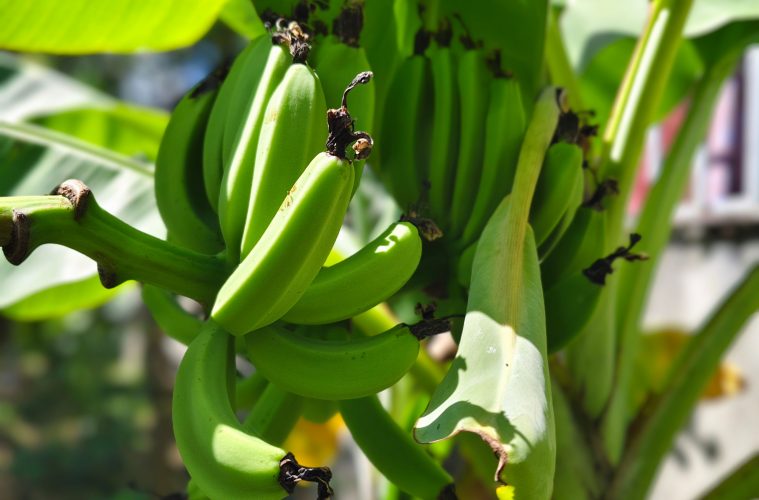
A mature dwarf Cavendish may produce edible bananas in sufficiently warm, sunny conditions, but fruit is a bonus rather than a promise. The real reward is the foliage, which can make even a modest outdoor space feel wonderfully lush.
ALSO SEE:
Featured Image: Pexels
