
 Jade Mcgee
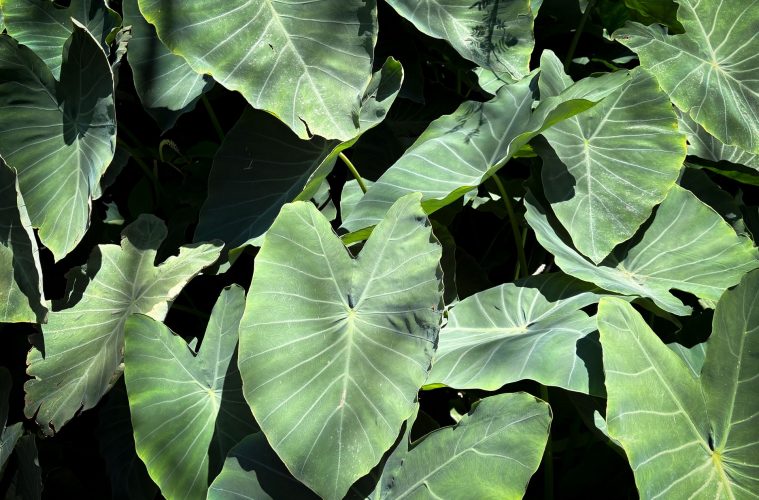
With near-black leaves held on long stems, ‘Black Magic’ colocasia is easy to understand as a garden temptation. The cultivar is usually promoted as a dramatic tropical plant for warm, moist borders, large containers and even pond edges.
In South Africa, however, the usual growing advice needs an important rewrite. ‘Black Magic’ is a cultivar of Colocasia esculenta, the same species commonly known as taro or amadumbe. South African biodiversity records show that the species has naturalised and become invasive in several parts of the country, so it is not a sensible choice for carefree outdoor planting in a South African garden.
Why the species is a concern locally
Colocasia esculenta spreads readily through vegetative material such as corms, stolons and fragments. In the conditions it prefers – warm temperatures, rich soil and abundant moisture – escaped plants can form dense stands along rivers and other wet areas, competing with surrounding vegetation.
A recent South African risk assessment scored the species as high risk and noted that it is already invasive in multiple provinces. The same assessment also points out that there are many ornamental cultivars in the country and that there is not enough information to assume individual cultivars are less invasive. That uncertainty is exactly why a cautious approach makes sense.
Why standard growing advice is a poor fit here
Typical international care guides recommend consistently damp soil and even suggest pond edges or shallow water as suitable planting positions. Those conditions may help the plant look lush, but they are also the environments in which escaped Colocasia can spread most effectively. Encouraging planting next to watercourses would therefore be particularly inappropriate in a South African garden.
The same applies to routine propagation. Dividing offsets from the main corm is presented as an easy way to make more plants, but multiplying and sharing material increases the number of opportunities for fragments to escape cultivation.
If you already have Black Magic colocasia
Do not dump corms, roots, offsets or potting mix into natural areas, stormwater systems, streams or garden waste piles where pieces may take root. Bag unwanted plant material securely for disposal according to local municipal guidance, and clean tools and containers so fragments are not moved accidentally.
If an existing specimen is being kept temporarily while you decide what to do with it, strict container control is safer than planting it into open ground. Keep the pot well away from drains, wetlands and watercourses, prevent offsets from escaping, and do not allow discarded pieces to enter compost that will be spread around the garden.
Choose dark foliage without increasing invasion risk
The appeal of ‘Black Magic’ is its scale and deep colour, not the species itself. Before buying a dark-leaved tropical for a courtyard or patio, ask a reputable local nursery for a non-invasive option suited to your province and intended growing conditions. A container-grown foliage plant that stays contained is a better design choice than an ornamental with a known history of escape.
If you are replacing an existing specimen, use the opportunity to rethink the role it was playing in the design. A locally appropriate foliage plant with strong texture, dark colour or generous leaves can create the same visual weight without bringing the same escape risk into a wet garden or riparian setting.
This is one of those cases where local context matters more than an attractive international planting guide. A striking plant is never worth increasing pressure on rivers, wetlands and natural vegetation.
ALSO SEE:
Featured Image: Pexels
