
 Maegan-Leigh Jacobs
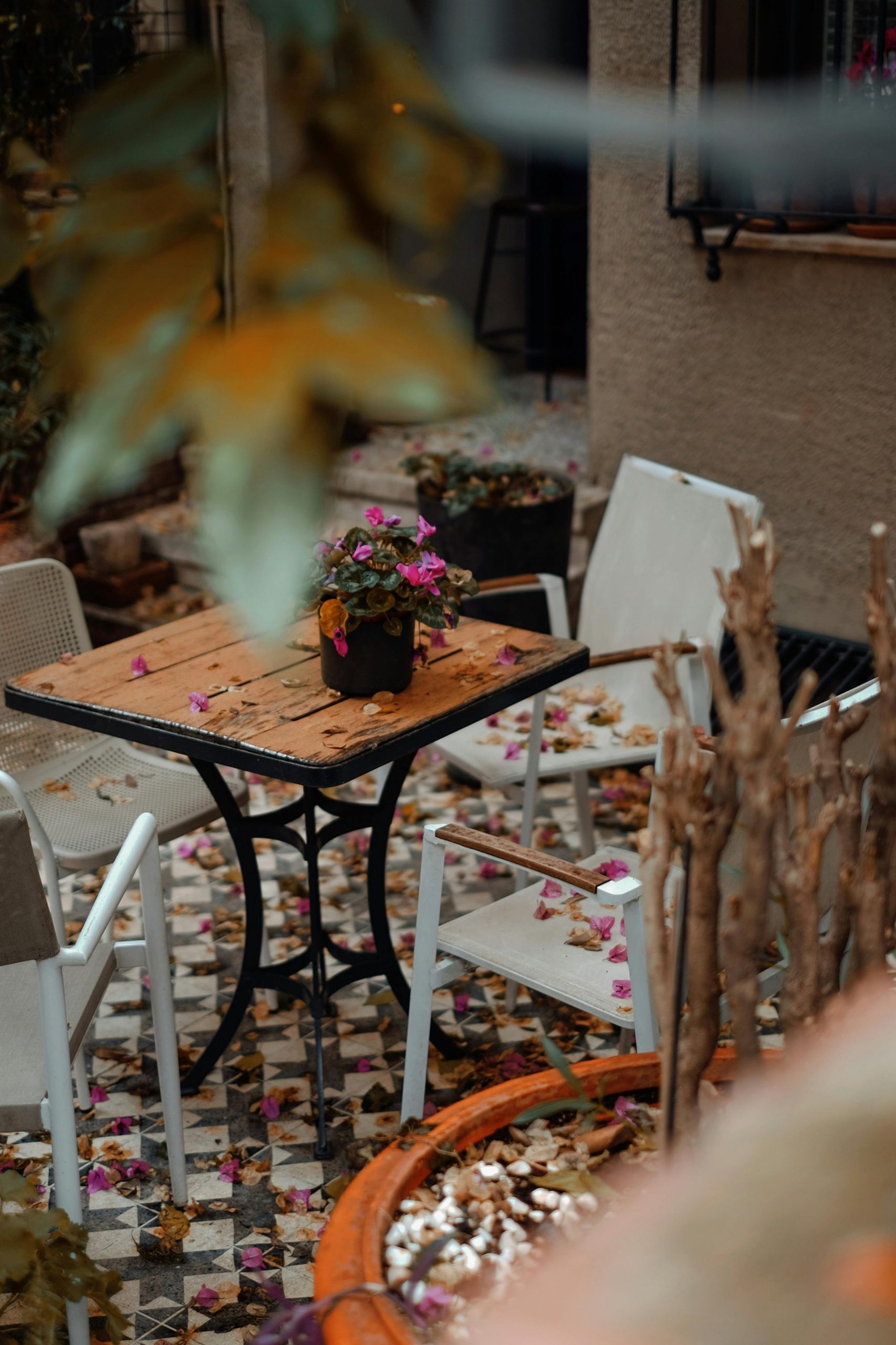
Winter has a way of quietly rearranging things. Suddenly the braai corner feels abandoned, the cushions look suspiciously soggy, and your once-perfect patio starts resembling a scene of “we’ll deal with it in spring.”
The truth? A little care now saves a lot of regret later. Think of it as tucking your outdoor space in properly before the cold sets in. Not dramatic. Just necessary. And surprisingly simple.
Here’s how to keep your patio furniture looking like it hasn’t just survived a small weather war by the time warmer days roll back in.
Clean it like you actually love it
Before anything gets packed away or covered up, give every piece a proper clean. Not a rushed wipe-down with yesterday’s cloth, but a real reset.
Dust, pollen, crumbs from that one long lunch that turned into dinner – get it all off. Dirt doesn’t just sit there politely over winter; it settles in, stains, and speeds up wear in ways you only notice when it’s too late.
Once clean, dry everything thoroughly. And then dry it again. Moisture is the undercover villain here, quietly encouraging mould, mildew, and that unmistakable “old damp garden chair” smell nobody wants in spring.
This is also a good moment to notice what your furniture has been hiding. A bit of rust here, a loose screw there – small fixes now prevent bigger frustrations later.
Add a protective layer (your furniture deserves skincare too)
If your skincare routine has serums and moisturisers, your patio furniture deserves its equivalent.
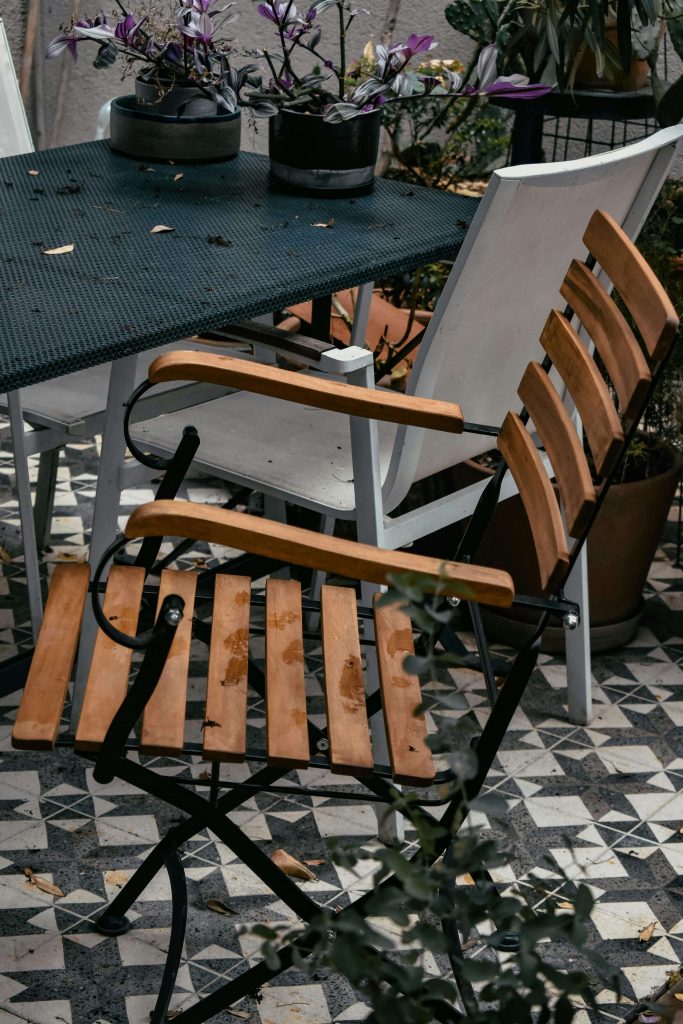
Wood benefits from a weatherproof seal or oil that locks out moisture. Metal pieces appreciate rust-resistant spray or a protective wax coating. Even wicker – especially the natural kind – does better with a light protective treatment before it’s exposed to cold, wet months.
Think of it as giving everything a lightweight raincoat before the stormy season arrives. Not heavy armour, just smart protection.
Pexels
Store it like you mean it
If you have the space indoors – garage, shed, even a covered storeroom – this is the gold standard. Winter and outdoor furniture are not best friends.
Stack chairs neatly. Group similar pieces together. Keep everything as compact and calm as possible. It’s part practicality, part “future you will be grateful.”
Cushions and soft furnishings should ideally come indoors. Store them in sealed bags or containers so they don’t quietly absorb moisture while you’re not looking. Because they will try. If you can, add something to absorb humidity in storage spaces. It’s a small step that prevents that damp, musty surprise no one ever wants to reopen in September.
If it must stay outside, cover it properly (not creatively)
Sometimes furniture simply has to brave the outdoors. In that case, covers are non-negotiable.
Choose weather-resistant covers that protect from rain without sealing everything in like a plastic vacuum. Breathability matters more than people think – it keeps mould from throwing a winter party under there.
Secure everything well. Wind has a talent for turning neatly covered furniture into a chaotic morning surprise. Tie-downs or weighted edges help keep things where they belong.
And don’t forget elevation. Keeping furniture slightly off the ground helps avoid frozen feet, trapped moisture, and unnecessary sogginess.
A quick check every now and then also goes a long way. Think of it as a gentle welfare visit for your patio.
Let the material guide you
Not all furniture is built for the same kind of winter drama.
Wood prefers attention. A light sand, a seal, and ideally a dry, raised storage spot. It hates lingering moisture and will let you know through cracks and warping if ignored for too long.
Metal needs vigilance. Tiny scratches can turn into rust faster than you’d expect. Touch up chips, apply rust protection, and keep joints lightly treated so nothing seizes up in the cold.
Wicker is sensitive, especially the natural kind. It prefers dry, airy storage indoors. Resin versions are tougher, but still don’t enjoy being left out in the elements like they’re indestructible.
Cushions and fabrics are the most dramatic of the bunch. One wet season is enough to cause fading or mildew. Wash, dry completely, and store properly sealed. No shortcuts here.
Winter doesn’t have to be the season your patio furniture disappears into a sad, weather-beaten version of itself. With a little effort now, you’re not just protecting furniture – you’re preserving the feeling of easy summer mornings, long lunches, and evenings that stretch just a bit too late.
And that version of your patio? It’s worth keeping safe.
ALSO SEE: SIMPLE WAYS TO REFRESH YOUR HOME BEFORE WINTER ARRIVES
