
 Maegan-Leigh Jacobs
There’s something deeply satisfying about reimagining your space – knocking down a wall here, carving out a corner there, and suddenly your home feels brand new. But before you reach for the sledgehammer or start sketching partitions, there’s one big question to settle: open-plan or zoned living?
Both styles have their charm (and their challenges). The trick is figuring out which one fits your life – not just your Pinterest board.
The case for open-plan living
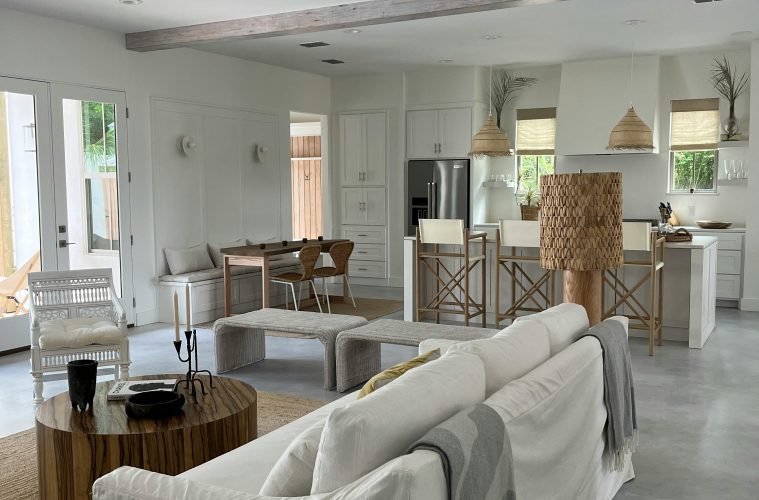
Open-plan spaces have a certain magic. Think light pouring in from every angle, uninterrupted sightlines, and a sense that everything just… flows.
It’s a favourite for smaller homes and apartments, where removing walls can make a space feel instantly bigger. The kitchen melts into the living room, the dining table becomes a multi-tasking hub, and suddenly you’ve got a home that feels social, breathable, and easy.
It also lends itself beautifully to a pared-back, minimalist style. Fewer walls mean fewer visual interruptions – and more room for statement pieces to shine.
But here’s the catch:
That same openness can quickly turn chaotic. When everything shares one space, boundaries blur. Work spills into downtime, clutter has nowhere to hide, and privacy becomes a luxury.
If you’re sharing your space (or just love a bit of quiet), it can feel like you’re always “on display”.
Best suited to:
Singles, couples, or anyone craving a light, airy home with a less-is-more approach.
Why zoned living deserves a moment
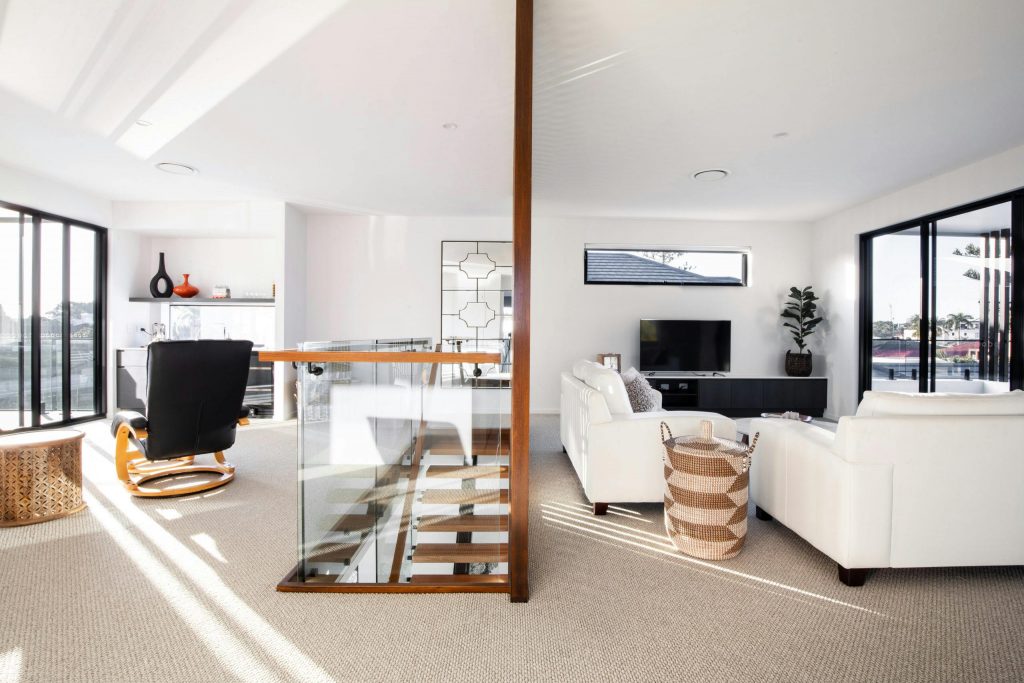
Zoned living is the quieter, more considered sibling. It doesn’t rely on walls alone – instead, it uses clever design to create “rooms within rooms”.
Think rugs that anchor a lounge area, a change in wall colour to define a workspace, or even a sleek glass divider that separates without closing things off completely. It’s all about balance: you still get flow, but with a sense of purpose. The living room feels like a living room. The workspace feels like somewhere you can actually focus. And your bedroom? Still your sanctuary.
The trade-off:
Zoning takes a bit more thought. Without careful planning, spaces can feel boxed in or slightly disjointed. And in smaller homes, carving out distinct areas can sometimes make things feel tighter rather than freer.
Light can also become uneven, with certain corners feeling a little dim if not handled well.
Best suited to:
Busy households, remote workers, or anyone who needs structure without full separation.
Pexels
So, which one wins?
Honestly – neither. It’s less about “better” and more about “better for you”.
If you love hosting, thrive in open spaces, and don’t mind a bit of overlap in how you use your home, open-plan living will feel effortless.
If you crave order, routine, and a sense that everything has its place (and purpose), zoned living might be your sweet spot.
The sweet middle ground
Here’s a little secret: you don’t have to choose just one.
Some of the most liveable homes blend both ideas – an open-plan base with subtle zoning layered in. A bookshelf acting as a divider, a rug that defines the lounge, or a change in lighting that shifts the mood from work to wind-down. It’s flexible, forgiving, and evolves with you.
ALSO SEE: YOUR HOME IS A MULTI-FUNCTIONAL SANCTUARY
