
 Maegan-Leigh Jacobs
You spend roughly a third of your life tucked in your bed – that quiet sanctuary of rest. But here’s the thing that many people don’t even think about when it comes to sleep and wellness – your bedding is quietly building a micro-ecosystem, and you’re the host.
Every night your body sweats, secretes body oils and sheds between 30,000 and 40,000 dead skin cells per hour, exactly where you sleep. Enter dust mites – and not just a few – research shows millions! The warmth, the humidity, the endless buffet of skin cells you generously provide basically make your bed a five-star resort for them. You won’t feel them. You won’t see them. But if you wake up sneezing, congested, or itchy-eyed, their waste particles are a leading suspect, and one of the most common triggers for allergies and asthma.
But the mites are almost secondary. They’re just feeding on everything else that’s already there. Bacteria from your skin transfer onto your linen every night, and then there’s fungi, yeast, saliva, pet dander, pollen hitchhiking in from outside, and – during illness – viruses that can survive on fabric for hours.
And while we know that regular laundering and mattress vacuuming keep your bed hygienic and fresh, the question remains: ‘How often is regular, really?’
According to Jeffrey Madkins, Marketing Manager at Unilever Professional, hygiene experts generally recommend washing household linen once a week in hot water (at least 60°C) to keep allergens and dust mite ecosystems at bay. Mattress protectors and vacuuming your mattress monthly also add another layer of defence.
Surprisingly, he adds that laundry standards are much higher in the hospitality industry.
“For hotels, guesthouses and lodges, hygiene is not simply about appearances. It is about trust. And bedding plays a powerful role in how guests judge a property the moment they walk into a room.”
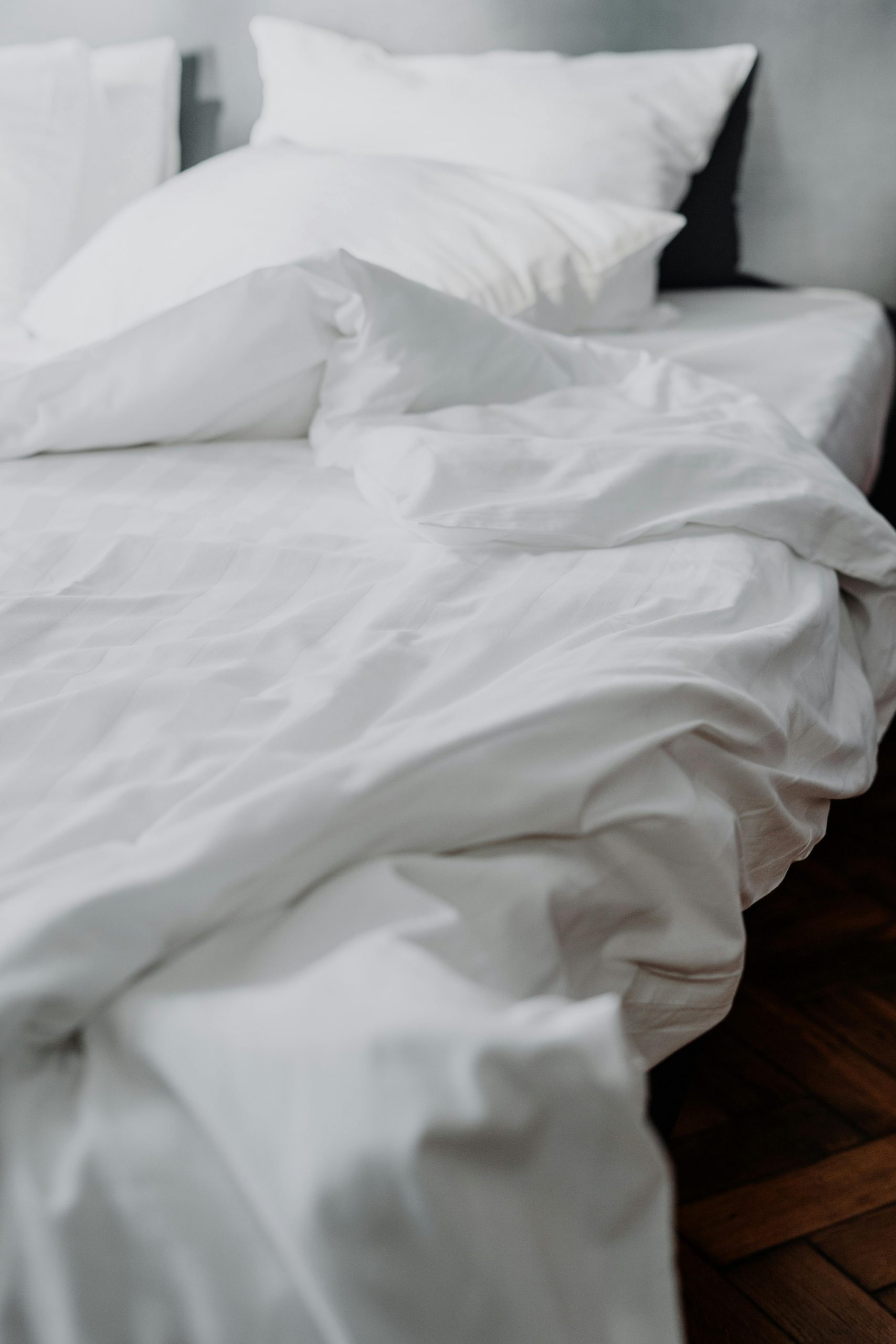
“Fresh, white linen is non-negotiable because it is one of the clearest indications of cleanliness to guests,” Madkins continues. “Think about walking into a hotel room – even before you inspect the bathroom or unpack your bags, you notice the bed. Crisp, pristine duvet covers, sheets and pillowcases communicate that an establishment is well-managed and guest-ready.”
“That’s also why no matter how short the stay, every reputable property replaces and launders all bedding between guests – no exceptions,” he emphasises. “Another often-overlooked rule: if a room has sat empty for two weeks or more, linen needs to be refreshed before the next check-in. Even undisturbed sheets go stale – and guests notice.”
“Across hotels around the world, white linen has become the visual benchmark for luxury and standards,” Madkins notes, “because we all trust what we see, right?” And white linen reveals any stain, mark or discolouration immediately, making it one of the most honest indicators of a well-run establishment.
This means you may need to change the linen mid-stay, too, if there is a visible stain – no waiting for the normal laundry cycle or for the guest to leave. The same rule holds at home: spills, pets, heavy sweating or allergy flare-ups all warrant an early change.
“Keeping whites bright is more straightforward than most people think – especially in hospitality, where professional laundry systems are built to remove stains, protect fabric and maintain that crisp brightness wash after wash,” says Madkins. “Products like OMO Perfect Whites are formulated to keep bedding visibly bright and genuinely clean.
Ultimately, linen may seem like a small detail… it isn’t!
“Because cleanliness isn’t just about hygiene. It’s about how people feel in a space,” Madkins believes. “Something as simple as quality, freshly laundered linen can be the difference between a glowing review and a one-time guest,” he concludes.
ALSO SEE: SUMMER IS THE PERFECT TIME TO UPGRADE YOUR BEDDING
Summer is the perfect time to upgrade your bedding: Here’s what you need
