
 Bianca Muller
A visit to Grootbos Private Nature Reserve is a reminder that a garden does not need to be neatly clipped or filled with familiar flowering plants to be extraordinary. Here, the landscape is shaped by fynbos, ancient milkwood forests and a remarkable variety of indigenous species, each with its own role in the ecosystem.
Set in the Overberg near Gansbaai, Grootbos is part of the Cape Floral Kingdom. Botanical research on the reserve began in 1996, and the reserve’s information records more than 900 plant species, including seven that have been identified as new to science. That is a remarkable amount of diversity to find in one place, and it is also why conservation and research are such important parts of the work taking place here.
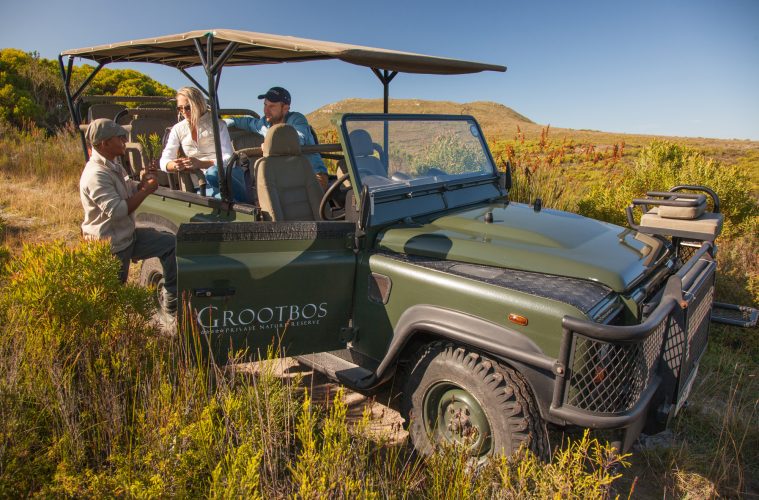
During a visit in October, I joined nature guide Jono for a walk through the milkwood forest and a 4×4 flower safari. The weather was wet and changeable, but the rain offered a different view of the landscape, bringing out the colours and scents of the vegetation.
Getting to know the milkwoods
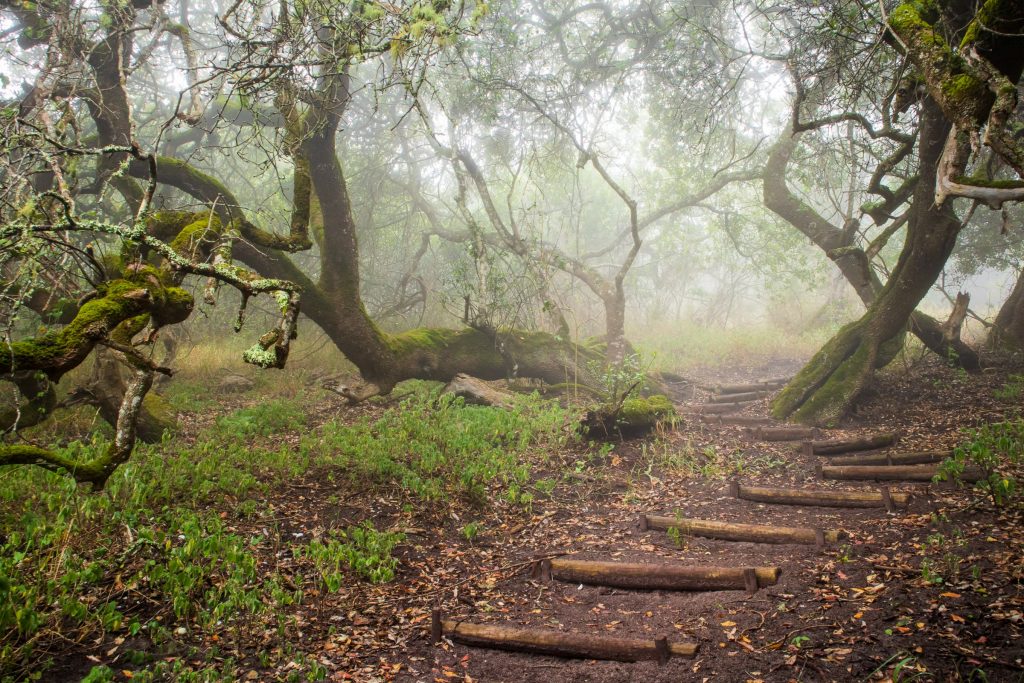
The milkwood forest was one of the highlights. These trees are well suited to coastal environments, where they have to contend with sandy soils, strong winds and salt in the air.
“They can withstand very bad soil, like literally sand dunes,” Jono explained. “They can put up with strong wind, they can put up with sea spray.”
Their growth habit is particularly interesting. Rather than growing straight upwards, some milkwoods spread out along the forest floor, with branches taking root as they go. This helps the trees reach pockets of water and nutrients in soils that are often poor.
“They actually creep along the floor, which allows them to access nutrients from much further afield and water,” Jono said. “Sometimes what looks like multiple different trees is one tree.”
The older trees can be exceptionally large and have been growing for centuries. Jono estimated that one of the specimens we looked at was more than 500 years old.
White milkwood (Sideroxylon inerme) is a protected tree in South Africa. It is an evergreen species found in coastal woodland, dune forest and littoral forest, and its dense growth provides habitat and food for wildlife. Its small, pale flowers and dark berries are part of the seasonal life of the forest.
The trees are also known for their fire resistance. This is an important characteristic in a region where fynbos has evolved alongside fire, although the forest and surrounding fynbos have different ecological requirements.
Fynbos needs fire, but timing matters
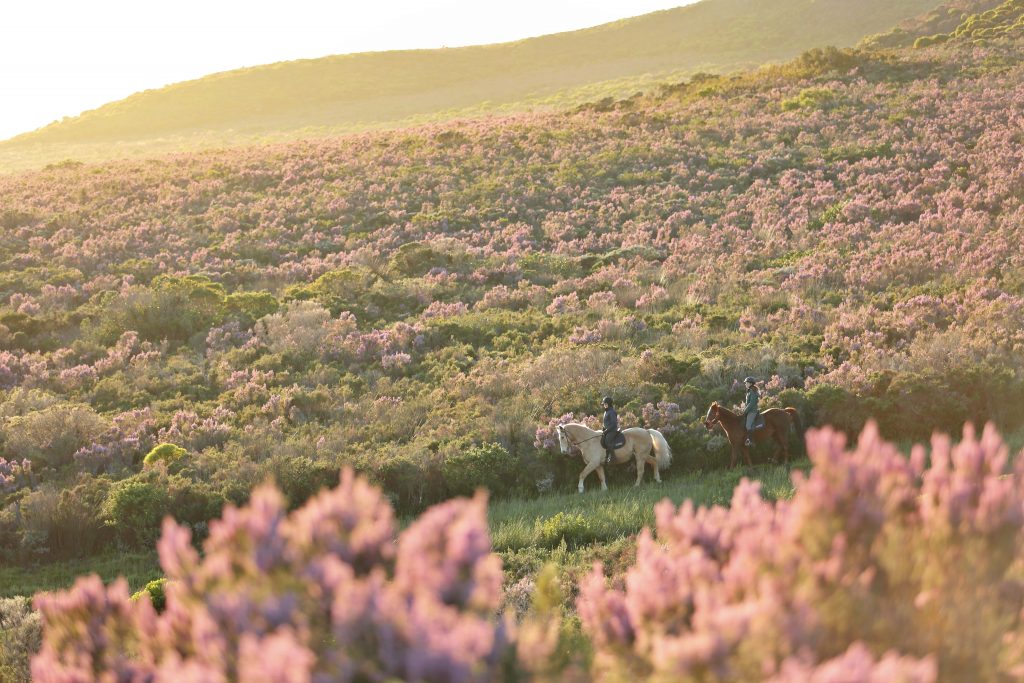
One of the most interesting parts of the flower safari was learning how fynbos responds to fire. Fire is a natural part of the ecosystem, and many species have adapted to survive or regenerate after it.
There are two broad strategies. Some plants are resprouters, which can grow again from protected buds or underground structures after a fire. Others are reseeders: the parent plant is killed, and the next generation grows from seed.
Proteas and some conebushes have a particularly clever strategy. Certain species retain seeds in their cones while they are still attached to the plant. After a fire, the seeds are released and can germinate when conditions are suitable.
But fire frequency is important. If an area burns again before slower-growing plants have had enough time to mature and produce seed, some species may struggle to regenerate. Fynbos management therefore involves considering the needs of different plants, rather than simply assuming that more frequent fires are better.
The timing of germination is also fascinating. Some seeds respond to cooler conditions, while the open ground and changed conditions after a fire can provide an opportunity for new growth. The ash, light and reduced competition all contribute to the post-fire environment.
Gareth Williams @GJH-Williams, Grootbos @Grootbos
A world of pollinators
The flower safari also brought attention to the relationships between plants and their pollinators. Flowers are not simply colourful additions to the landscape; their shapes, markings and scents can be closely linked to the insects or birds that visit them.
We learnt how some flowers have markings that guide pollinators towards the parts of the flower where pollen is available. In one example, stripes on a flower help direct bees towards the right landing point. Another plant had markings that are more visible under ultraviolet light, offering a different perspective on how pollinators may see flowers.
Grootbos also has an entomology collection and research programme focused on the insects found in the region. The work is important because many insect species remain poorly documented, particularly in the fynbos of the Agulhas Plain.
Conservation beyond the reserve
The Grootbos Foundation was established in 2003 and works across conservation, community development and education. During the visit, we learnt about projects that include environmental education, training, alien vegetation clearing, plant propagation and opportunities for local people to develop practical skills.
The conservation work also extends beyond Grootbos itself. Through partnerships with neighbouring landowners, the team supports efforts to protect important areas of fynbos and improve long-term management of the landscape.
It is a useful reminder that conservation cannot always stop at a property’s fence line. Habitats are connected, and protecting a larger area can make a meaningful difference to the plants and animals that depend on it.
For gardeners, a visit to Grootbos offers plenty of inspiration. It encourages a closer look at indigenous plants, the insects that visit them and the conditions they need to thrive. It also shows why fire, soil, water and biodiversity should be considered together when we think about the natural landscape.
The fynbos may look untamed, but there is an extraordinary amount of order and adaptation within it. Spend a little time looking closely, and the smallest flower or insect can tell a much bigger story.
ALSO SEE: Historic art collection Grootbos Florilegium celebrates 25 years of conservation
Historic art collection Grootbos Florilegium celebrates 25 years of conservation
