
 Jade Mcgee
Perlite is a fixture in most commercial potting mixes and seed-starting mediums, and its ubiquity is justified: it improves aeration, provides some water retention and is chemically inert, which makes it safe around sensitive seedling roots. But it is not without drawbacks. It is technically inorganic; it floats to the soil surface over time as watering displaces it from within the mix, the dust it produces during handling requires care, and its primary source is volcanic glass from Greece, which carries a significant transport footprint.
For gardeners with eco-conscious priorities, or those who simply want a growing medium that does more than perlite alone can offer, there are viable alternatives. Some match perlite’s function precisely, others improve on it for specific applications, and several offer the added benefit of contributing nutrients rather than acting purely as a structural agent.
What perlite actually does
Before selecting an alternative, it is worth identifying which of perlite’s properties you actually need. Perlite provides three things: aeration and drainage by creating space within the soil structure; limited water retention through small cavities on its surface; and chemical neutrality, meaning it introduces no nutrients or pH-altering compounds. A suitable alternative needs to match at least one of these functions for the specific growing application. Not all of the alternatives below match all three.
Rice hulls
Rice hulls are the outer coatings removed from rice grains during processing and are one of the most genuinely like-for-like perlite alternatives available. They provide similar structural benefits, improving drainage and aeration in a potting mix, but unlike perlite, they break down over time, releasing micronutrients including calcium, magnesium, iron, zinc, manganese and copper into the growing medium as they decompose. They are a renewable agricultural byproduct with a smaller environmental footprint than perlite, and they do not produce the fine dust that makes handling perlite in enclosed spaces uncomfortable. Rice hulls are not yet widely available at SA nurseries but can be sourced from agricultural suppliers and some organic gardening retailers.
Coconut coir
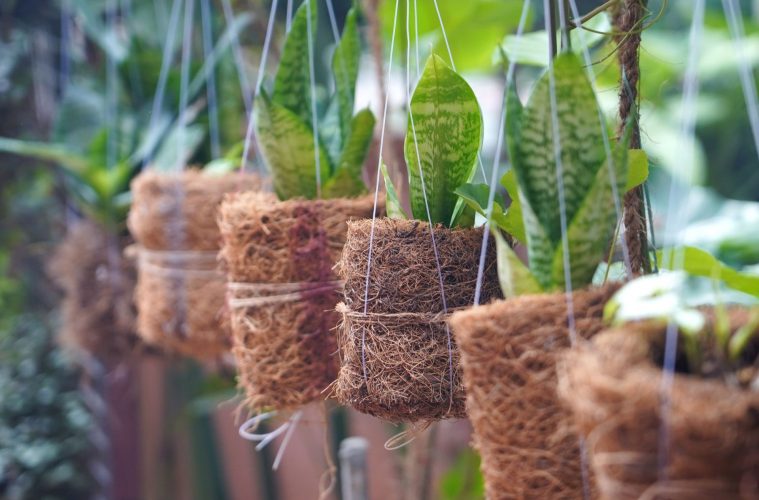
Where perlite is used primarily to improve drainage and aeration, coconut coir is used for its superior moisture retention. Coir can hold approximately 70 to 80 per cent of its own weight in water while maintaining an open, aerated structure that does not compact or become waterlogged in the way that heavy potting soils can. It is pH-neutral, making it compatible with a wide range of plants, and it is a renewable byproduct of coconut harvesting rather than a mined or manufactured material. In SA, compressed coir blocks are available at most large nurseries and hardware retailers. For applications where water retention is the primary goal, coir is a more effective choice than perlite. For drainage, perlite remains stronger.
Peat moss
Peat moss shares coir’s exceptional water-holding capacity and has a long history of use in seed-starting and potting mixes. Its limitation is ecological: peat comes from ancient bog ecosystems that take thousands of years to form, and its extraction is destructive to habitats that also serve as significant carbon stores. For gardeners weighing up water retention with environmental impact, coir is the more defensible choice for the same function. Where peat does have an advantage over coir is its natural acidity, which makes it suitable for acid-preferring plants like blueberries, azaleas and heathers without requiring soil amendment.
Horticultural sand
Coarse horticultural sand is an effective perlite alternative specifically for drainage and aeration in mixes for plants that need fast-draining conditions: cacti, succulents, citrus and Mediterranean herbs all perform well in mixes that include a proportion of coarse sand. It is important to use horticultural or river sand rather than builders’ sand or fine beach sand: the particle size and composition of builders’ and play sand create entirely different soil conditions and are not appropriate substitutes. A standard working ratio for cacti and succulents is one part potting mix to one part coarse sand.
The one context in which horticultural sand should not be used is in clay-heavy soils, where adding sand without substantial organic matter creates a concrete-like compacted mixture when wet. In heavy clay, gypsum and organic matter are more appropriate structural amendments.
Compost and well-rotted manure
Compost and composted manure do something that none of the structural alternatives can: they add nutrients as well as improving soil structure. This makes them not simply alternatives to perlite but upgrades in nutrient-limited situations. Both improve aeration and drainage moderately while contributing the macro and micro nutrients and organic matter that encourage the microbial life responsible for long-term soil fertility.
For container gardening, compost is best used in combination with a drainage amendment such as coir or pumice rather than as a standalone perlite replacement, since container soils need more active drainage management than garden beds where gravity and depth assist. As an amendment to garden beds rather than containers, compost alone is often sufficient.
Pumice
Pumice is a naturally occurring volcanic rock with porous surfaces that hold both water and air, making it functionally similar to perlite but with several practical advantages. It is heavier than perlite, which means it stays in place within the growing medium rather than floating to the surface during watering. It does not require manufacturing beyond processing and is a naturally renewable material from ongoing volcanic activity. In SA, pumice is available from specialist garden and horticultural suppliers, though it tends to be more expensive than perlite. Its weight makes it particularly suitable for outdoor containers and raised beds where the displacement problem with perlite is most noticeable.
Vermiculite
Vermiculite is a mineral that undergoes a significant expansion when heated, producing a lightweight, porous material with a high capacity to absorb and hold both water and nutrients. Unlike perlite, which releases no nutrients, vermiculite can hold and gradually release cations including calcium, magnesium and potassium that are introduced through fertiliser applications, making it more efficient in nutrient-managed growing systems. It is particularly effective in seed-starting mixes and rooting mediums where both moisture retention and gentle fertility are useful. Vermiculite is widely available at SA nurseries and is often sold alongside perlite in the same aisle.
ALSO SEE:
Featured Image: Pexels
