
 Jade Mcgee
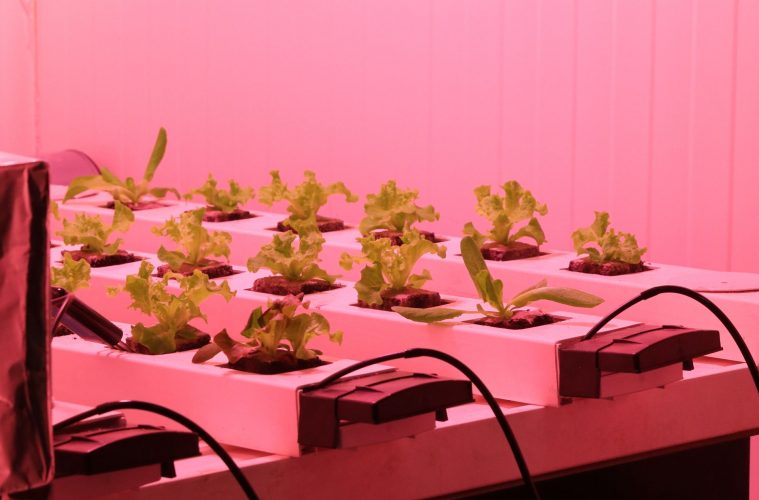
Grow lights have become increasingly accessible for home growers and houseplant enthusiasts, and with that accessibility has come a proliferation of options: full-spectrum white LEDs, single-colour red or blue lights, combined red-blue units and infrared panels. The red light category in particular has gathered a following among indoor growers who report improvements in flowering, fruiting and overall plant vigour. The underlying science explains why these results occur, while also clarifying some important distinctions between the different types of red light that are often conflated.
Why light colour matters for plants
Plants do not treat all wavelengths of light equally. The visible light spectrum covers wavelengths from approximately 400 nanometres at the violet end to around 700 nanometres at the red end, and different wavelengths drive different physiological processes in plants. Of these, red and blue light are the most critical for photosynthesis and plant development.
Blue light, in the 400 to 500 nanometre range, drives vegetative growth: leaf development, stem elongation and root formation. It is the dominant signal that seedlings and young plants respond to. Red light, in the 600 to 700 nanometre range, promotes flowering, fruiting and the later developmental stages of a plant’s life cycle. A plant receiving only blue light tends to produce lush vegetative growth but may struggle to flower; one receiving predominantly red light may flower earlier than ideal but at the expense of leaf development.
The three types of red light
What growers often refer to loosely as red light is actually three distinct phenomena. Visible red light sits in the 620 to 700 nanometre range and is detectable by the eye as red colour. It directly stimulates chlorophyll absorption and drives photosynthesis, which makes it the most established and evidenced form of red light for plant growth applications.
Infrared light, in the 700 to 1000 nanometre range, is invisible to the human eye. It plays a role in plant signalling, particularly in the way plants detect shade from neighbouring plants and adjust their growth accordingly. Infrared light in large quantities generates heat, which can stress plants in a way that red light does not.
Far-red light sits between visible red and infrared, at approximately 700 to 780 nanometres. Research suggests it may have significant potential for promoting plant growth and elongation, but the scientific evidence base is still developing, and much of what circulates in grower communities is anecdotal. Far-red LEDs are increasingly available but their optimal use parameters are less established than those for standard red or full-spectrum lights.
Full-spectrum versus single-colour lights
Most professional and experienced home growers use full-spectrum LED lights rather than single-colour red or blue lights. A full-spectrum light provides the complete range of wavelengths that plants can use, including the blue light required for vegetative growth and the red light that promotes flowering, without the user needing to manage which light to use at each stage of the plant’s development. This is particularly practical for houseplants, which are typically kept in a single environment across their entire life cycle rather than moved through distinct production stages.
Single-colour red lights are more useful in specific production contexts: a grower who wants to push a plant into flowering, or who has seedlings in a vegetative stage and then wants to transition them to fruiting, can use light colour to influence this timing. For the home houseplant grower, this level of control is rarely necessary.
Timing and duration
Regardless of the light type used, timing matters as much as spectrum. Seedlings require the most light, typically 14 to 18 hours per day. Established houseplants that are primarily foliage plants generally need 12 to 14 hours under artificial light to maintain healthy growth. Flowering and fruiting houseplants benefit from 14 to 16 hours during the active growing phase. Automated timers are the most practical way to manage these cycles consistently, since manual switching at the right intervals is easy to forget.
LEDs are the best practical choice
LED grow lights have become the dominant option for indoor plant growing, and the reasons are practical: they produce bright light with significantly less heat output than fluorescent or incandescent alternatives, they use less electricity for the same light output, and they last considerably longer. The initial cost of LED grow lights tends to be higher than other types, but the reduced running cost makes them the more economical choice over time. For anyone investing in grow lights for houseplants, LEDs, whether full-spectrum white or combined red-blue units, are the most sensible starting point.
ALSO SEE:
Featured Image: Pexels
