
 Jade Mcgee
The bathroom rug has a complicated reputation. In some design circles it is dismissed as fussy or dated; in others it is considered an essential layer that transforms a hard, clinical space into something more considered and comfortable. The truth, as with most things in interior design, is that it depends almost entirely on execution.
A badly chosen bathroom rug, placed in the wrong position and left too long between washes, earns its poor reputation. A well-chosen one, in the right material and position, adds warmth, texture and visual interest to a room that can easily feel stark without it. The difference comes down to a few key decisions made at the outset.
Understand what a rug is for in a bathroom
The first thing to clarify is the distinction between a bath mat and a bathroom rug. A bath mat is a functional item: it sits directly outside the shower or bath, absorbs water from wet feet and prevents slips. It needs to be highly absorbent, quick-drying and easy to wash frequently.
A bathroom rug serves a different purpose. It is a design element rather than a purely functional one, used to add pattern, colour or texture to the space rather than to manage moisture. Placing a rug in the same wet zones as a bath mat is the most common mistake and the main reason rugs develop the damp, musty quality that gives them a bad name. The two items should coexist rather than compete: the bath mat handles the wet zones directly outside the shower and bath, while the rug occupies the drier areas of the room, an entrance zone, a stretch of floor between the vanity and the door, or a section of a larger bathroom that sees foot traffic but not direct water exposure.
Choose the right material
Material choice is where a bathroom rug succeeds or fails in the long term. The bathroom environment is persistently humid, and any material that retains moisture will quickly become a problem.
Cotton and microfibre are the most practical choices. Both are washable, dry relatively quickly and resist the kind of moisture retention that leads to mildew. Low-pile weaves are preferable to high-pile or shaggy textures in a bathroom context: a flat or short pile dries faster after incidental contact with moisture, is easier to clean, and tends to look tidier for longer. Polyester blends are generally best avoided, as they hold onto moisture and odours more readily than natural fibres, even when they are washed regularly. A non-slip backing is a practical safety feature worth prioritising, particularly on smooth tile or stone floors.
Place it with intention
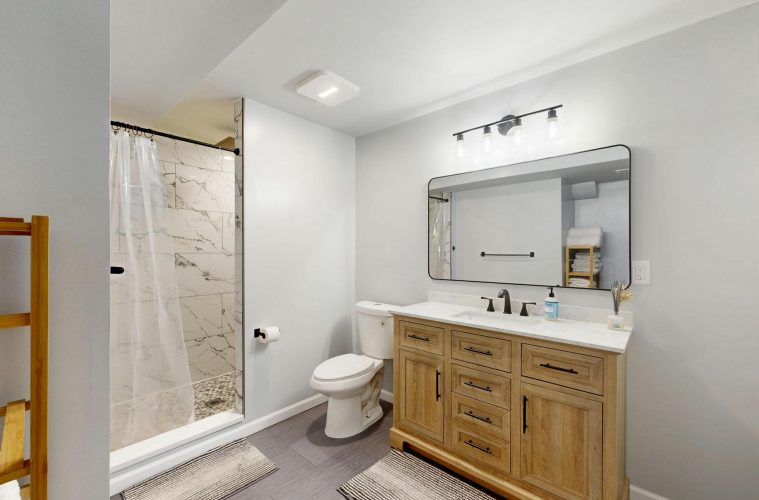
Where the rug sits in the room matters as much as what it is made of. In a larger bathroom, a rug can help define zones and create visual cohesion between areas that might otherwise feel disconnected, linking the vanity area to the bath zone or anchoring a freestanding tub on a wide expanse of floor. In a smaller bathroom, a runner or narrow rug placed along the main walkway adds a layer of warmth and interest without overwhelming the space.
The key principle is to keep the rug away from direct moisture. If it is close to a shower or bath, a bath mat placed on top provides a practical buffer that takes the wet contact and can be hung to dry after use. The rug underneath remains dry and clean significantly longer as a result.
Keep it fresh
The cleanliness concern that puts many people off bathroom rugs is entirely manageable with a consistent routine. Ventilation is the single most important factor: an extractor fan that is in good working order and used consistently during and after showers significantly reduces the ambient moisture in a bathroom, which is what allows a rug to dry between uses rather than staying damp.
The rug itself should be washed regularly, at least every one to two weeks in a household where the bathroom sees daily use. Most cotton and microfibre rugs are machine washable, which makes this straightforward. Shaking the rug out and hanging it over a towel rail or outside to air between washes helps maintain freshness between laundry cycles. If the bathroom has underfloor heating, this is a significant advantage: a consistently warm floor prevents moisture from sitting under the rug and accelerates drying after incidental contact with damp feet.
Choosing the look
Once the practical decisions are made, the aesthetic choice becomes considerably more straightforward. The most useful starting point is the existing palette and texture of the bathroom. A room with a lot of hard surfaces and neutral tones benefits from a rug that introduces warmth through colour or texture without disrupting the overall register. A room that already has strong pattern or colour is better served by a more restrained rug that adds interest without competing.
If choosing colour feels uncertain, working from an existing element in the room, a towel colour, a tile accent or the tone of the wooden vanity, and finding a rug that echoes or complements it is a reliable approach. Pattern adds visual interest and has the practical advantage of disguising wear between washes. The overall principle is subtlety: in a space where the practical requirements are already demanding, a rug that earns its place quietly is almost always more successful than one that demands attention.
