
 Bianca Muller
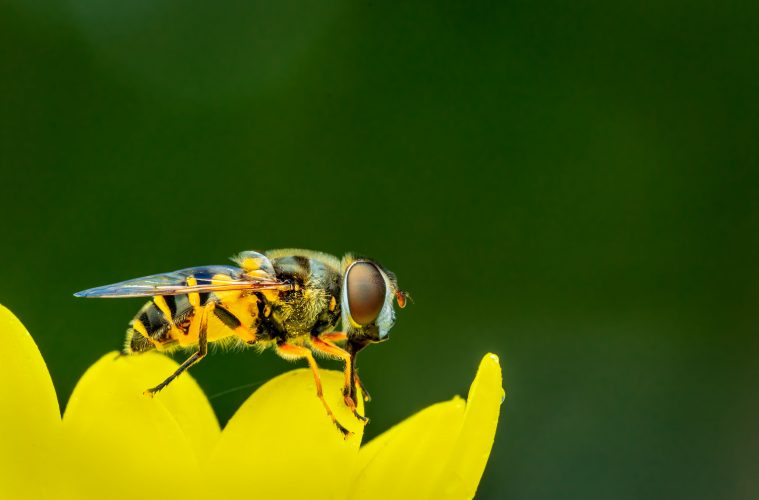
Often mistaken for bees or wasps because of their yellow-and-black markings, hoverflies are small, harmless insects that offer two important benefits: they help pollinate flowering plants and, during their larval stage, feed on troublesome garden pests such as aphids.
Approximately 230 hoverfly species have been described in southern Africa, and they occur in a variety of habitats, including grasslands, forests, bushveld and home gardens.
What are hoverflies?
Hoverflies belong to the Syrphidae family and are true flies, rather than bees or wasps. Their name comes from their distinctive flying behaviour: they can remain suspended in mid-air before darting forwards, backwards or sideways.
Most have black-and-yellow markings that mimic the appearance of stinging insects. This colouring helps protect them from predators, but despite their resemblance to bees and wasps, hoverflies cannot sting or bite.
They are also relatively easy to recognise once you know what to look for. Adults have large eyes, short antennae and just one pair of wings, unlike bees and wasps, which have two pairs.
Why are hoverflies beneficial to your garden?
The real garden benefits of hoverflies become apparent during their larval stage. While adult hoverflies feed mainly on nectar and pollen, the larvae of many species are predators that feed on aphids.
Aphids are among the most common garden pests in South Africa. They cluster on new shoots, stems and the undersides of leaves, sucking sap from plants and potentially weakening growth. Left unchecked, large colonies can cause distorted leaves, damaged buds and stunted plants.
Hoverfly larvae help keep these populations under control by feeding on aphids. Depending on the species, they may also prey on other small, soft-bodied pests, including thrips and certain other insects.
There is another benefit to having adult hoverflies around. As they move between flowers to feed on nectar and pollen, they transfer pollen between plants, contributing to pollination in both gardens and agricultural landscapes.
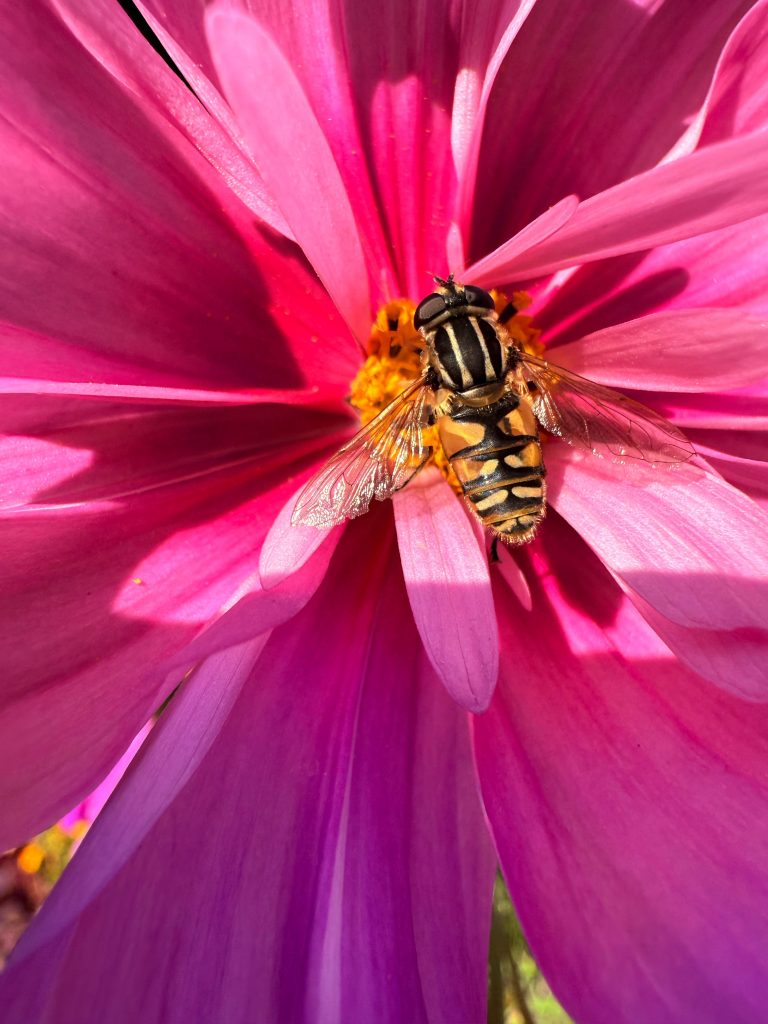
Photo: Pexels
Which plants are most affected by the pests hoverflies eat?
Hoverflies don’t target particular plants themselves. Instead, their larvae hunt aphids and other small pests that commonly infest certain garden favourites.
Keep an eye out for hoverflies around plants that are particularly susceptible to aphid infestations, including:
- Roses: Rose aphids gather around fresh shoots, stems and developing flower buds.
- Vegetables: Cabbage, broccoli, kale, spinach and other leafy greens can attract aphids.
- Fruit trees: Peach trees and other stone fruit trees are susceptible to aphids, particularly on young growth.
- Broad beans: Black bean aphids often gather in clusters around stems and growing tips.
- Ornamental plants: Dahlias and other flowering garden plants can also experience aphid infestations.
If you spot a hoverfly repeatedly visiting a plant with an aphid problem, it may be more than a coincidence. Female hoverflies from predatory species often lay their eggs close to aphid colonies, giving their emerging larvae an accessible food source.
How to identify hoverflies in your garden
Although their colouring can make them look intimidating, hoverflies are harmless to people and pets. Here are a few characteristics to look out for:
- Yellow and black markings: Many species have striped bodies, although colouring and patterns vary.
- Distinctive flight: Their ability to hover almost motionlessly above flowers is one of their easiest identifying features.
- Large eyes: Adults have prominent eyes and relatively short antennae.
- One pair of wings: Unlike bees and wasps, hoverflies have just one pair of functional wings.
You might also spot their larvae if you look closely at plants with aphid colonies. These are small, legless, greenish or brownish, maggot-like creatures that crawl along leaves and stems.
They don’t look particularly attractive, but they are doing useful work by eating the pests around them. It’s worth remembering that not all hoverfly larvae are aphid predators, as different species have different feeding habits.
When are hoverflies most active?
Hoverflies can be found throughout the year in South Africa, although their numbers fluctuate with temperature, habitat and the availability of flowering plants.
Spring and summer are generally good times to spot them, with activity often continuing into early autumn. Research conducted in KwaZulu-Natal has recorded higher hoverfly numbers during January, September and December, with fewer recorded during May, June and July.
This suggests that warmer months tend to support greater hoverfly activity, although sightings will differ between regions and species. In warmer parts of the country, they may remain active for much of the year.
How to attract more hoverflies to your garden
The easiest way to encourage hoverflies is to make your garden a reliable source of food and shelter.
1. Plant flowers with accessible nectar and pollen
Adult hoverflies are attracted to flowering plants, particularly those with small, open flowers that make feeding easier. Consider adding alyssum, coriander, dill, fennel and other flowering herbs to your garden.
2. Allow some herbs to flower
Instead of harvesting every herb before it flowers, allow a few plants to bolt and produce blooms. Flowering coriander, dill and fennel can provide useful food for visiting pollinators.
3. Avoid unnecessary pesticides
Broad-spectrum insecticides can kill beneficial insects alongside the pests you’re trying to control. If you notice aphids on your plants, consider less harmful management options first and give natural predators an opportunity to do their work.
4. Grow a variety of plants
A garden with different flowering plants provides a more consistent food supply throughout the year. Combining indigenous flowering plants with herbs and seasonal flowers can help support a wider variety of beneficial insects.
5. Don’t aim for a completely pest-free garden
A few aphids aren’t necessarily a reason to reach for the spray bottle. Predatory hoverfly larvae need a food source, and allowing small pest populations to exist can help maintain a natural balance in your garden.
ALSO SEE: Should you keep a praying mantis in your garden?
Feature image: Pexels
