
 Jade Mcgee
Dog food storage gets very little attention compared to the considerable care that most owners give to what they feed their pets. This is an oversight with real consequences: dog food that is stored incorrectly becomes rancid, contaminated with bacteria or mould, or loses nutritional value in ways that are not always visible from the outside. The smell, appearance and palatability of the food may seem acceptable while the quality has already degraded significantly.
Dry kibble: the most mismanaged category
Dry kibble is the most widely fed dog food in South Africa and also the most commonly stored incorrectly. The most important and least followed rule is this: keep the kibble in its original bag, inside any airtight container you use. The inner lining of premium kibble bags is designed to protect against light, air and moisture, and it contains residual preservative compounds that actively slow fat oxidation. Pouring kibble directly into a plastic storage bin removes all of these protections, and the fats in the kibble begin oxidising faster.
Store the sealed bag in a cool, dry location. Garages and outdoor storage areas, while spatially convenient, expose food to temperature extremes that accelerate rancidity. The inside of a kitchen cupboard away from the oven is better. The pantry or a utility room interior is better still. Once a bag is opened, seal the top with a clip or fold it down tightly before placing it in the airtight container. Finish an open bag within six weeks where possible: the fats in dry kibble oxidise relatively quickly once exposed to air, even with careful sealing.
Signs dry food has gone off
Rancid kibble smells stale, sour or unpleasant in a way that is distinct from the nutty, meaty or grain smell of fresh food. The fat bloom on the surface of kibble pieces may look greasy or look slightly different in colour from the rest of the piece. Visible mould growth is obvious and requires immediate disposal. Insect activity, including pantry moths or small beetles, indicates the bag has been compromised and all contents must be discarded. If your dog suddenly loses interest in food they previously ate readily and nothing else has changed, it is worth checking the food’s freshness before assuming a health problem.
Wet and canned food
Unopened cans and pouches store well at room temperature until the best-before date. Once opened, the contents must be refrigerated and used within 48 to 72 hours. Transfer leftover canned food to a clean, covered container before refrigerating: leaving a half-eaten can open in the fridge dries out the food and allows cross-contamination with other odours. Pouched wet food that has been partly used can be sealed with a clip and refrigerated for the same period.
Raw food and the load-shedding consideration
Raw dog food, which has become more popular in South Africa, carries the highest food safety requirements. Raw proteins spoil rapidly at room temperature and must remain frozen or refrigerated at all times. Divide raw food into single-serving portions before freezing, which allows you to defrost only what you need without repeatedly thawing and refreezing the whole batch. Defrost raw food in the refrigerator overnight rather than at room temperature: bacteria multiply rapidly in raw protein between 5 and 60 degrees Celsius, the temperature range the food passes through when defrosted on a counter.
Load-shedding creates a specific risk for raw pet food. If power is out for an extended period and the freezer begins to thaw, do not refreeze partially thawed raw food. Cook it and feed it immediately, or discard it. A freezer that has been at the correct temperature will stay below 0 degrees Celsius for roughly four hours with the door kept closed. Beyond that, the contents should be checked carefully.
Food and water bowls
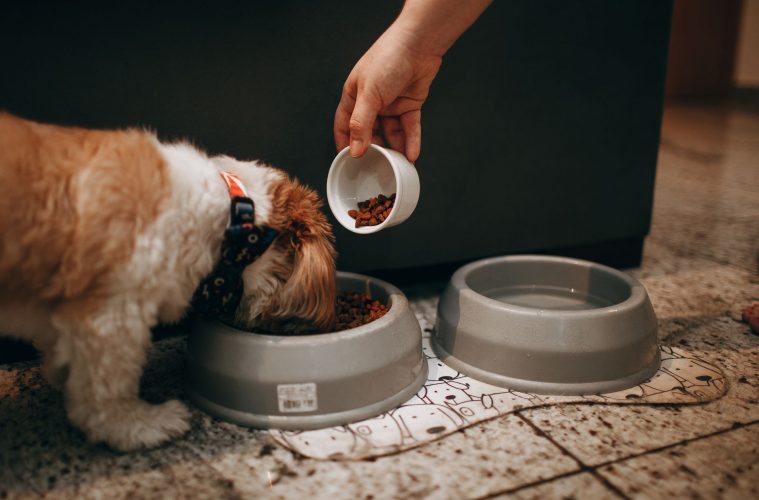
The bowl from which your dog eats is part of the food safety equation. Bacteria, particularly from the saliva and food residue that accumulates in the fat deposits on a bowl surface, builds up rapidly, particularly in warm weather. Wash both food and water bowls daily, in hot water with dishwashing liquid, rather than simply rinsing and refilling. Stainless steel bowls are easier to sterilise thoroughly than plastic and do not develop the micro-scratches that harbour bacteria over time. Water should be changed daily, and the water bowl washed as frequently as the food bowl.
ALSO SEE:
Featured Image: Pexels
