
 Maegan-Leigh Jacobs
Wood cabinets give a kitchen warmth and character, but they also collect grease, dust and sticky fingerprints faster than we realise. The good news? You don’t need harsh chemicals or fancy sprays to get them clean.
With a gentle mix of vinegar and dish soap, you can cut through grime while keeping the wood in good shape – whether your cupboards are solid timber or budget-friendly board.
Read more: The best kitchen colour combos to try right now
Start with the right approach
Before you begin, take a moment to check what you’re working with. Solid wood cabinets are more forgiving, while laminated or veneer cupboards need a lighter hand. Whatever the finish, the golden rule is the same: never soak the surface. Too much moisture can cause swelling, peeling or warping.
Always test your cleaning mix on a hidden corner first.
What you’ll need:
- White vinegar
- Warm water
- Mild dishwashing liquid
- Spray bottle
- Soft microfibre cloths
- Dry cloth or tea towel
The everyday cleaning method
Mix equal parts warm water and white vinegar in a spray bottle. Add a few drops of dishwashing liquid to help break down grease.
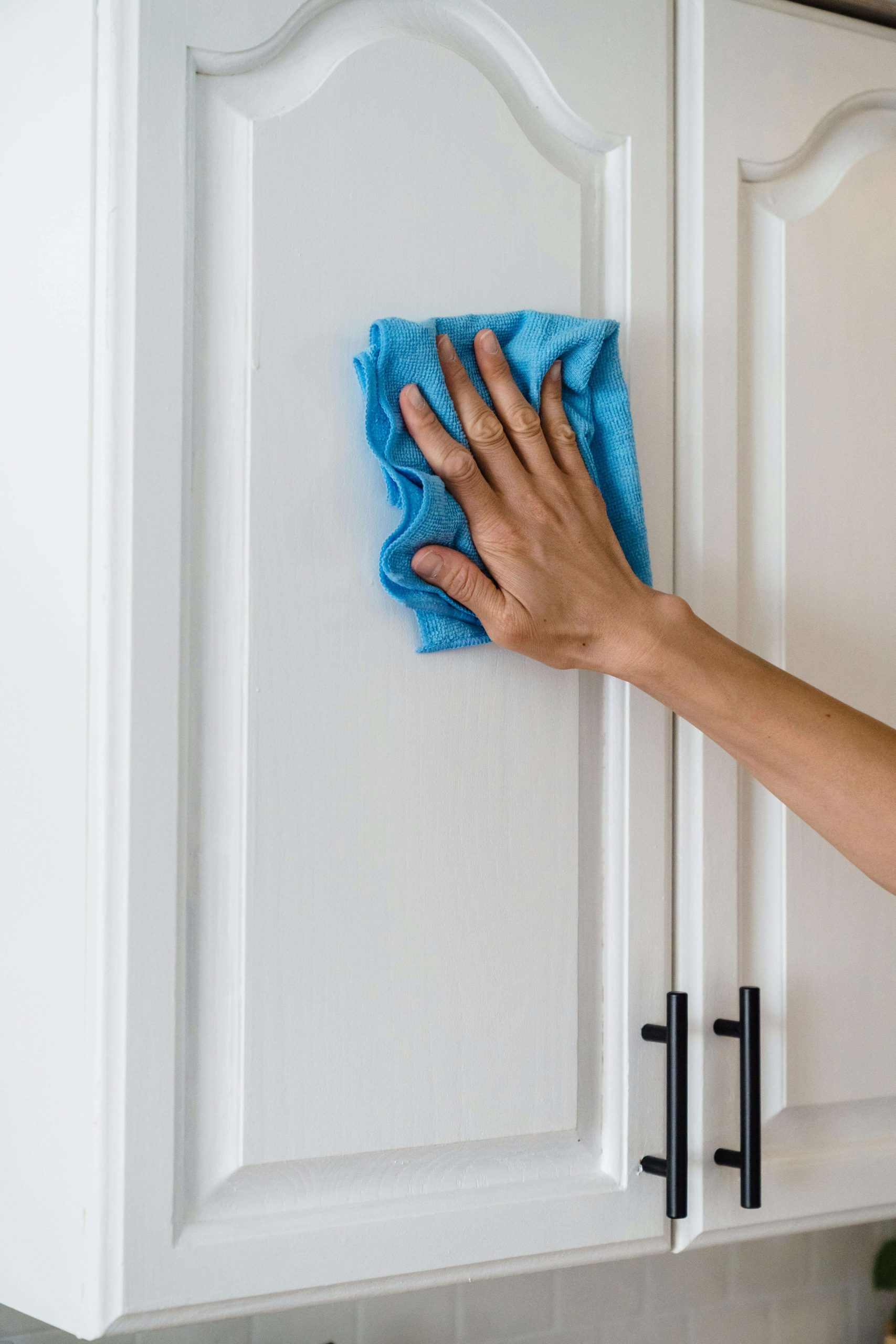
Lightly mist the cabinet doors – don’t drench them. Let the solution sit for a minute so it can loosen grime, then wipe gently with a soft cloth, following the grain of the wood where possible.
Go over the surface again with a cloth dampened with clean water to remove any residue. Finish by drying everything properly. This step matters more than you think and helps protect the finish over time.
Pexels
Dealing with stubborn marks
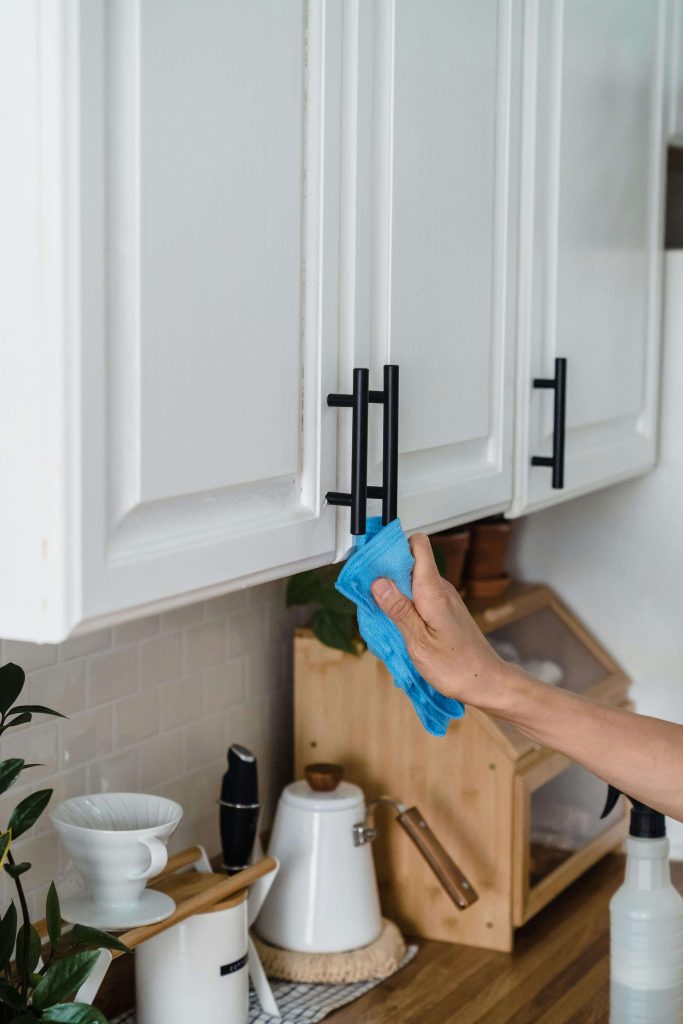
For areas around handles or near the stove, you may need a little extra effort. Reapply your vinegar mix and gently rub with a clean cloth. Avoid scrubbing hard, especially on cheaper wood finishes, as this can lift the coating.
If a mark refuses to budge, patience is better than pressure. Repeat the process rather than reaching for abrasive tools.
Caring for different cabinet types
Solid wood: These cabinets benefit from regular but gentle cleaning. A natural beeswax or wood balm applied once or twice a year helps nourish the surface and adds a soft sheen.
Veneer or laminate: Less is more. Keep moisture to a minimum and skip heavy oils or thick polishes, which can leave streaks or damage the edges.
How often should you clean?
A quick weekly wipe keeps grease from building up, especially in busy kitchens. A more thorough clean once a month is usually enough, depending on how much cooking you do and whether oils are used often.
What to avoid
Steer clear of bleach, ammonia, strong solvents or abrasive pads. These can strip finishes and leave dull patches that are hard to fix. Soft cloths and mild cleaners are always the safer choice.
A simple habit that makes a difference
Wiping cabinet doors after cooking – especially near the hob – goes a long way in keeping them fresh. It’s a small routine that saves time and effort later.
With a few gentle ingredients and mindful care, your kitchen cabinets can stay clean, polished and welcoming for years to come.
ALSO SEE: Thinking of painting your kitchen cabinets? Here’s what you need to know
Thinking of painting your kitchen cabinets? Here’s what you need to know
