
 Jade Mcgee
The traditional lawn has a complicated reputation. It looks tidy, it is familiar, and it works well for recreational space and high-traffic areas. But as a default covering for every available patch of garden, it is difficult to justify. Grass requires regular mowing, consistent watering, periodic feeding and occasional treatment for weeds and pests. It supports very little wildlife and does almost nothing for local biodiversity.
The growing alternative is to replace some or all of that lawn with low-growing ground cover plants that require a fraction of the maintenance, support pollinators and other garden wildlife, and in many cases look considerably more interesting. Here are some of the best options available.
Creeping thyme
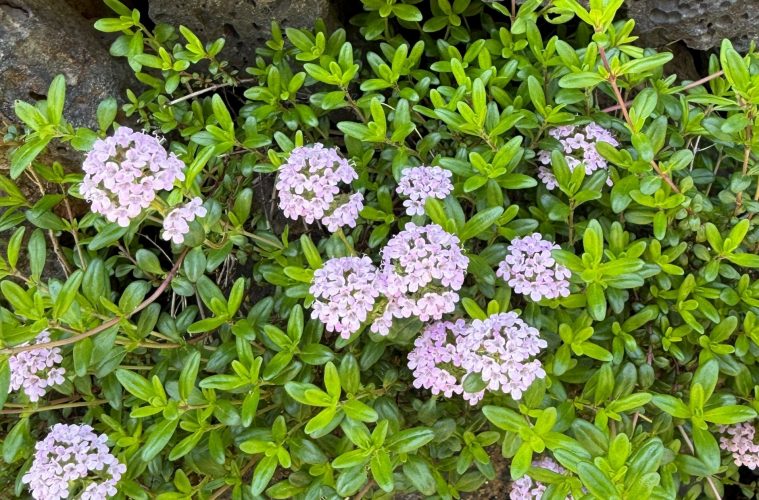
Creeping thyme is one of the most satisfying grass replacements available. It grows to around five centimetres tall, spreads readily to form a dense, aromatic mat, and produces carpets of small pink, lavender or white flowers in summer that attract pollinators in large numbers. It tolerates foot traffic reasonably well, grows in almost any soil, including nutrient-poor types, and asks for very little once established. The one thing it genuinely dislikes is waterlogged soil, so it performs best in well-drained positions. For a sunny patch of lawn that currently demands regular mowing, creeping thyme is among the most practical and visually rewarding replacements.
Microclover
White clover has long appeared in lawns uninvited, but growing it deliberately, and in its more compact microclover form, is an approach worth reconsidering. Microclover produces smaller leaves than standard white clover and grows into a denser, tidier mat that holds up better under moderate foot traffic. It flowers less abundantly than regular clover, which is an advantage in areas used by children or pets, and it fixes nitrogen in the soil, actively improving conditions for whatever else is growing nearby. It can be sown on its own or blended with grass seed to gradually improve an existing lawn. Either way, it reduces the need for feeding and mowing considerably.
Creeping phlox
For gardeners who want their lawn replacement to earn its keep visually, creeping phlox delivers. From late spring into summer, it produces masses of blooms in pink, purple, white, red and blue that transform a flat green surface into something genuinely spectacular. Outside of flowering season, it remains a tidy low-growing mat of fine foliage. It performs best in full sun but tolerates partial shade, though flower production decreases in lower light. It grows at a moderate pace, so it takes time to establish across a larger area, but it is worth the wait. It is particularly effective when planted between pavers, along rockery edges or on sunny slopes.
Stonecrop
For dry, hot climates where water conservation is a priority, stonecrop, or sedum, is one of the most practical grass alternatives available. These low-growing succulents form dense mats of fleshy foliage and produce flowers in pink, red, yellow or white on upright stems. They survive on minimal water, tolerate heat and drought once established, and look after themselves almost entirely once settled in. The trade-off is pace: stonecrops spread slowly, and a large area will take time to fill. For gardeners with patience and a sun-baked patch to cover, they are an excellent long-term investment that will require virtually no maintenance once established.
Wild strawberries
Wild strawberries are not an obvious first thought for a lawn replacement, but for low-traffic areas where the goal is coverage rather than a surface to walk on, they offer something no other ground cover does: an edible harvest. They spread via runners to create a mat of bright green trifoliate foliage dotted with small white flowers and, in season, sweet red berries. They work best in partially shaded spots and need to be kept well away from any area that sees regular foot traffic. For an unused patch of garden that currently serves no purpose beyond requiring maintenance, replacing it with wild strawberries is a straightforward entry into foodscaping.
Hostas
Hostas are not spreaders in the way that most other ground covers are, but grouped together in a shaded area they can achieve the same visual effect as a green lawn without any of the maintenance. Their broad, lush leaves come in a wide range of colours including green, blue-green, gold and variegated combinations, and their textural presence fills space convincingly. Mini hosta varieties stay compact even at maturity and are the most practical choice for this purpose. They work particularly well alongside other low-growing shade plants, creating a layered planting that covers the ground thoroughly without any of the upkeep a grass lawn demands.
ALSO SEE:
Featured Image: Canva
