
 Bianca Muller
Think forest bathing involves swimming in a dam or taking a dip in a mountain stream? Think again. I certainly did! When I first heard that we would be going forest bathing during my visit to Grootbos Private Nature Reserve, my mind immediately went to cold water and an early-morning swim. Considering the chilly weather at the time, I wasn’t particularly thrilled about that prospect.
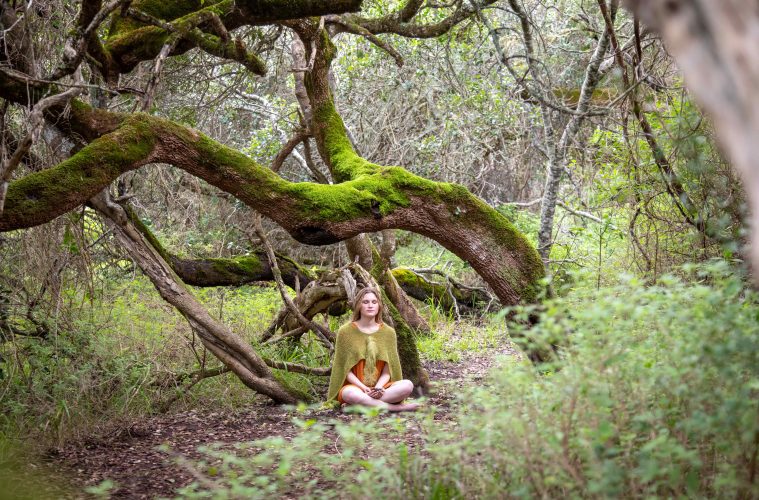
Thankfully, I was mistaken. Forest bathing has absolutely nothing to do with swimming. Instead, it involves stepping into a forest, slowing down and allowing yourself to become fully immersed in your natural surroundings. And after experiencing it for myself, I can honestly say it was one of the more interesting and enjoyable activities I’ve tried.
What exactly is forest bathing?
Known in Japan as shinrin-yoku, forest bathing is a nature-based wellness practice that encourages people to connect with their surroundings through their senses. The practice originated in Japan during the 1980s and has since gained popularity around the world as a way to support mental and physical well-being.
Despite its name, there is no actual bathing involved. Instead, the idea is to spend time in a natural woodland environment without rushing, following a particular route or worrying about how many steps you’ve clocked.
Think of it as a form of mindfulness or meditation, but with the forest as your setting. Rather than concentrating on your to-do list or the next thing on your schedule, you are encouraged to notice the sounds, textures, scents and sights around you.
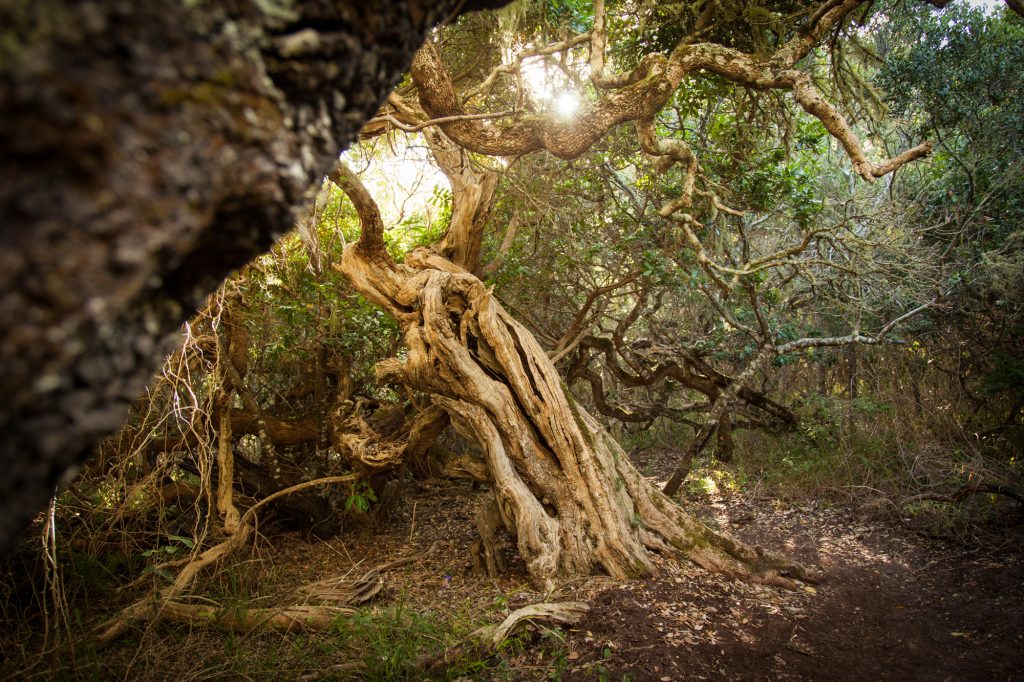
Photo: Supplied/Grootbos Nature Reserve
The benefits of forest bathing
There is more to forest bathing than simply enjoying a peaceful walk among the trees. Research into shinrin-yoku suggests that spending mindful time in forest environments may have several benefits for our physical and mental well-being.
1. It may help reduce stress
One of the most recognised benefits of forest bathing is its potential to reduce stress. Studies have found that spending time in forest environments can help lower heart rate and support the body’s relaxation response. Being away from everyday distractions and spending time in a quieter environment can also help ease feelings of tension.
2. It encourages mindfulness
Forest bathing encourages you to pay attention to the present moment. By focusing on the sound of leaves rustling, the feeling of the ground beneath your feet or the details of a tree, you naturally shift your attention away from everyday worries.
3. It may improve your mood
Research has linked forest exposure with improvements in mood and reductions in feelings of anxiety, tension and fatigue. Even a short period spent in nature can provide an opportunity to mentally reset.
4. It gets you away from screens
Between emails, social media, work and the constant stream of notifications, it can be difficult to switch off. Forest bathing offers an opportunity to put your phone away and reconnect with the world around you without a screen demanding your attention.
5. It encourages a stronger connection with nature
Perhaps one of the simplest benefits is that it makes you more aware of the natural environment. When you take the time to notice the smaller details, from the texture of a leaf to the movement of a tree, you begin to appreciate just how much is happening around you.
While research into forest bathing is promising, it is worth remembering that it is a complementary wellness practice rather than a treatment for medical or mental health conditions.
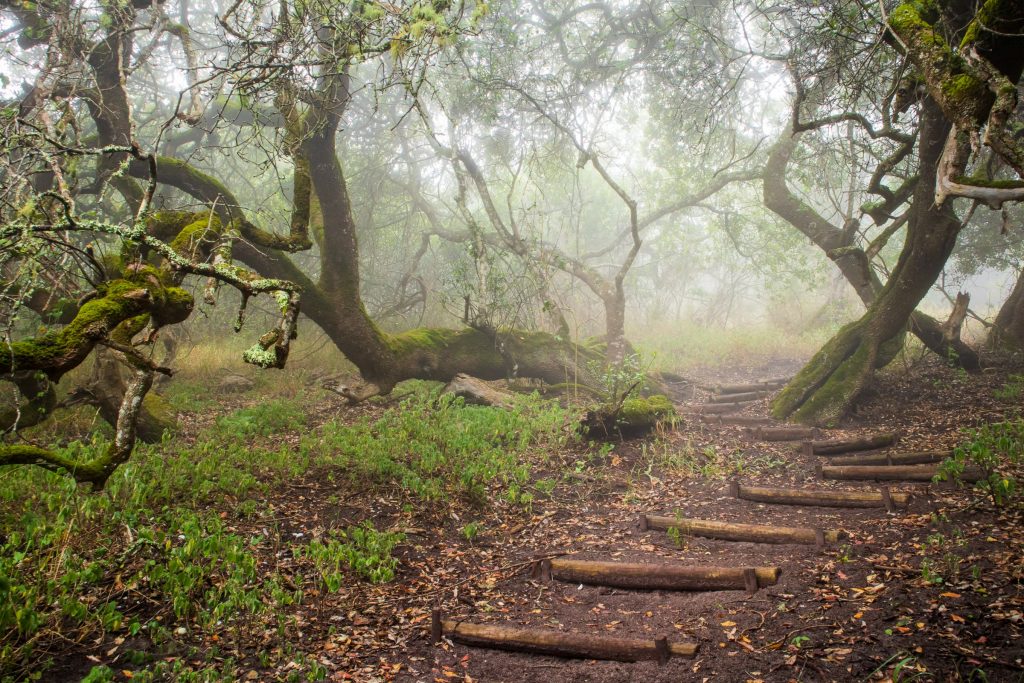
Photo: Gareth Williams @GJH-Williams, Grootbos @Grootbos
My first forest bathing experience at Grootbos
As someone who has always loved trees, forests and being outdoors, forest bathing was right up my alley. However, I had no idea quite what to expect when we arrived at the beautiful milkwood forest at Grootbos.
Our experience began with our guide introducing us to the practice and explaining what we would be doing. We then took off our shoes, allowing us to feel the ground beneath our feet and connect with our surroundings.
We started with a simple exercise. With our eyes closed, we were asked to listen carefully to the sounds around us. First, we focused on the noises closest to us before gradually shifting our attention to those further away. It sounds simple enough, but it was interesting to notice just how many little sounds you tend to miss when you’re busy thinking about everything else.
Next, we each found our own little spot on the forest floor and spent some time observing a single thing. It could be a leaf, an insect, a piece of bark or anything else that caught our attention. The idea was to slow down and really look at something rather than simply glance at it before moving on.
A little trust goes a long way
One of my favourite activities involved working in pairs. One person was blindfolded while the other became their guide, leading them carefully through the forest.
The guide would help their partner explore different parts of the woodland, encouraging them to touch and feel things along the way. This could be the texture of a leaf, the stem of a plant or the interesting shapes and patterns found on a tree.
-
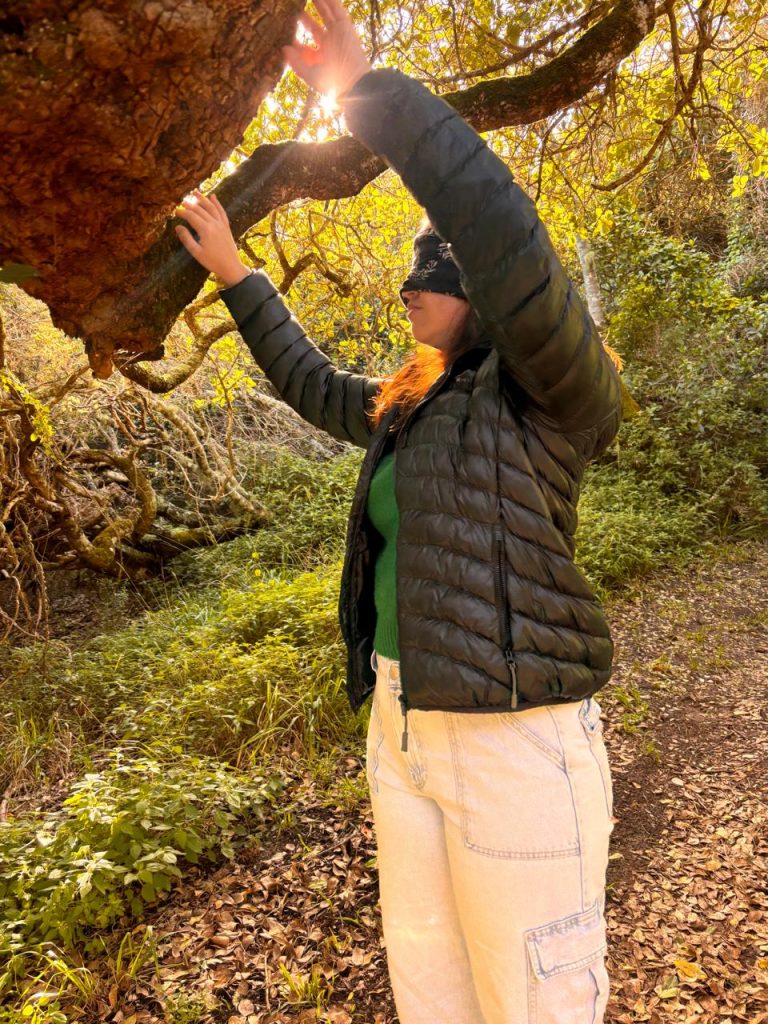
- Bianca experiences forest bathing in the milkwood forest at Grootbos Private Nature Reserve.
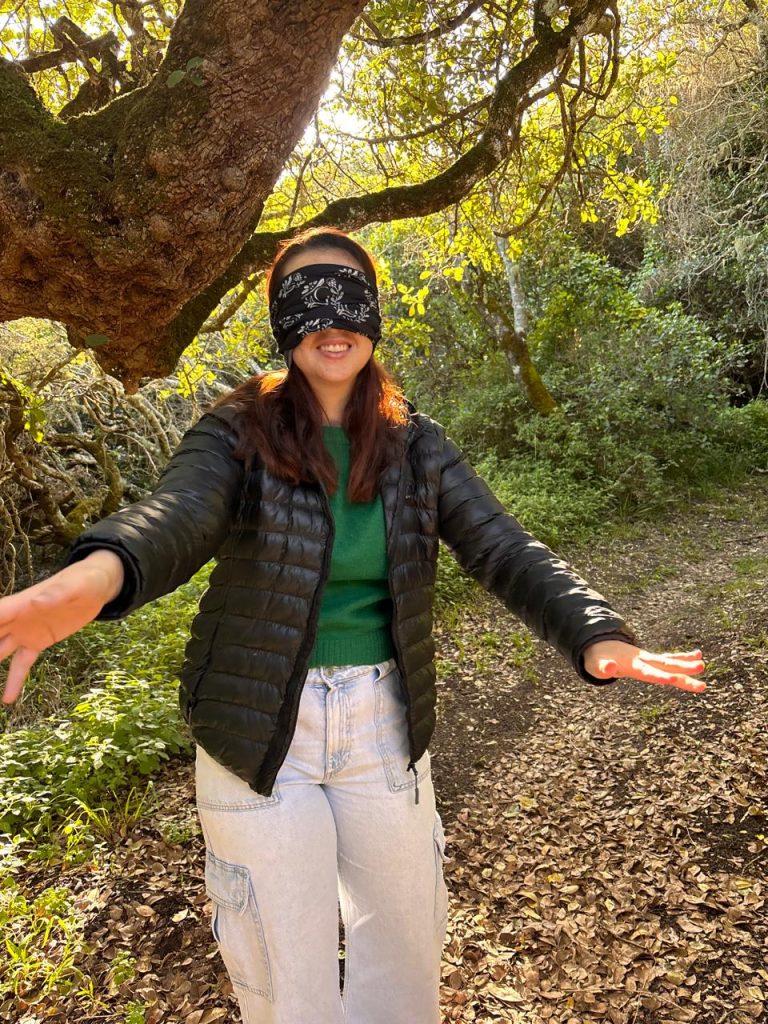
Once we’d had our turn, we swapped roles.
It was such an interesting way to experience the forest because, without being able to see, you become much more aware of what you can feel and hear. It also requires quite a bit of trust in your partner. If you don’t trust them, you might find yourself looking a little silly! We certainly had a few laughs along the way.
Listening to the trees
The final activity was probably the most unexpected of the day. Our guide handed out stethoscopes, leaving us wondering what on earth we were going to do with them in the middle of a forest.
We were then instructed to place the stethoscope against the trunk of a living tree and listen.
At first, I wasn’t quite sure what I was supposed to hear. But after a moment, there it was: a faint, almost bubbling or swishing sound coming from within the tree.
The sound is associated with the movement of water through the tree’s internal tissues, particularly the process of water transport through the trunk. It was fascinating to realise that there is so much happening inside a tree that we would never ordinarily notice.
It was one of those little moments that makes you look at something familiar in a completely different way.
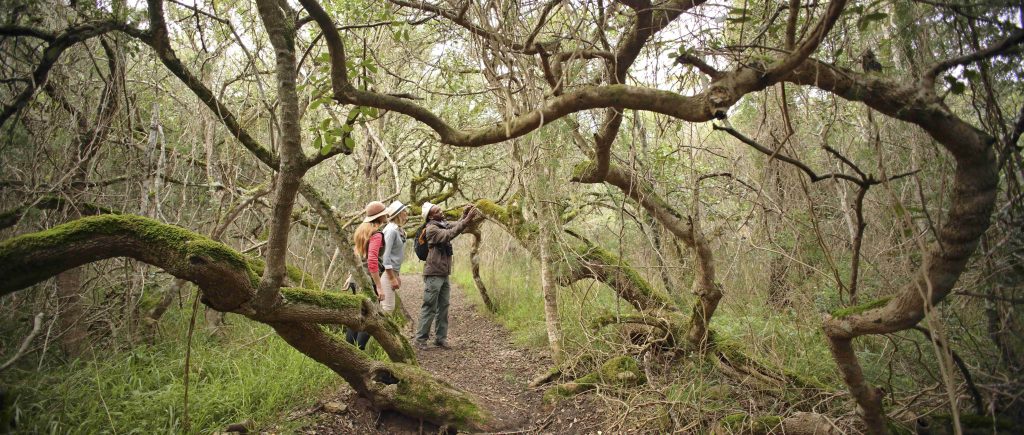
Photo: Supplied/Grootbos Nature Reserve
How to try forest bathing yourself
The lovely thing about forest bathing is that you don’t necessarily need a guide, a special location or any equipment to give it a try. A quiet woodland, nature reserve or leafy green space can be a good starting point.
Here are a few simple ways to get started:
- Leave your phone behind: Give yourself some uninterrupted time away from notifications and screens.
- Slow down: There is no destination to reach or distance to cover. Walk at a comfortable pace and take your time.
- Use your senses: Pay attention to the sounds, smells, textures and colours around you.
- Find a quiet spot: Sit for a few minutes and observe something in your surroundings, whether it is a plant, tree or insect.
- Breathe deeply: Take slow, comfortable breaths and allow yourself to settle into the environment.
- Don’t overthink it: There is no right or wrong way to experience forest bathing. The idea is simply to be present.
If you’re trying it in a natural area, remember to respect the environment. Stick to appropriate paths where necessary, avoid disturbing wildlife and never remove plants or natural materials.
Make a stay of it
Forest bathing is one of the guided experiences available to guests staying at Grootbos Private Nature Reserve, forming part of its selection of lodge itineraries. A stay also offers the opportunity to enjoy a range of other experiences, from guided nature walks and hikes to educational outings that introduce guests to the reserve’s remarkable biodiversity. With beautiful accommodation and plenty to experience, it’s worth setting aside a little extra time to enjoy everything Grootbos has to offer.
ALSO SEE: The Hannarie Wenhold Botanical Art Gallery is an Overberg gem for nature lovers
The Hannarie Wenhold Botanical Art Gallery is an Overberg gem for nature lovers
Feature image: Supplied/Grootbos Nature Reserve
