
 Jade Mcgee
As spring growth accelerates and hotter weather approaches, mulch can be one of the simplest ways to make a garden more resilient. A well-placed layer helps slow moisture loss, cools the soil surface, suppresses many annual weeds and gradually improves soil as organic materials break down.
The important part is timing and technique. South African gardens span summer-rainfall, winter-rainfall and more temperate coastal climates, so there is no single calendar date that suits everyone. The useful rule is to mulch when the soil is already moist and before prolonged summer heat and drying winds become the norm.
Yes, spring can be an excellent time to mulch
In summer-rainfall regions, wait until the soil has received a good spring rain or deep irrigation, then mulch to help hold that moisture in. In winter-rainfall areas, renewing mulch in spring is particularly useful before the dry, hot summer months set in. Coastal gardens can be more forgiving, but the same principle applies: moisture first, mulch second.
Mulching bone-dry soil simply insulates dryness underneath. Water the bed deeply before applying a new layer, especially around recently planted shrubs, perennials and young trees.
How thick should mulch be?
For most ornamental beds, aim for roughly 5 to 8 cm of organic mulch. Too little may not suppress weeds or slow evaporation effectively, while an excessively deep layer can keep soil waterlogged and reduce airflow around shallow roots.
Good options include chipped bark, wood chips, shredded leaves, well-rotted compost used as a surface layer, or other clean organic garden material. Very fine material can compact, while whole wet leaves can mat together, so shredded leaves are usually easier to manage.

Keep mulch away from stems and trunks
One of the most common mistakes is piling mulch directly against a tree trunk or shrub stem. That permanently damp collar can encourage bark deterioration and create hiding places for pests. Leave a clear breathing ring around trunks and crowns, then spread the mulch out across the root zone instead.
Mulch is useful, but it is not a substitute for watering
A mulched garden generally loses water more slowly, but plants still need adequate irrigation, especially while establishing. Check the soil beneath the mulch rather than judging dryness from the surface. Drip irrigation or a soaker hose placed under the mulch can deliver water efficiently to the root zone.
Top up rather than burying the garden every season
Organic mulch gradually decomposes, which is useful for soil structure, but that does not mean a full new layer is needed every few months. Rake the existing material lightly, check its depth and top up only where it has broken down or washed away.
What about vegetable beds?
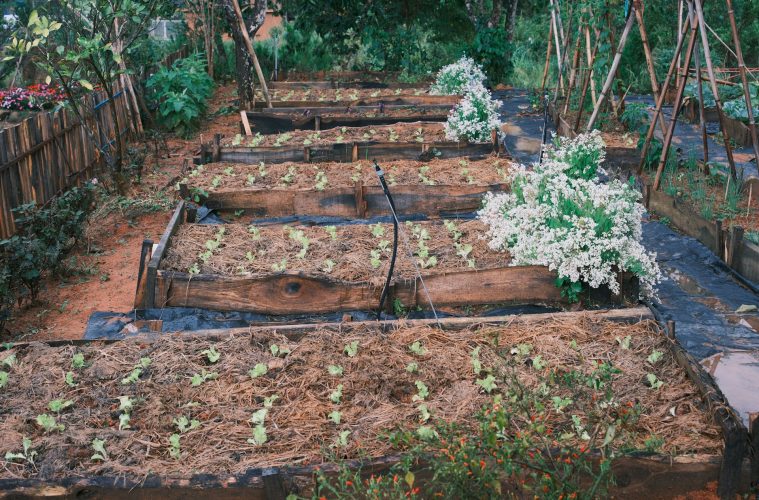
Mulch can be especially helpful around tomatoes, peppers, brinjals, beans and other warm-season crops once seedlings are established and the soil has warmed. It reduces splash onto lower leaves, slows moisture swings and helps keep weeds manageable. Avoid smothering newly sown rows or tiny seedlings that still need light and space to emerge.
A small job with a big summer payoff
Spring mulching is less about making beds look neat and more about preparing the soil for tougher weather ahead. Applied to moist ground, kept away from trunks and maintained at a sensible depth, mulch creates a buffer between roots and the heat of summer. That can mean fewer weeds, more even moisture and less stress on both plants and gardeners.
ALSO SEE:
Featured Image: Unsplash
