
 Jade Mcgee
Of all the vegetables worth growing, asparagus requires the most patience before it delivers. Plant the crowns in late winter or early spring and you will be waiting at least two to three years before a proper harvest is possible. But the return on that patience is extraordinary: a well-established asparagus bed produces spears every spring for fifteen years or more, requiring remarkably little from you in exchange.
Understanding when and how to harvest correctly is the difference between a productive long-lived bed and one that weakens and declines within a few seasons.
Why you cannot harvest in the first year
When asparagus crowns are transplanted, they need time to establish their root system. The energy required for that establishment comes from the spears that emerge above ground: if those spears are allowed to develop fully into leafy ferns, they photosynthesise and transfer that energy back to the roots for storage. Cutting those spears in the first year deprives the roots of the energy they need, weakening the crown and reducing the yields you will get in every subsequent season.
Leave all spears untouched in the first year after planting. They will grow into tall, feathery ferns that may reach one and a half to three metres, and this growth is doing exactly what it should be doing. In the second year, you may take a very small harvest of perhaps three or four spears per crown for a period of two to three weeks, then stop and allow the remaining spears to fern out again. From the third year onwards, provided the plants are healthy and established, you can harvest properly.
When to harvest in South Africa
In South Africa, asparagus shoots emerge in spring, typically from August to October, depending on your region. The Western Cape, with its cooler winters and Mediterranean climate, tends to produce particularly good asparagus because the cold dormancy period is more pronounced. In summer rainfall regions and warmer provinces, asparagus grows as a perennial, but the quality can vary depending on whether the winters are cold enough to induce a good dormancy period.
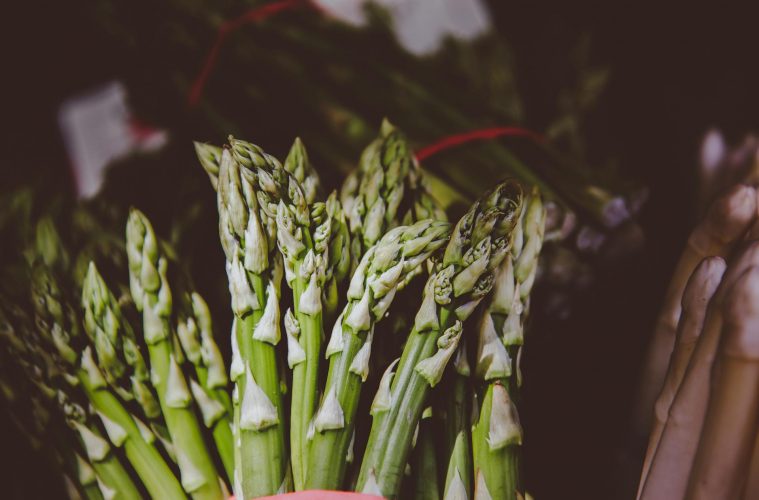
Harvest spears when they are between fifteen and twenty centimetres tall, and the tip is still tight and compact. Once the tip begins to open and fatten out, the spear has gone too far and becomes woody and fibrous. During the main harvest season, established beds produce new spears every two to four days, depending on temperature.
How to harvest correctly
There are two methods. The simplest and most suitable for home gardeners is to snap the spear off at ground level by bending it until it breaks. The spear will naturally break at the point where it transitions from tender to fibrous, so you avoid the woody base without needing to judge where to cut. The remaining stump will wither naturally, and a new spear will emerge from a bud underground.
The alternative is to cut below the soil surface with a sharp knife, which produces a slightly longer spear. This method requires care because you can accidentally cut underground buds that have not yet emerged, reducing future yields. For most home gardeners, snapping is the better approach.
How long to keep harvesting
In the third year, harvest for a maximum of four to six weeks, then stop completely and allow everything that emerges to fern out. In subsequent years, as the crowns become more fully established, you can extend the harvest season gradually, eventually reaching six to eight weeks per season on a mature bed.
Stop harvesting for the season when the spears emerging become pencil-thin, less than approximately one centimetre in diameter. Thin spears are a signal that the crown’s energy reserves are running low. At this point, allow all remaining spears to fern out for the season. This fern growth is not decorative: it is essential for food production for the roots, and removing it will weaken next year’s harvest.
After the harvest season
Once the ferns have died back in autumn, cut the dead stems down to just above ground level. This is the time to apply a generous layer of well-rotted compost over the bed. Asparagus is a heavy feeder, and the annual autumn compost application is one of the most important things you can do to maintain productivity over the long term. Avoid digging around the crowns: asparagus roots are shallow and easily damaged, and disturbing them causes the exact kind of stress that reduces spear production.
Given the right conditions, a well-maintained asparagus bed will outlast most other perennial vegetables in your garden. The patience required in the first few years is the investment. What follows is years of one of the most rewarding spring harvests a home kitchen garden can offer.
ALSO SEE:
Featured Image: Pexels
