
 Maegan-Leigh Jacobs
They arrive like tiny guests who didn’t read the invitation. One minute your kitchen is calm, the next there’s a determined little procession marching across the counter like they own the place. Bathrooms aren’t spared either – especially after a steamy shower, when everything is warm, damp, and apparently irresistible.
The truth is, ants aren’t being dramatic. They’ve simply found two of their favourite things: moisture and easy snacks. Your home just happens to offer both on repeat.
So let’s unpack why your kitchen and bathroom are such hotspots – and how to gently convince ants to move their party elsewhere.
Read more: How to use cinnamon on houseplants to repel pests
The kitchen
To an ant, your kitchen is less “room in a house” and more “all-you-can-eat opportunity.”
Crumbs under the toaster? Jackpot. A drip of jam on the counter? Celebration. Pet food left out overnight? Absolute luxury. Even the tiniest spill tells an ant colony: this way to resources.
And they don’t just come for visible food. Ants are surprisingly fond of the invisible kind too – grease on stovetops, sugary residue on jars, or that forgotten coffee ring on the counter.
Once a scout ant finds something promising, it lays down a scent trail for the rest of the crew. Suddenly, what started as one curious visitor becomes a well-organised conga line.
The bathroom
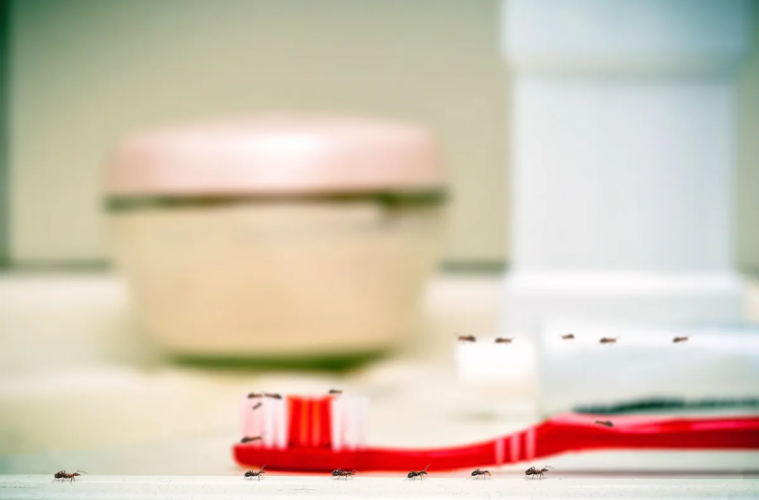
It might feel odd that ants show up in a space where there’s no food in sight. But the bathroom has its own kind of appeal: water, warmth, and quiet corners.
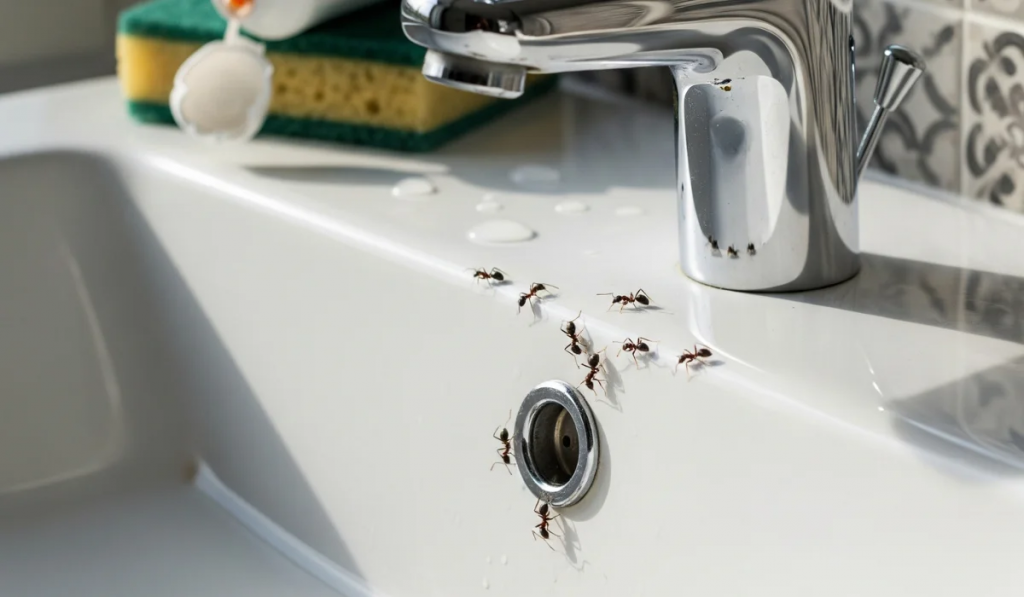
Steamy showers, dripping taps, and damp bath mats create a humid little haven. For ants, water is just as important as food – it keeps the colony going.
Even small things count:
- a slow-leaking tap
- condensation around pipes
- damp soil in a houseplant
- a rarely dried bath mat
To us, it’s everyday life. To ants, it’s hydration heaven.
The hidden doorways you didn’t know existed
Ants don’t need an open invitation. A crack the width of a credit card is basically a front door.
They slip in through:
- gaps around sinks and pipes
- worn grout between tiles
- loose window seals
- tiny splits in walls or floors
Bathrooms and kitchens are especially vulnerable because plumbing creates natural entry points – and moisture softens materials over time, making it even easier for them to squeeze through.
Once inside, they explore like seasoned interior designers… except they’re mapping routes to food and water instead of colour palettes.
Pexels
A naturally unwelcoming home
The good news? You don’t need harsh chemicals or complicated solutions to make your home less appealing. A few simple habits go a long way – and your kitchen will probably feel better for it too.
1. Keep it dry, especially in the bathroom
Ants love moisture, so reducing it is half the battle.
- Run the extractor fan after showers
- Wipe down wet surfaces (yes, even the tiles)
- Fix dripping taps sooner rather than later
- Don’t let damp towels or mats linger
Think of it as creating a “less tropical” bathroom.
2. Clean like you’re gently discouraging tiny visitors
No need for perfection – just consistency.
- Wipe kitchen counters daily
- Sweep or vacuum crumbs (especially under appliances)
- Rinse dishes instead of leaving them overnight
- Clean sticky spills immediately, even if they seem small
Ants don’t need much encouragement. A single crumb is enough to start a trend.
3. Store food like you mean it
Open packets are basically an open invitation.
- Use airtight containers for snacks and grains
- Keep pet food sealed when not in use
- Don’t leave fruit ripening too long on counters
It’s less about being strict and more about removing the “easy wins.”
4. Make entry points less welcoming
This is where things get satisfyingly preventative.
- Seal gaps around sinks and pipes with caulk
- Check window and door seals
- Repair cracked grout or worn edges
- Look for trails and trace them back to where they’re coming in
It’s a bit like detective work, but with very small suspects.
Gentle natural deterrents
If ants are still lingering, a few scents can help encourage them to reconsider their visit.
They tend to avoid:
- vinegar
- citrus
- mint
A simple spray made with water and a little of one of these can be used along entry points or known trails. It won’t harm them – but it does send a very clear “not welcome here” message.
When to call in backup
Sometimes, despite your best efforts, the ants don’t get the memo. If trails keep returning or the numbers start increasing, it may be time to bring in a professional. Large colonies can be surprisingly organised, and what you see in your kitchen is only a fraction of what’s happening outside or beneath floors. There are often thousands more waiting in the wings.
ALSO SEE: PLANTS THAT NATURALLY REPEL INSECTS
