
 Maegan-Leigh Jacobs
Choosing art for your home is a bit like choosing perfume: deeply personal, slightly mysterious, and when it’s right – you just know. But here’s the catch – what feels perfect under gallery lighting doesn’t always translate once it’s home, hanging above your couch, judging your scatter cushions.
So how do you pick pieces that belong in your space? And more importantly, how do you style them so they don’t just exist – but live?
Let’s get into it!
Start with your space, not the art
Before you fall head over heels for a piece, take a proper look at your room. Not a glance – a moment.
Notice the height of your ceilings, the width of your walls, and how the light drifts in throughout the day. A sun-drenched living room calls for something very different from a cosy, cocoon-like bedroom.
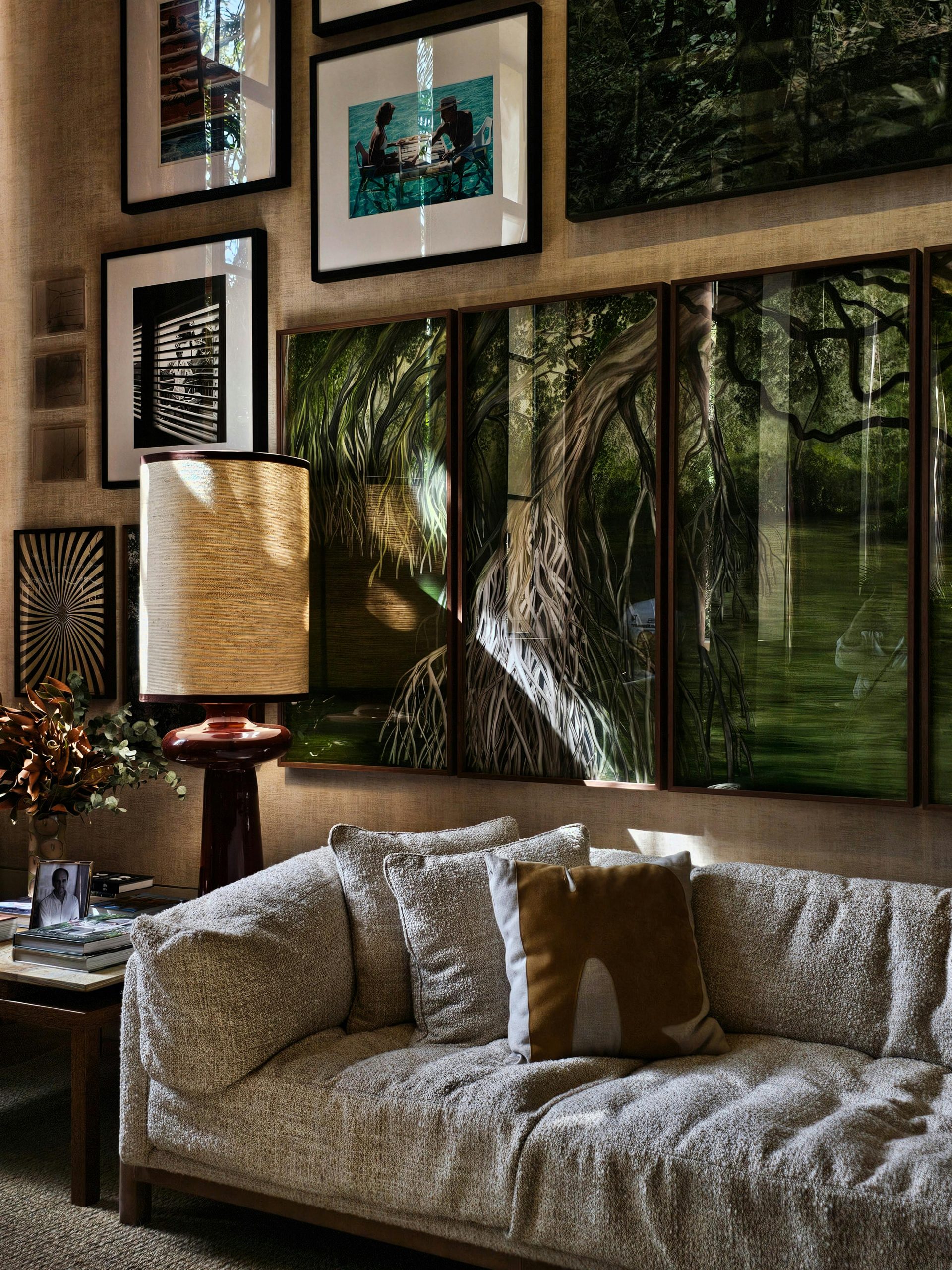
Big walls can handle bold, oversized pieces (think drama, not timid whispers), while smaller nooks might shine with a thoughtfully placed mini moment. The trick? Balance. Art should feel anchored – not like it’s floating off into the design abyss.
And don’t treat rooms as isolated islands. Your home should read like a well-curated gallery – each space flowing into the next, with its own personality but a shared story.
Let there be light (but not too much)
Light is art’s best friend – and occasionally, its worst enemy.
Natural light can bring a piece to life, shifting colours and highlighting textures in the most magical ways.
But too much direct sun? That’s a fast track to fading, especially for prints or photographs.
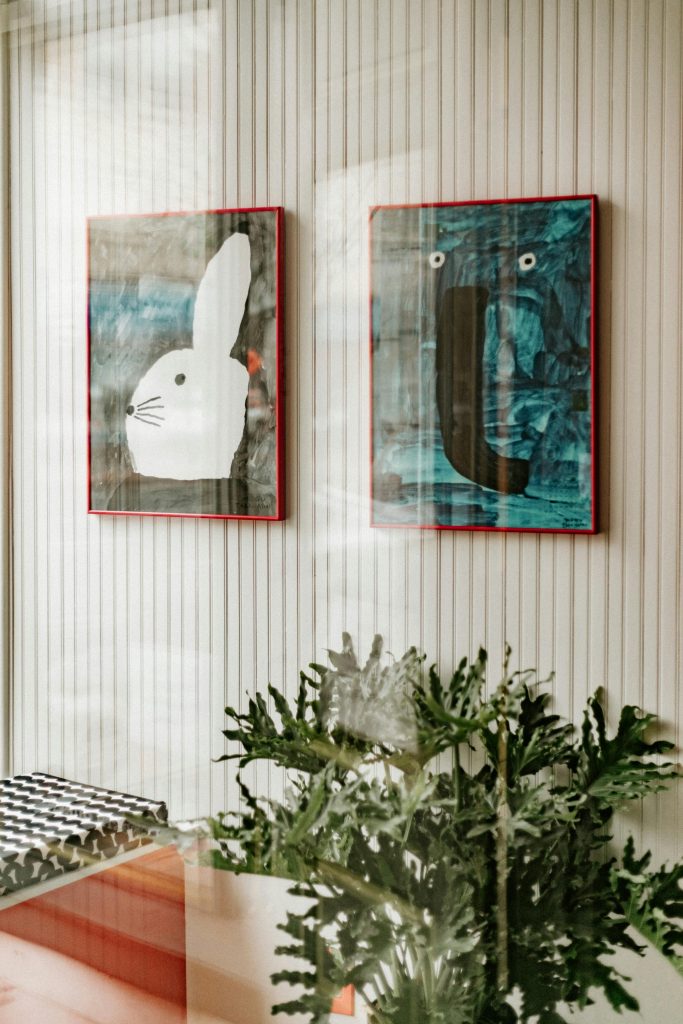
Then there’s glare – the sneaky design saboteur. Glossy finishes or glass-covered frames can bounce light straight back at you (and your TV screen), which is… not ideal.
If your space is bright and bold, lean into textured canvases, matte finishes, or even sculptural pieces. In darker corners, a slightly reflective surface can help bounce light around and lift the mood.
Choose art that feels like you
Empty walls have a way of making us panic-buy. Resist the urge.
Art isn’t just décor – it’s a reflection of your inner world. The things that make you pause, smile, think twice. If a piece doesn’t stir something in you, it’s probably not the one.
Skip overly generic prints and predictable quotes. Instead, look for pieces that carry meaning – whether it’s a painting you discovered on holiday, a local artist’s work, or something slightly imperfect that just clicks.
A good rule of thumb? If you’re still thinking about it days later, it’s worth considering.
Pexels
Work with colour – and shape
Art doesn’t need to match your space – but it should make sense within it.
Pull subtle tones from your room – maybe a hint of rust from a cushion or a deep green from a leafy plant – and let your artwork echo that. It creates cohesion without being overly “matchy-matchy”.
Also, don’t forget about shape.
If your space is full of clean lines and sharp edges, a circular frame or fluid artwork can soften things beautifully. On the flip side, structured frames can ground a more relaxed, layered room.
It’s less about perfection, more about conversation between pieces.
Mix, match, and make it interesting
The most memorable homes don’t play it safe – and neither should your art.
Blend high-end pieces with thrifted finds. Pair a contemporary print with a vintage frame. Hang a painting next to something unexpected – a woven basket, a ceramic plate, even a child’s drawing that
deserves its moment.
It’s this mix of old, new, polished, and personal that gives a home soul.
Gallery walls, in particular, are your playground. Keep spacing consistent, but let the content vary. Think of it as storytelling – each piece adding a layer.
Give it time
Here’s the thing no one tells you: building an art collection isn’t a one-day job.
The best spaces evolve. You’ll swap pieces around, discover new favourites, and maybe even fall out of love with something – and that’s okay.
The goal isn’t to “finish” your walls. It’s to create a space that grows with you.
Because the right artwork doesn’t just fill a gap – it becomes part of your everyday. Quietly, beautifully, and over time, it starts to feel like home.
A final thought? If it makes you feel something every time you walk past it – even just a tiny spark – that’s the piece worth hanging onto.
ALSO SEE: MASTER THE ART OF LAYERING COLOUR AND PATTERNS AT HOME
