
 Jade Mcgee
A rug under the dining table is one of those design decisions that looks effortless when it works and noticeably wrong when it does not. Get the size, material or placement slightly off and you end up with something that trips people as they pull out chairs, collects crumbs in a way that resists cleaning, or makes the room feel awkwardly proportioned.
Get it right, and a dining room rug adds considerable warmth and character to a space that can otherwise feel hard and echoey. It anchors the table, absorbs ambient noise, protects the floor surface, and introduces colour, pattern or texture in a way that nothing else quite replicates. Here is how to make the right choice.
Size is the most important decision
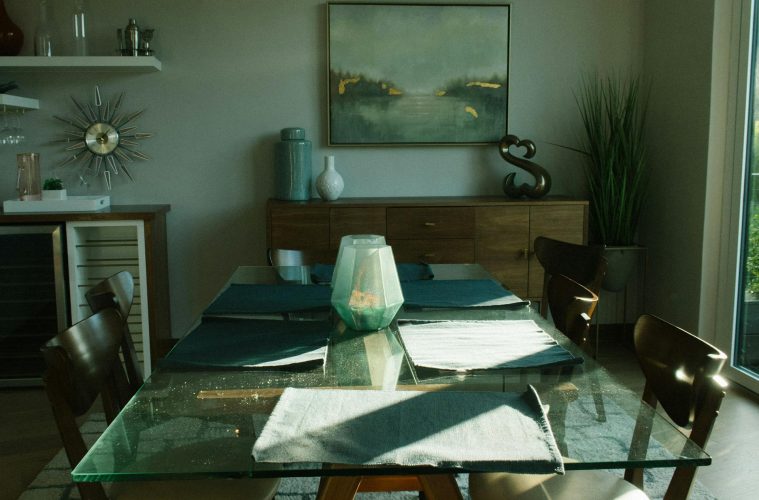
Undersized is the most common dining room rug mistake, and it creates a specific and persistent problem: chairs that catch on the edge of the rug every time someone sits down or pushes back from the table. The rug needs to be large enough to accommodate both the table and all the chairs when they are in a pulled-out, seated position.
As a practical guide, add at least sixty centimetres to the length and width of the table on all sides. For a rectangular table seating six to eight people, a rug of around two hundred by three hundred centimetres is typically the minimum. For a round table seating four, a round rug of at least one hundred and fifty centimetres in diameter works well. It is also worth leaving at least thirty centimetres between the edge of the rug and the nearest wall, which allows the room to breathe and prevents the space from feeling over-furnished. When in doubt, go larger.
Choose a low pile that can actually be cleaned
The dining table is where spilled drinks and dropped food are most likely to occur, which makes the cleaning demands on a dining room rug significant. High-pile, shaggy or plush rugs trap crumbs, absorb spills and become matted and difficult to clean under the regular pressure of chair legs. They are a poor choice for this room regardless of how appealing they look at the point of purchase.
A flat weave or low pile rug is the practical standard for a dining space. It can be vacuumed effectively, wiped down between deep cleans and tolerates daily use without deteriorating quickly. Patterned rugs with multi-coloured or darker designs have the additional advantage of disguising minor staining and wear between washes, which in a dining room is a genuinely useful quality.
Let material guide the decision
Durability and ease of cleaning should drive the material choice in a dining room. Wool is one of the strongest performers: naturally stain-resistant, hardwearing and available in a wide range of weights and weaves. Nylon and other synthetic fibres are highly durable and easy to clean, though they lack the warmth and tactile quality of natural materials. Jute and sisal are appealing for their natural texture and are reasonably robust on flat, dry surfaces.
The materials to avoid are those that stain easily or hold moisture. Cotton absorbs spills readily and requires frequent washing. Viscose and polyester blends can look beautiful initially but tend to mat, attract dirt and hold onto stains in ways that make maintenance impractical in a high-use room. If a rug appeals visually but raises doubts about cleanability, those doubts are usually worth listening to.
Match the shape to the table
The shape of the rug should generally follow the shape of the table: a rectangular table on a rectangular rug, a round table on a round rug, a square table on a square one. This creates a sense of order and symmetry that anchors the dining setting within the room and is the most reliable visual approach in most spaces.
That said, rules exist to be broken thoughtfully. A large rectangular rug under a round or oval table can work well where flexibility is needed, and an organic or irregular shape adds visual interest in a more eclectic scheme. What matters most is that the rug is centred under the table and correctly proportioned, which is a more important principle than strict adherence to matching shapes.
Use colour and pattern to your advantage
In a room that typically contains relatively little furniture, the rug can carry significant decorative weight. Choosing a colour that echoes a tone already present in the curtains, upholstery or joinery creates cohesion. Introducing a contrasting colour adds energy and becomes a focal point. A bold geometric pattern, classic stripes or a traditional Persian design all work well in a dining room, where the rug is seen largely from a standing or seated position rather than being walked across.
Light-coloured rugs show staining more readily than darker or patterned alternatives, which is worth factoring in honestly before committing. Multi-toned and patterned rugs are considerably more forgiving in practice and often look better for longer in a room that sees regular meals and entertaining.
Define the dining area in an open-plan space
In an open-plan kitchen and dining area, the rug does additional work beyond decoration. A large rectangular rug positioned squarely under the table and chairs separates the dining zone from the kitchen and living spaces around it, creating a sense of a room within a room without requiring a physical partition. This defining function depends entirely on the rug being large enough to fully contain the furniture; one that the chairs partially fall off undermines the effect and creates the edge-catching problem that is the most common dining rug complaint. In an open-plan setting, erring on the side of a larger rug is even more important than in a self-contained dining room.
ALSO SEE:
The bathroom rug: how to choose the right one and keep it fresh
Featured Image: Pexels
